
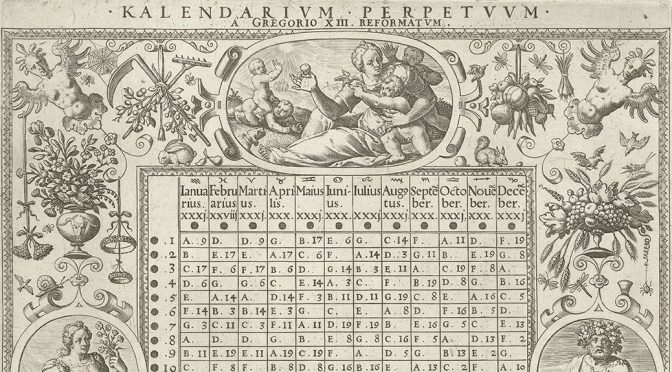
Recently, I was attempting to explain this concept to my grandchildren, who were anticipating no school for President’s Day. However, they did you know that George Washington was actually born on February 11, 1731, and NOT on February 22, 1732, as we in the United States celebrate. How is that possible?

First, let us look at the Julian calendar. The Julian calendar was the primary calendar in Western civilization for over 1,600 years, introduced by Julius Caesar in 46 BCE [Before Common Era or Before Current/Christian Era) and refers to the time period before year 1 in the Gregorian calendar, serving as a secular, neutral alternative to BC (Before Christ). It is identical to BC in numerical value, counting backward from year 1 (e.g., 500 BCE is 500 years before the Common Era). (taking effect in 45 BCE) and used until 1582, when Pope Gregory XIII introduced the Gregorian calendar. While many countries adopted the reform later—some as late as the 20th century—it is still used today by some Orthodox churches.
Key details regarding its usage include:
- Initial Adoption: Implemented in 45 BCE, the Julian calendar corrected the earlier Roman, lunisolar system by establishing a 365.25-day year with a leap day every four years.
- The Switch: By 1582, the Julian calendar was 10 days out of sync with the seasons, prompting the switch to the more accurate Gregorian calendar, which reduced the drift to one day in 3,226 years.
- Delayed Adoption: While Catholic countries adopted the new calendar in 1582, Protestant Britain did not switch until 1752, and Russia did not adopt it until 1918.
- Continued Usage: Some Eastern Orthodox churches continue to use the original Julian calendar for determining liturgical dates and fixed holidays.
Because the Julian calendar gained one day every 128 years, by the 20th century, it was 13 days behind the Gregorian calendar.
According to the CT State Library, “During the Middle Ages, it began to become apparent that the Julian leap year formula had overcompensated for the actual length of a solar year, having added an extra day every 128 years. However, no adjustments were made to compensate. By 1582, seasonal equinoxes were falling 10 days ‘too early,’ and some church holidays, such as Easter, did not always fall in the proper seasons. In that year, Pope Gregory XIII authorized, and most Roman Catholic countries adopted, the ‘Gregorian’ or ‘New Style Calendar. As part of the change, ten days were dropped from the month of October, and the formula for determining leap years was revised so that only years divisible by 400 (e.g., 1600, 2000) at the end of a century would be leap years. January 1 was established as the first day of the new year. Protestant countries, including England and its colonies, not recognizing the authority of the Pope, continued to use the Julian Calendar.
“Double Dating
Between 1582 and 1752, not only were two calendars in use in Europe (and in European colonies), but two different starts of the year were in use in England. Although the ‘Legal’ year began on March 25, the use of the Gregorian calendar by other European countries led to January 1 becoming commonly celebrated as ‘New Year’s Day’ and given as the first day of the year in almanacs.
“To avoid misinterpretation, both the ‘Old Style’ and ‘New Style’ year was often used in English and colonial records for dates falling between the new New Year (January 1) and old New Year (March 25), a system known as ‘double dating.’ Such dates are usually identified by a slash mark [/] breaking the ‘Old Style’ and ‘New Style’ year, for example, March 19, 1631/2. Occasionally, writers would express the double date with a hyphen, for example, March 19, 1631-32. In general, double dating was more common in civil than church and ecclesiastical records.
“Changes of 1752
In accordance with a 1750 act of Parliament, England and its colonies changed calendars in 1752. By that time, the discrepancy between a solar year and the Julian Calendar had grown by an additional day, so that the calendar used in England and its colonies was 11 days out-of-sync with the Gregorian Calendar in use in most other parts of Europe.
England’s calendar change included three major components. The Julian Calendar was replaced by the Gregorian Calendar, changing the formula for calculating leap years. The beginning of the legal new year was moved from March 25 to January 1. Remember that March 25 is now one of the Quarter Days in England. March 25th in England is historically known as Lady Day (Feast of the Annunciation), marking the Christian celebration of Gabriel visiting Mary. Formerly the legal New Year’s Day and a major “Quarter Day” for rents and contracts, it remains a traditional date, though no longer a public holiday.
Keeping all this in mind, January 1 became the beginning of the years, and, initially, 11 days were dropped from the month of September 1752. As my birthday is in September, I would NOT have approved. I would be like Lady Catherine de Bourgh and be “most displeased.”
The changeover involved a series of steps:
Step 1: September 2, 1752, was followed by September 14, 1752, (dropping 11 days to conform to the Gregorian calendar)
Step 2: December 31, 1750, was followed by January 1, 1750 (under the “Old Style” calendar, December was the 10th month and January the 11th)
Step 3: March 24, 1750, was followed by March 25, 1751 (March 25 was the first day of the “Old Style” year)
Step 4: December 31, 1751, was followed by January 1, 1752 (the switch from March 25 to January 1 as the first day of the year)
Therefore, George Washington, the first American president’s birthday moved from February 11, 1731, to February 22, 1732.
King George III, who was on the throne when Austen was writing her novels was born on June 4, 1738, which was already recognized under the New Style (Gregorian) dating convention, as Britain adopted it in 1752. Unlike earlier figures, his birth date did not require a retrospective “Old Style” conversion, and he celebrated on June 4th throughout his life.
The same cannot be said of his father, King George II. Over the course of George’s life, two calendars were used: the Old Style Julian calendar and the New Style Gregorian calendar. Before 1700, the two calendars were 10 days apart. Hanover switched from the Julian to the Gregorian calendar on 19 February (O.S.) / 1 March (N.S.) 1700. Great Britain switched on 3/14 September 1752. George was born on 30 October Old Style, which was 9 November New Style, but because the calendar shifted forward a further day in 1700, the date is occasionally miscalculated as 10 November. [Huberty, Michel; Giraud, Alain; Magdelaine, F. et B. (1981) L’Allemagne Dynastique. Volume 3: Brunswick-Nassau-Schwarzbourg. Le Perreux-sur-Marne: Giraud, page 108.]
If you are like me and very interested in your ancestry, these types of discrepancies are important to you. For example, one of my grandfather’s was a jeweler to the king. Some reports say George II and some say George III. He had a shop in Richmond, and you will often read a reference to him in my stories when a jeweller is required.
But who was Francis Grose? Born about 1731, at Greenford, Middlesex, Francis Grose was the eldest son Francis Grose (Sr.) or (Esquire) and his wife Ann Bennett (or Bennet), daughter of one Thomas Bennett [you JAFF fans will know I smiled when I saw this name] of Kingston, Oxfordshire, who happens to be my 6th Great-Grandfather and Great-Grandmother. Francis Sr. was born in Berne, Switzerland, an immigrant who came to England in the early 18th Century, with a pedigree in the College of Arms. He was a jeweller of some renown living at Richmond in Surrey. He fitted up the coronation crown of George III (some accounts say George II, but either way he was a jeweller to a king). He was also a collector of prints and shells, which were sold around 1770. His son, Francis, Jr. is the author of The Dictionary of the Vulgar Tongue 1811.

Anyway, with giving dates, one must recall the change over from one calendar to the other. Old Style. New Style.


Leave a Reply