
On the 250th anniversary of Jane Austen’s birth, she remains a touchstone for politics for many people. We find that white supremacists are co-opting the English author in support of a racial dictatorship, shocked opponents are claiming that true readers are “rational, compassionate, liberal-minded people,” and conservatives are chiding Janeites for assuming that great literature can be written only by great liberals.
For all these political takes on Austen, most people are wrong about her political views, because they have no idea what hers actually were. As an individual and an artist, she kept her political mouth firmly shut. She had other—I would claim—more important things to write about.
This silence can be confounding, for Austen lived in a time tumultuously like our own. Slavery—the “alt-right” issue of the day—was bitterly fought over. War, political corruption, and disparity in wealth had England on the brink of breakdown. Factory automation was destroying the middle class. Sound familiar?
Yet, when asked about her aunt’s political views, niece Caroline Austen, who wrote a memoir of the author, said: “In vain do I try to recall any word or expression of Aunt Jane’s that had reference to public events—Some bias of course she must have had—but I can only guess to which quarter it inclined.”
As today, the politics of 1800-1820 had many “quarters.” Radical Tories believed that God had put themselves and the King in charge; the poor deserved their lot because God had made them so. Radical Whigs, full of entrepreneurial zeal, believed that the poor deserved to starve because they were too lazy or incompetent to rise from their rags.
In between was a shifting coalition of moderate Tories, who felt a responsibility to those beneath them, and moderate Whigs, who sought to spread the political and social wealth—mostly to themselves, the rising business and technical class.
Lower-case “republicanism”—power to the people by putting them in charge, rather than an anointed king—drew the same reaction among conservatives then as “socialism” does today—the fear of the leveling of society (and power). A few desperate citizens pushed for revolt out of despair at the lack of economic and political justice.
Many of the issues are woven into the fabric of Austen’s work, but none plays out in the foreground. Thus, people take a slice here and there to justify their own political stances. Sheryl Craig, in her book Jane Austen and the State of the Nation, goes so far as to conclude that Austen’s novels are “carefully constructed texts … about political economics. The love stories came later.” Despite much great information in her work, Craig’s conclusion strikes me as exactly wrong.
A few feminist scholars were also described as “startled” to discover that a Wikipedia entry on Austen claimed she supported traditional marriage. Sorry, but she did. Every woman in her novels outside of traditional marriage, unless she started out rich, ends up impoverished, disgraced, or dead. The women in traditional marriage end up happy—or make a conscious and occasionally odious tradeoff for its security (see Charlotte Lucas and Mr. Collins). What Austen insisted upon is that traditional marriage include love and respect.
The poet W. H. Auden wrote a ditty noting that Austen’s supposed love stories actually describe the “economic basis” of society. Four of her six novels open with a reference to wealth, and conversations regularly involve finance. But this “economic basis” develops not through political discourse but through her factual descriptions of life.
Being dependent, women must be canny in their romantic choices (see what happens to Marianne and Lydia when they are not).
Most men were in a similar fix. The non-inheriting males must find a career (see all younger sons). Further, corruption in some ways was built in. Army officers bought commissions; the poor need not apply. Naval officers such as Jane’s sailor brothers Frank and Charles Austen needed political patronage to move up in the navy. William Price is their stand-in in Mansfield Park.
One sees in these stories her liberal sympathies, but it is not a sympathy of class. While self-made naval heroes return from war to supplant the attenuated aristocracy in Persuasion, the author holds in equal esteem the dull but reliable Col. Brandon, the grouchy aristocrat Darcy, the energetic Mr. Knightley, the farmer Martin—anyone who shares the virtues of industry, intelligence, and generosity.
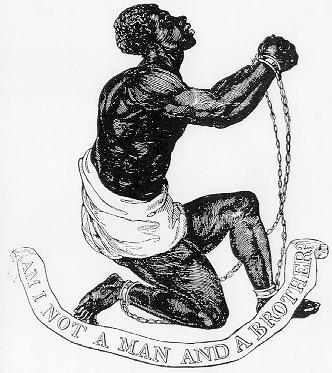
The telling issue of that era was the slave trade, which became illegal in 1807, when Austen was 31, in her maturity as an author. As I have discussed elsewhere, Edward Said and other scholars claim that she turns a blind eye, particularly in Mansfield Park, where the family’s money comes from slavery on a West Indies plantation. Paula Byrne and others, in contrast, claim that Fanny Price in Mansfield Park speaks “truth to power” about slavery.
As today, racial issues divided society. Economic and religious traditionalists supported slavery, while evangelicals led the bitter fight to end it.

Austen’s admiration for the poet-abolitionist William Cowper and for Thomas Clarkson’s abolitionist book indicate her opposition to slavery. Despite a few anti-slavery winks, however, Mansfield Park does not prove these personal views. Apologists cite Fanny’s comment that, when she raises the issue of the slave trade with her family, she is met with “dead silence!” The inability of anyone to respond to her question demonstrates Fanny’s—Austen’s—moral rebuke.
Only it doesn’t. Fanny explains the silence: Her cousins simply have no interest in their father’s business, and Fanny does not wish to “set myself off at their expense,” by showing any curiosity about his topics. Earlier, she makes similar, maddeningly oblique comments. She could mean that she wants to end the slave trade or that she’s interested in the plantation reforms that were beginning to make slavery somewhat less horrific. We don’t know. Slavery adds a subtle metaphor about Fanny’s own lowly status, but Austen is too talented to turn her most complex novel into a political tract.
In attitude, Austen was a moderate Tory—the equivalent of a moderate Republican. Austen never challenged the existing order. Like the abolitionist William Wilberforce, she wanted to reform it—not abolish it. She believed in merit as the economic salvation for herself and her brothers.
She was a proto-feminist in the sense that she was a pragmatist. Dependent on the men in her family for most of her life, she needed to be able to support, as well as express, herself. That ability became critical when her brother Henry’s bank collapsed, taking much of the family’s wealth with it. (Most of Jane’s funds were safely deposited in Navy Fives–stock paying five percent.)
Practical economic considerations fill her books, but to read the novels as political commentary is to miss the point. Austen creates a rich, original world in which complex, believable human beings interact at their best and worst.
Any political lessons flow from the way human characteristics manifest themselves at all levels in the real world. Life experience, not ideology, dictates any political take-aways from her plots. She demonstrates that women should be able to accept relationships on their own terms and to provide for themselves as their needs require.
In the 250th commemoration of her birth, it is disquieting that these lessons of a woman’s right to basic self-determination remain too often unheeded—even disputed.


Leave a Reply to Collins HemingwayCancel reply