
I was busy thinking about what to write about this month. I have a book coming out early in 2026, starring our beloved Colonel Fitzwilliam, and I considered that. I’m also finally finishing Miss Mary and Alexander Lyons’ next mystery, set in the world of Persuasion, and that was an option too.
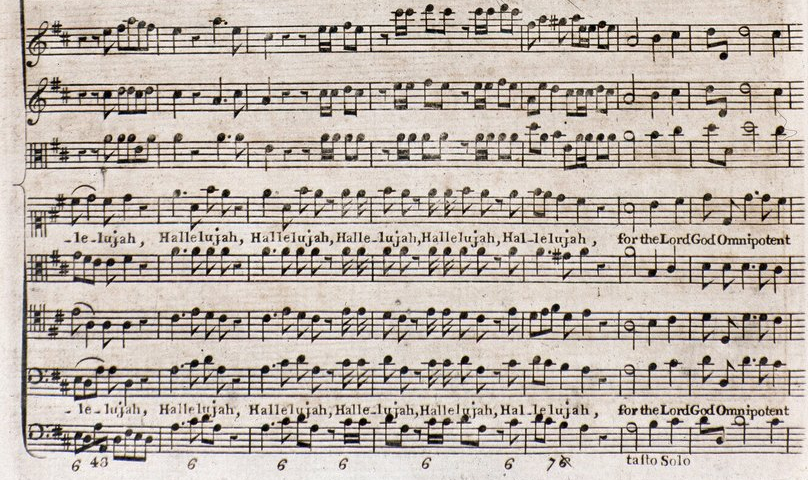
Then, on one of the JAFF boards, somebody asked about Handel’s Messiah, and whether the Bennet sisters might have seen it, and I thought, “Aha!”
I had written something a couple of years ago, but it seemed relevant, and I do hope you will excuse me if I dust it off and present it to you again. Like the music itself, the stories about this magnificent oratorio never grow old.
And yes, my son is still singing in the big concert choir, and he’s well into rehearsals once more. Hallelujah!
Here is an excerpt from my post from two years ago.
One well-loved Christmas tradition is the performance of G.F. Handel’s fabulous oratorio, Messiah. We had the pleasure of hearing a brilliant rendition last week here in Toronto. I’ve played the piece many times in my former life as a classical musician, but I’ve rarely been in the audience. It was a treat. An added bonus is that my son sings in the choir, so I could get some parental gloating in as well.
There are some lovely stories associated with Messiah, and I thought I’d do a bit of digging into the history of this piece.

George Frideric Handel was born in Halle, Germany, in 1685, but settled in London in 1712, where he resided for the rest of his life. He first rose to fame as a composer of traditional Italian operas, a hugely popular artform in the early 18th century, but he was equally renowned early on for his court music, concerti grossi, organ music, and anthems as well. You might have heard the stirring performance of ‘Zadok the Priest’ at King Charles’ coronation last May. Handel pulled out all the stops for that one!
Italian opera, as I said, was big business. In the first decades of the 1700s, Handel founded three commercial opera companies to keep the English nobility happy. These pieces demanded highly trained, and often imported, singers, who came with temperaments as thrilling as their voices, and on one occasion a fight broke out on stage between two battling sopranos. Eventually the demands of the opera world became excessive, and musical tastes began to change as well.
By the 1730s, Handel began to change his musical direction, shifting his focus from elaborate and very expensive Italian opera to religious oratorio and English choral music. These new pieces also appealed more to the middle classes, whose pockets were often deeper than those of their social superiors. One result of this was Messiah.
This fabulous oratorio (like an opera, with chorus and solo numbers, but without the staging and action) was composed over a very short time, three or four weeks, in August and September of 1741. Some say it was divine inspiration. Others say it was the brilliant selection of biblical verses by librettist Charles Jennens in July. No matter. The result was this masterpiece. Hallelujah!

Messiah had its first performance not in London, but in Dublin, on April 13, 1742, to a huge crowd. Ladies were advised not to wear hoops in their skirts to make room for the masses, although the draw might have been as to see the scandalous contralto, Susannah Cibber, as to see the superstar composer. Handel chose Dublin over London for the premiere because he had been disappointed with recent flops in the English city. Dublin, at the time, was a fast-growing and prosperous city, with a wealthy population and a determination to show its mettle in the realm of art and music.

The performance was a hit, and this success was replicated when Messiah was first performed in London the following year.
Here’s a bit more Messiah trivia for you.
* The first performance in Dublin was a charity benefit, and it raised enough money to release 142 men from debtor’s prison.
* At the first performance in London on March 23, 1743, the king was in the audience. At the first ringing notes of the ‘Hallelujah’ chorus, he sprang to his feet. And if the king stands, everyone stands, so the whole audience rose. This tradition of standing during this rousing chorus still, well, stands!
* Messiah was intended for the Easter season, since the second and third parts focus on the resurrection, but it soon became associated with Christmas instead.
* Handel himself conducted Messiah over thirty times. He was stingy with food, but generous with his time and money, and most of these performances were fundraisers for various charities, often the foundling hospital. Thousands of pounds were raised, leading historian Charles Burney to write, “Messiah has fed the hungry, clothed the naked and fostered the orphan more than any single musical production in this or any other country.”
* The first performance of Messiah in Bath was November 24, 1756. By this time, the oratorio was associated with Christmas, although it was performed several times a year in various venues, including the Upper Rooms. The piece was also performed to celebrate the opening of the Octagon Chapel on Milsom Street in 1767.
* William Herschel, who discovered Uranus, was the organist at the Octagon Chapel, and he conducted Messiah frequently, often with his sister Caroline as one of the soloists.
* Knowing Jane Austen’s love of music, and the frequent performances of Messiah in Bath, through the late 18th and 19th centuries, she almost certainly heard the piece and likely knew it well.
So, to answer the question, yes.
It is very possible that the Bennet sisters might have attended a performance of Messiah. Perhaps they might have seen it in London, while staying with their aunt and uncle, or perhaps a choir and orchestra might have mounted a performance for a children’s charity in St Albans or Oxford, or another large town in the vicinity.
Do you have a tradition of attending a performance of Messiah? Tell us about it.


Leave a Reply to AnnaCancel reply