
For a JAFF author, the plot is queen.
A simple statement, I think, revealing a fundamental truth about our genre. An author can comfortably use the geography supplied by Austen to offer stories to readers thoroughly familiar with the lay of the land or building.
Hundreds of stories have spoken of Pemberley glowing in the afternoon sun as seen from the overlook. More have examined Longbourn’s solid, if not spectacular, architecture. Then there is Oakham Mount. Rarely do authors write of the path winding from the track between Longbourn and Lucas Lodge to Lizzy’s favorite refuge. Austen only offered that Elizabeth enthusiastically wended her way through the countryside before finally ending up on the summit plateau. The road from Longbourn to Meryton is equally undescribed, except it is a mile walk. We assume it is not rutted nor, though, is it paved. The Bennet daughters and Mr. Collins do use it several times. Revealing conversation flows above and over as the characters walk along.
But is it shaded—as I had Longbourn Lane gradually turning into a tree tunnel over a century in the Bennet Wardrobe as sentinel oaks grew in—or a road between stone walls and exposed to the weather?
Decor is less critical unless it contributes to revealing something more about a character. We accept that Mrs. Bennet’s spendthrift ways might lead her to overdecorate the parlor. By inference, we are led to believe that Caroline Bingley would let loose the dogs of interior design upon Netherfield Park. This may be an artifact of the infamous orange dress in the 1995 television series. Austen only refers to her as a lady of fashion, and the fashion of the day did find much to admire in Egypt and China. Such choices are triggers for those of us with modern sensibilities. Austen never directly refers to any gauche and bourgeois redecoration.
I recall a description of a table in Netherfield’s Mistress’s suite from Laraba Kendig’s Longbourn’s Son. The author, through Elizabeth, reported that the table’s frail nature, with spindly legs and a delicate surface, was decorative but served no other useful purpose, unable to support a single teacup. A more apt description of the person who had ordered the table for her room—Caroline Bingley—could not have been written.
Austen’s core plot drivers—pride and vanity, honor and goodness of heart, misunderstanding and growth—buoy new plots bringing Darcy and Elizabeth together while Wickham and Lady Catherine muddy the waters. The authors accept the environment in which the characters lived in the Regency and concentrate on the story.
&&&&
Austenesque authors use Jane Austen as a starting point. We accept the predominant character constructs and use many of Austen’s core events—the insult, balls, visits, and deception—within our different plots that step beyond the confines of ‘Boy is a prickly SOB and manages to insult girl who, despite every protestation that she is unlike any other Regency heroine, proceeds to take against him because of his insult about her looks.’ Going Austenesque allows authors to explore worlds unimagined by Jane Austen.
Could Maria Grace have written her dragon series if she had not decided to step outside the 1930s Heyer model of romance and the demands that Variations focus on Darcy and Elizabeth?
Could Barry Richman have examined disease and medical/genetic conditions as he did in Doubt Not Cousin and Follow the Drum?
Could Kathleen Cowley have undertaken to reposition Mary Bennet as a detective and spy and become the heroine of her own series, The Secret Life of Mary Bennet?

Austenesque Authors abandon the comfort of Jane Austen’s world—by comfort, I mean the understood context through which the characters move—for the need to describe convincing worlds. Since readers are unfamiliar with the stage we set our players on, we must explain why it matters. Here, Section Officer Elizabeth Bennet meets a man she came to know as Colonel Barraclough at SOE’s Baker Street offices.
The radiator gurgled in its futile attempts to cut the winter chill. The sole window needed a thorough cleaning, as it had been unwashed since 1939. Opened blackout curtains—dusty and tatty—let Midday’s feeble light brighten the room. Crosshatched with tape, the hazed glass allowed only a feeble winter glow into the room. Green paint, unrenewed since Edwardian times, was dingy with the smoke of a thousand cigars and cigarettes. Worn linoleum and utilitarian metal furniture completed the picture. All contributed to a dog-eared air of weariness that bore down on late-1943 Britain, settling its heavy cloak around the uniformed pair.
Ghost Flight, opening lines of Ch. Two
The paragraph positions the characters in the middle of World War II. We understand that the country has been on its back heel for years. Britons are soldiering on, but their steps are slow. The ton’s denizens do not languidly lounge through afternoon teas of the type found in a Regency Grosvenor Square sitting room. Many of those classes have been imprisoned or marginalized for fascist leanings. For those who remain, the rationing regime has created a nation of thin, sallow-faced survivors, willing to get on with it, knowing that the only way to go was through.
One of the fun parts of building an Austenesque story is the geographic research. Whether it is Napoleonic Malta, Expansion-era Cincinnati, or Regency Meryton, finding and placing the towns in which our characters live is an interesting exercise. Old travel guides (Baedecker’s) illuminate the land’s contours and the historical surroundings. Blogs and commentaries consider where the fictional Meryton may be located.
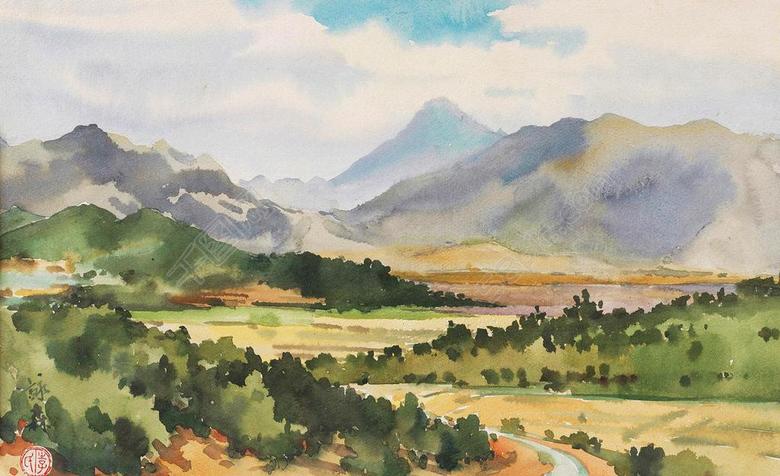
A note on that question before I close. Many speculate that Meryton may have been modeled on the town of Harpenden. I, on the other hand, lean more toward Welwyn. Both are in Stevenage’s proximity. Welwyn, though, does rest on the banks of the Mimram River, a twenty-mile stream that empties into the Lea. I needed a river within my stories as the small valley would have been important in Celtic times. That allowed me to imagine fortifications atop Oakham Mount, whose crest overlooked the river. Opposite Oakham rose the Chiltern Hills. Then Mr. Bennet could write his paper, Considerations on Pre-Celtic Inhabitation of the Mimram Valley (1806).
Darcy accepted her hand and clambered to his feet, doing more damage to his pantaloons, this time the knees. Once he turned back to face his lovely savior, his view was of Elizabeth facing west and looking across the valley toward the Chiltern Hills. A halo surrounded her. That vision split his life into one of the eternal opposites: before and after. He could not have loved her more than in that moment, although he would spend years trying.
In Westminster’s Halls, Ch. Sixty-two
Many of my books use geography to establish the emotions I want readers to experience.
Whether JAFF or Austenesque, when well-composed, both methods allow readers to immerse themselves in stories growing from the timeless tale.
&&&&
Please enjoy the first words of my new Lessers and Betters novel. While neither appears in this excerpt, Lord Richard and Lady Kate St. Jean, along with Annie and Henry Wilson, and Mr. Foote, match wits with a Russian assassin determined to steal a draft treaty between Great Britain and the Ottoman Empire.
This excerpt of The Ambassador’s Wife is ©2025 by Donald P. Jacobson. Reproduction is prohibited.
Constantinople, June 23, 1819
Wallis liked his drink. Any sane man plying his trade throughout the Aegean, pockmarked as it was with tiny bits of rock, could not do so if he remained Methody-sober twenty-four hours a day. Every call at stony sun-scorched jetties to buy bundles of coarse goat’s hair cloth, urns of brined olives, and jars of pressed oil was identical to all others and equally boring. Few had hospitable widows with flasks of home-brewed ouzo hidden away. Amusements preferred by sailor-merchants awaited the patient behind Constantinople’s great wharves, in smoky dens protected from imams’ baleful glares by the time-honored tradition of baksheesh.
His route around the ancient sea had been unchanged since he, a half-pay Royal Navy lieutenant, was beached when his ship paid off in Malta after Wellington’s final victory. He had the misfortune of serving under meek commanders: connected men unwilling to scar their alabaster decks with gun practice or in battle with Napoleon’s corvettes and frigates. Nothing had awaited him from the prize courts in Valetta or Gibraltar. Wallis’s meager bank balance never improved except when the Admiralty deposited his annual fifty pounds, lucre frequently delayed by paymasters unable to allow even a farthing to trickle between their fat fingers.
Picking survival over starvation, he had fallen in with a Neapolitan captain who needed a watch officer to spell him as he ran through the Med to Athens. In Athens’s port of Piraeus, Wallis had been taken by a wild idea, to be his own man. With the gold he had hidden in his uniform jacket’s lining, he bid on and won a well-used karavoskaros about the same size as a cutter. A rough crew of Greeks, Turks, and Lascars manned his ship, their numbers ebbing and flowing in time with his fortunes. That had been three years ago.[i]
The trader avoided the larger islands—Naxos, Rhodes, Lesbos—and their Ottoman harbor masters and customs officials. Too much of his meager profit would have disappeared beneath their kaftans and into their şalvar’s deep pockets. These officials might also have been inclined to justify their pay by asking uncomfortable questions about documents, cargo, and passengers.
While nominally under Topkapi’s rule, other ports of call lived much as they had for four thousand years, whether their masters were Hittite, Persian, Greek, or Roman. Ignored by the outside world and not noticing it unless its unwelcome attention was imposed, the only visitors to the islets were itinerant traders like Wallis.[ii]
This passage had been unusual because he had taken on only enough cargo to placate the curiosity of the capital city’s gatekeepers. Arriving with one passenger and nothing more would have inspired suspicion in the Sublime Porte’s paranoid officialdom. Wallis had been well-paid by someone he had encountered in a kafeneío to play the fast packet from Athens to Constantinople. Wallis never saw the first man again after a bag of mixed heritage gold coins had been slid across the table—with the promise of more at the destination—to secure passage for one.
A man with few distinguishing characteristics boarded shortly before the stern lines had been loosed. He quickly disappeared below decks and did not reappear until the ship had turned east to weather the Attica’s southerly peninsula. The fellow took his meals in his cell-like cabin and did not seek the deck’s fresh air until after sunset.
Wallis thought the behavior curious, but the small fortune hidden beneath the master’s cabin’s stern seat put paid to any questions. Conversation with the traveler was almost nonexistent and limited to Wallis answering the inevitable question, “When will we make the city?” Those interchanges clued Wallis that his fare was not English. There was an accent, guttural of the northeast European variety and not of the Romance tongue. What brand of foreigner, though, Wallis could not say.
Favorable winds had found them after their second stop in Psará. Even then, they had been forced to wait for the Aegean’s weak tide to push them through the Dardanelles and into the Sea of Marmara. Breezes rolling down from the Ionian highlands allowed them to tack back and forth until the Hagia Sofia’s dome lifted high above the ridgeline. Another several hours saw customs cleared, the cargo offloaded, and the passenger debarked.
No longer needing to own all his faculties, Wallis had cracked open his last bottle of French brandy, a treat he reserved for himself at the end of every successful voyage. With what he had earned, he could visit a maid-servant of his acquaintance and replenish his spirit’s store. She worked at a French Embassy populated by Gallics who refused to exist on anything but the best the Bourbon state could provide. A few gold Louis would find a case making its way to his larder.
Wallis lifted the seat lid and spied the specie-filled sack among the ship’s papers. A companion purse now weighed down his pocket, and he bent to grab his Athenian inheritance. His fortune had now reached its high-water mark, and he was loath to let it out of sight. He turned to his worktable, opened both pouches, and transferred the money into a canvas waistcoat. Once all compartments were filled, he shrugged the weighty garment over his shoulders and slipped on his coat. Dressed for the night, Wallis grabbed the bottle by its neck and drained the remaining liquor. He refused to allow his crew to come behind him, clean his cabin, and enjoy the brandy.[iii]
So focused was Wallis on not stumbling on the weed-covered steps leading to the pier’s lip that he never saw the shadow leaving the darker murk of an alley just passed. Not that this would have prevented the inevitable. This simply was a statement of the dulled senses of potent drink laid atop an indifferent mind focused on other matters.
Muffled footsteps padded behind, inaudible to all but other assassins attuned to the unusual.
***
A sure hand caressed the sharkskin grip. The blade flashed in the night, and its gutters drank deeply as its whorled Damascene edge carved a bloody smile beneath the victim’s chin. Wallis collapsed into his killer’s arms and wheezed a last breath as his life splashed on ancient stones, mingling with that of others—Phoenician, Carthaginian, Roman, Byzantine, and Crusader. He was but one among thousands to dampen the waterfront’s dry stoneworks with his vital essence.
Not that anyone would weep for him. His remains were but another bit of refuse to be picked up by pre-dawn cleaners and dropped in a ravine outside of the city.
The killer thought that the captain’s voice could have been problematic. Now silenced, it posed no threat to the wearer of the soft-soled boots. There had been no charity waiting to end the man just off the docks. He could have killed him on the boat, but that might have led to uncomfortable questions about who else had been aboard.
As he lowered the corpse to the stone, his experienced hand felt unusual lumps—something more than the expected ribs—beneath the coat. Cutting away the buttons, he flipped open the coat’s front and grinned. Although his valise held more than enough funds to lubricate his way through Constantinople’s corridors, more was always welcome. What the sailor had thought safely hidden around his frame would now add to his killer’s resources.
Flipping the body facedown, he slit the jacket’s back and ripped the cloth from the body. He cut the waistcoat’s laces and grinned—if the rictus reshaping his face could be called that—as he lifted the blood-besmirched sailcloth from the corpse. Coin clinked heavily as it shifted in the sewn pockets.
Dropping the violated vest, he dug out a bit of felt cloth and wiped his dagger clean of bloodstains. He was beaten if that was not his first undertaking after dispatching a target. A tarnished blade was a sin of the first order in his master’s eyes. There were no other commandments—except, perhaps, to avoid sentimentalizing the act and the result.
In this, he was less adept than some of his fellow acolytes, emotionless men and women who conducted their entire lives with soulless dispassion. He prided himself on retaining a measure of humanity. A beggar’s bowl would find silver as he passed by. Flowers would scent a grave. A weeping child would see her tears dried and her mother gifted with a peck of flour to bake bread for her family.[iv]
He had never killed except those who had offended God’s ordained rulers. Sadly, some had fallen before him whose only fault had been to come between him and his target. The ship’s captain was a necessary sacrifice akin to using his queen to annihilate a pawn on the exchequer, cutting off the possibility of a dangerous back file exchange.
He believed that his ability to wall off his dark breath from the balance of his existence had turned him into what he had become, the single greatest secret weapon in the Czar’s arsenal.
As after most kills, he became philosophic and thoughtful. Looking down at the cooling figure at his feet, he considered not the man he had just ended, but rather what the carcass represented. Death has its own look: a jointless finality, muscleless, thoroughly inanimate, and tending toward flaccidity. If left untended, the dead begin to dissolve within hours of vital processes ending. The sinews and flesh form nothing but an empty vessel once the spirit has winked out.
Most so fear the idea of death that they hold up both hands to protect themselves from confronting their mortality by viewing the dead. The idea of no longer being aware is frightening to the point of incomprehensibility. Comfort is sought in assurances that there is another life beyond this. Even if accepted, there are shreds of doubt that anything awaits beyond the veil, so remembrance becomes salvation, and the dead will live on through communal memory.
However, think about this: the Inuit have a dozen words for varying types of snow. But death to English speakers is a single overarching condition. Some subsets slice it into different classes—usually nothing more than glorified adjectives: violent, natural causes, all words used to describe the manner of a person’s decease. The word, though, keeps its potency without nuance.
The killer shook himself free of these thoughts much as a hound would after crossing a stream to drop a broken bird at his master’s feet. There was more to be done, tasks that could only be undertaken away from the Bosporus’s shores. He untied the leather apron he wore when working and rolled his prize inside its bloody folds to shield his wardrobe from telltale stains. Buckling the straps, he hoisted his pack and made his way along the quay, keeping to the shadows.
His remit was specific. He would collect what he had been ordered to take, and anyone who came between him and that would be swept away.
[i] https://www.kavas.com/blog/traditional-greek-vessels.html A karavoskaros is a larger cargo vessel than a Greek trahantiri, more commonly used as a fishing vessel with no cabins. Wallis’s ship was about the same size as a Royal Navy cutter, with twenty crew and a burthen weight of under 220 tons.
[ii] https://greekweaving.com/preparing-goat-hair-for-spinning/ A kaftan was a long surcoat or robe. Şalvar were Ottoman trousers. Topkapi Palace in Constantinople was the seat of Ottoman rule.
[iii] Wordplay on the Pergamum Inheritance through which the King of Pergamum bequeathed his entire city and fortune to the Romans in exchange for them not invading Pergamum during his lifetime.
[iv] A peck is about fourteen pounds.


Leave a Reply to Don JacobsonCancel reply