
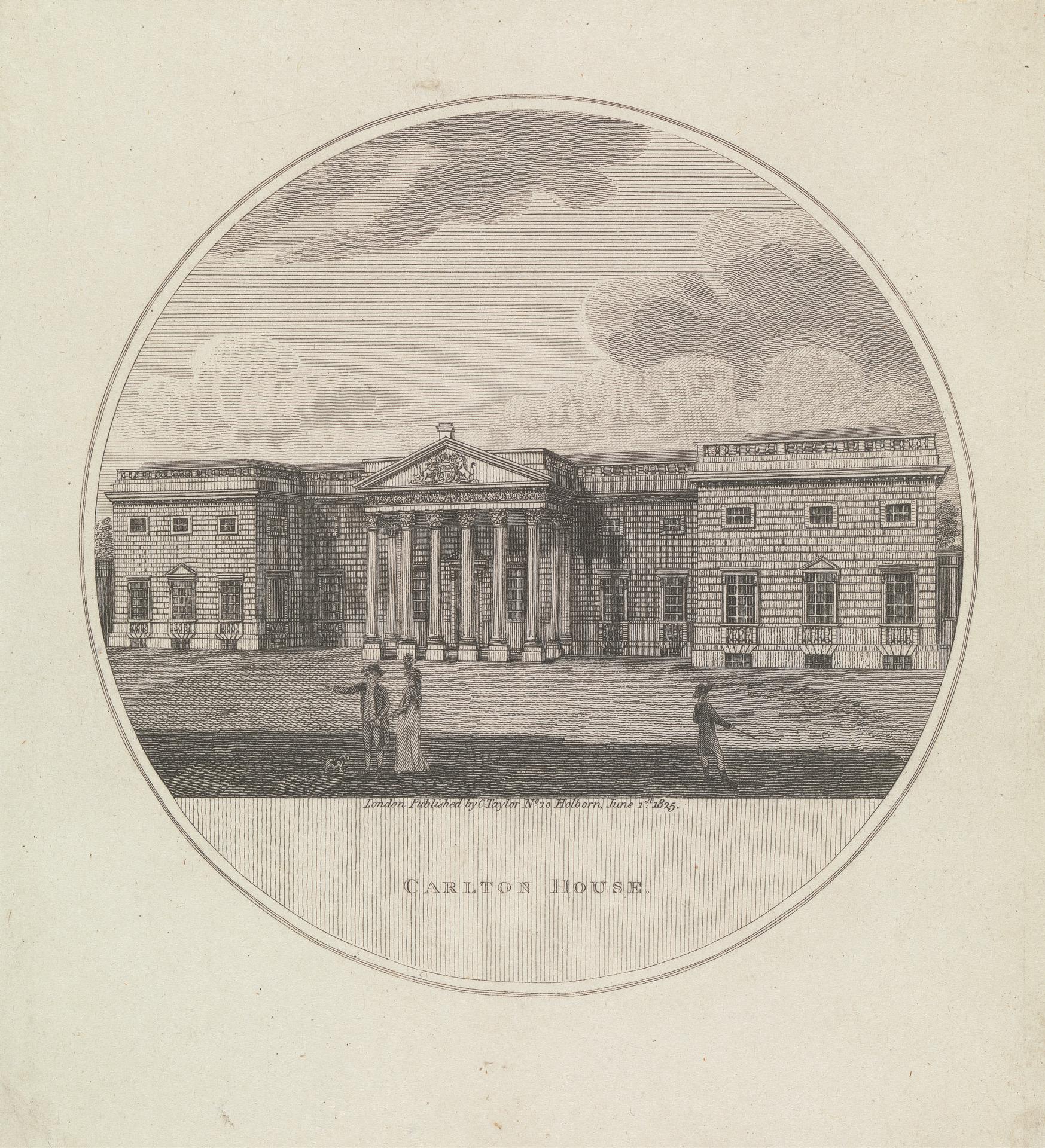
We tend to perceive the fine neoclassical residences of Regency grandees as a neutral backdrop to the unfolding dramas. However, the design of these great houses had been shaped by rather dramatic forces as well.

It started with the resurgent interest in classical antiquity – Rome and, to a lesser extent, Greece (although Alexander Pope’s translation of Homer became as famous as it was divisive). In many ways, it had been whipped up by the exciting results of eighteenth-century excavations in Pompeii and Herculaneum. Not that the Roman world had been unknown before, but it used to be more of a thing of the great dead men – the orations of Cicero, the victories of Caesar. Now, suddenly, the past came alive as never before, with the gowns of Roman ladies shimmering on the colourful frescoes.
It could have remained just an artistic fad… but then politics intervened.
The Whigs connected the Roman style to the old Roman republican system, the one that came before the despotism of the emperors. Charles James Fox, a prominent Whig, even referred to himself as the “English Brutus,” associating himself with Roman republican virtues in his struggle against William Pitt the Younger. As a result, they’ve made Neoclassicism their own style. One architect specializing in it, Henry Holland, even made a name by mostly creating Whig residences. Holland had built Southill for Samuel Whitbread based on French designs and remodeled Althorp for Lord Spencer, but his most prominent creation remained Carlton House.

Neoclassical interiors favored clean, symmetrical lines and geometric shapes. Furniture often featured paw-shaped feet, legs finished with animal heads, carved rosettes, and laurel wreaths. Brass was commonly used for inlay and mounts, and gilding added touches of shine.
Apart from Holland, quite a number of architects and artists helped to popularize the classical style:
- Robert Adam (1728-1792) was a significant figure who rejected the heavier Palladian style. His designs were based on Greek and Roman styles, characterized by clean, delicate lines, and a muted color palette. Adam created movement in his interiors by progressing through rooms of contrasting styles in a logical sequence.
- James ‘Athenian’ Stuart (1713-1788) pioneered Neoclassicism in architecture (I mean, just look at his nickname!) and interior design. His 1762 publication, The Antiquities of Athens and Other Monuments of Greece, was a crucial resource that provided templates for many Regency era architects and designers.
- Thomas Chippendale (1718-1779), famous for his mid-Georgian designs, also incorporated Neoclassical styles. His The Gentleman and Cabinet Maker’s Directory (1754) was highly influential, and his designs were so esteemed that he was often contracted to furnish entire rooms or even whole homes, and consulted on color schemes.
- Thomas Sheraton (1751-1806) contributed to the Neoclassical trend through his publications, Cabinet Directory (1803) and The Cabinet Maker and Artist’s Encyclopedia (1804-1806), which included designs for Grecian couches and chairs with curved legs.
- George Smith (1756-1826), another influential furniture designer, published The Cabinet-Maker and Upholsterer’s Guide in 1808.
By contrast, Gothic style, with its medieval connotations, was associated with the Tories – sometimes positively, as keepers of tradition, sometimes negatively, as defenders of dark ancient privilege.
So, for the Regency authors among you – take care whether you give your hero a picturesque neo-castle for country seat or a place with Roman-like porticoes; it turns out that either can say quite a lot of his views on life (or, at least, those of his parents!).
Ann Hawthorne is a passionate student of the Regency era, and sets all her historical romances there. Her books do not follow the leading couples into their bedchambers, preferring to let the sparks fly in the ballroom instead. She is also partial to making special editions of her books.

Leave a Reply