
Jane Austen, born barely three weeks before the publication of Common Sense, was most assuredly a child of the Enlightenment.
&&&&

Thomas Paine
&&&&
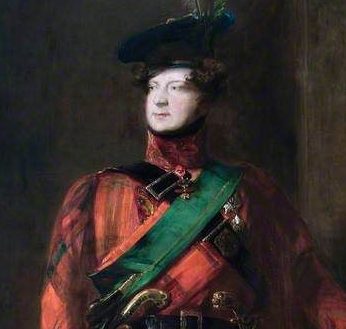
George Augustus Frederick, eldest child and heir to George III, was also a child of the Enlightenment. He was born in 1762, at a time when his tutors would have been well-versed in the philosophical discourses of the Enlightenment. He would have been exposed to Locke, Hume, and Montesquieu. Voltaire and Rousseau may have been too radical.
The Enlightenment embodied a rejection of capricious rule by monarchs, who were governed by loyalty only to themselves and their families. Look at how the English viewed the succession of George of Hanover to the throne following the death of Queen Anne in 1714. This first George was not English! Nor was his son, George II. As late as 1840, the potential marriage of Victoria to Albert raised concerns about the influence of non-English cultures.
George III was British but was plagued by bouts of madness from 1765 onward. His masters were trained in the old, pre-Enlightenment ways. His early ministers were the same. Well, maybe not Pitt the Younger.
Crown Prince George became the Regent with his father’s final descent into madness in 1811. He ruled in his own right from 1820-30.

The epitome of the Enlightenment view of civil government would have been the evolving British Parliamentary system, especially after 1811. The Regent allowed his ministers to take complete charge of government affairs, playing a significantly lesser role than his father. The principle that the prime minister was the person supported by a majority in the House of Commons, regardless of whether the king personally favored them or not, became firmly established under the Prince Regent.
The Regent’s Ministers were unquestionably giants…Liverpool and Canning. The great Castlereagh managed foreign policy. Even Wellington played a role in successive governments. Each of these leaders was given his head to establish policy. All we have to do is look at how Britain prosecuted the war against Napoleon after 1811 in an almost monomaniacal manner, to the point where the government was willing to open a new war with the United States in 1812.
Janites tend to view the Regent as primarily influential in the style and fashion of the time. From Beau Brummel and John Nash to the goings-on of the Carlton House set, George was larger than life. However, those factors, despite how Austen immortalized the Regency in the arts, were really not lasting legacies.
Rather, in his willingness to allow Parliamentary government to flourish even in time of existential crisis, the Regent brought about the modern British state by setting the stage for the political and economic reforms necessary to cope with the influence of the Industrial Revolution. All we have to do is consider why Britain did not experience a Revolution after 1815 to see the greatness of the Prince Regent and King George IV.
&&&&
Edits are coming along in my latest novel, Ghost Flight: A World War II Pride and Prejudice Variation. As a historian, I have pondered the social politics of the past and how they shape the foundation upon which my stories (and their historical contexts) stand. Here is a sample from the book that makes understandable why the need for D-Day in 1944 grew from French society in the interwar years.
This excerpt from Ghost Flight: A World War II Pride and Prejudice Variation is ©2025 by Donald P. Jacobson. Reproduction is Prohibited. Published in the United States of America.
&&&&
Chapter Twenty-two
Margarethe LaMotte had been in the business for thirty-five of her forty-seven years. Girls in the Nineteenth Arrondissement grew up early and had to fend for themselves. Boys could work in the factories or for the city. Girls were another mouth to feed. At least in Margarethe’s case, she was a comely wench. As her body changed, her father, tired of wasting hard-earned sous on her meals and wearying of nocturnal visits to her pallet, sold her to the neighborhood bar owner who had a few girls working out upstairs.
Perhaps the sodden fool thought he would get a discount for his daughter’s services. Margarethe did not stay cooped up at the bordel long enough to find out. She grabbed the few francs she had hidden away, enticed a ticket agent, and took the first train she could get from le Gare de l’Ouest. Her ticket got her as far as Deauville. Her girlish looks and mature figure, enhanced by pigtails, earned her a place of pride in one of Deauville’s premier houses. She catered to a clientele from both sides of the Channel, vacationing men who liked schoolgirls, especially those who submitted with wide-eyed innocence and a pouty lisp.
As she aged, Margarethe honed her craft and saved her money while working in coastal towns from Le Havre to Cherbourg. Tired of earning her money on her back, Margarethe LaMotte purchased her ‘retirement’ villa overlooking le Pont de la Motte along the Falaise Road above Lisieux in Saint-Desir. She set up shop in 1939. She chose the heavily visited inland town rather than her old favorite, Deauville, because she could smell the coffee, as one of her favorites from the Great War, an American flying in the Lafayette Escadrille once said.[i]
Margarethe saw war clouds gathering and had listened to her customers over the years after 1918. The Third Republic was incapable of governing effectively, having fallen prey to corruption that steered everything toward the wealthy, leaving little but dissatisfaction for the working classes. The country’s elites embraced fascist tendencies and admired Franco, Mussolini, and Hitler while expressing horror at Blum’s Front Populaire’s efforts to relieve suffering and reopen the factories. The eternal French problem found voice in violent revolutions in 1789, 1830, 1848, and 1871. The collapse in 1940, though, was a different sort of revolution, one that broke the nation’s pride; pretensions of la gloire were unsustainable, defying the Pétainists’ assertions.
In the end, Margarethe had mused, was it any wonder that French soldiers quickly advanced to the rear in June 1940, refusing to sacrifice themselves on the altar of French delusions?
Britons, with whom Margarethe had more than a passing acquaintance, had a different experience with revolution. The closest to jacquerie the country came after its Civil War in the 1640s was after the old order’s ham-handed efforts to suppress demands for expanding the right to vote in 819. Peterloo revealed the decay of the ton and its decrepit hold on the nation’s economy in the face of change.
Once British Liberal factory owners had broken Tory landowner backs with the Reform Acts, power shifted from farm and field to hearth and hammer. The new English ruling classes, previously decried as bearing the stench of trade, understood the Industrial Revolution’s potential. They also comprehended that blast furnaces and looms needed men to operate them.
There came a point where the industrial titans realized they could only live in one country house, townhouse, or beach house at a time. They could ride in a coach-and-four or a Rolls Royce Phantom—but not simultaneously. While men still measured their success by the size of their empires, many abandoned the old robber baron mentality for Mr. Carnegie’s Gospel of Wealth. If the world’s greatest steel maker could wax philosophic about the responsibilities wealth brings, then perhaps they, too, could use their wealth to help Britain navigate complicated social waters without resorting to repression and autocracy.
The British sentiment evolved to the notion that being wealthy did not require workers to be impoverished. Profit came from selling more, and who better to buy the goods than the men and women bending their backs in their factories? While not embracing Mr. Marx—heaven forbid that a daughter loved the chauffeur—the upper classes did find something to admire in Mr. Owens’s somewhat utopian approach.
The French elites never learned that lesson, preferring to imagine themselves as lords with undisputed power. They forgot the lessons of the Terror. The next layer below, jealous of their betters’ privileges, gravitated toward those who would allow them to get—or steal—what they wanted. They were willing to make a deal with the Devil, preferring to live for today and never thinking the bill would come due.
With the Occupation, Deauville had become a place Madame LaMotte avoided. The Casino and Racetrack still had their seasons. Margarethe went once to each and left early, her stomach turned by the sycophancy of Fascist hangers-on, bowing and scraping before their conquerors. The oily collaborators, men and their fancy women society avoided even after Laval’s ascent in 1937, now brought their pedestrian sense of style—gold-plated toilet bowls and gold brocade drapes, indeed—to the old resort town.
…
[i] Madame Margarethe LaMotte is modeled after Germaine Guérin, owner of one of Lyon’s most successful brothels. She worked with Virginia Hall (Diane) to collect intelligence from her German and Vichy customers and provide a safehouse for agents entering or leaving France. See A Woman of No Importance, Ch 3.


Leave a Reply