
I have a problem.
I possess what might be called a “flypaper mind.” Stuff goes in and then gets stuck. My memory is in no way eidetic, but rather is loosely associative…meaning I tend to cascade information in an inverse pyramid. You hit me with a general topic—or even something specific—and then I will barf out all sorts of things. There is a lot of information inside, not much of which is correlated with anything else—except when I write.
Then it gets a little weird.
For instance…in The Maid and the Footman, I decided to create a “proposal without words” where Henry Wilson wishes to ask for Annie Reynolds’ hand. She is seated at the pianoforte in Burleigh House’s Blue Parlor, having been sent there by Miss Kitty Bennet to set her up for the proposal. While Miss Reynolds awaited what she knew not, she began to play the instrument. Henry slips in.
“Annie softly exhaled as she ended the melody. Not shifting in her seat, she reached up with her unadorned left hand and gently clasped his right where it rested on her collarbone. Her eyes remained closed so as not to break the trance.
Henry dropped to his knees and carefully—so carefully—grasped hers where they were under the pianoforte. He turned her body on the bench to face him.
Her face, rosy in the room’s firelight, was turned down to his. Her eyes slowly opened as she beheld her world. The golden brown pools glistened with hope and joy.
He gripped her hands in his, holding them prayerfully. Here was his Westminster. His love echoed through the spires, rising like the great buttresses holding the walls of the mighty cathedral to join with the bells tolling a full peal . His Annie…his love…his life.” (1)
And there, in the last paragraph, is one of those “things.” Somehow, I recalled that a royal marriage, coronation, or other great national event would be celebrated with a “full peal” of the bells at Westminster Abbey. However, the historian in me took over because I could not. I was constitutionally unable to drop such an interesting tidbit in the middle of Annie and Henry’s story.
So, I checked it out. And, at the bottom of this post (after the excerpt), you will find the reference. The fine folks at the Abbey itself advise that a full peal is over 5,000 changes and takes nearly three hours to complete.
Gentlemen in the audience: I do not know about you, but when my wife of 48 years said, “My Mom thinks we ought to get married. What do you think?” I nearly shouted back, “That’s what I have been saying for five years!” Think all the bells at Holy Name Cathedral, St. James and Fourth Presbyterian (all Chicago) letting loose all at once? You bet!
As a historian, I have been trained to always—always—cite your sources. Doing so adds heft to the evidence you assemble but also illustrates that you are being rigorous and not making it up as you go. I could no more stop footnoting than I could cease breathing.
That has put me lightly crosswise with a few readers who do offer the valid criticism that excessive endnotes tend to detract from their reading experience. Endnotes (which I use in literature rather than the more common footnote found in academic writing) do not disturb the pagination and layout of either print or e-books. A reader can move past the notation if they desire or, in print, flip to the back of the book, representing a true departure from the narrative. In the e-book, an interested reader simply highlights the note in text to get a full reference.
Many folks tend to think notes are truly boring.
However, I see several uses for notes: they answer the questions “Why/What.” They also offer backstory and context or respond to the author’s desire to interact with the reader outside the story.
Why/What Notes
In The Keeper: Mary Bennet’s Extraordinary Journey, Mr. Bennet receives a note from someone. The note is in an envelope that is sealed. But, wait a moment. Thomas Bennet is sitting in his bookroom in January 1812. Were envelopes even around? Time to look it up.

I learned that:
“The machine to apply adhesive to the seams and flap of machine-made envelopes was not fully developed until the 1880s.”
Not common knowledge to anyone. If I had let it flow by, I would justifiably have been pilloried by astute readers. Having an envelope in 1812 was just as much a sin as having (I kid you not) Darcy receive a telegram from an investigator looking for Wickham.
In the aforementioned missive opened by Mr. Bennet, I have the writer using the word “closure.” This was intentional on my part as 1) the writer had undergone years of psychoanalysis and 2) she was writing with a vocabulary of a person living in 1932 (see The Keeper and The Exile: Kitty Bennet and the Belle Époque). As I have a word maven as one of my beta readers (yes, Carole…no teenagers, only adolescents!), I knew I had to explain that I knew what I was doing.
In the modern sense… The sense of “tendency to create ordered and satisfying wholes” is from 1924, from Gestalt psychology. http://www.etymonline.com/index.php?term=closure
Context Notes
Sometimes, an explanation is necessary to establish a very clear context for a set of actions undertaken by a character.
In The Exile: Kitty Bennet and the Belle Époque, I was curious how much Kitty’s fortune would grow in 75 years. Why? First, I wanted to know how wealthy she would have been (an interesting conundrum for a young lady who had been raised in the knowledge that her family was one fall from horseback away from poverty). But her wealth was a vital plot motivator for the villain in the story: Lord Junius Winters.
I felt that I needed to justify the figure at which I arrived (somewhat north of £200,00) for her holdings when she arrived in 1886. I did not want an error detracting from the overwhelming impact of that figure.
Kitty’s £10,000 dowry from Darcy and Bingley and her £1,000 share of her mother’s dowry, calculated at 4% compound interest (annual), would be £208,398 in 1886 after 75 years of investment. Her annual income off of that principal at 4% is about £8,300. That £8,300 would be the 2016 equivalent of £980,000 per year. See http://www.in2013dollars.com/1886-GBP-in-2016
Think Winters’s efforts to get his hands on Kitty’s trust fund were worth it? For my American readers, that £980,000 is about $1.5 to $2 MILLION! A Year!
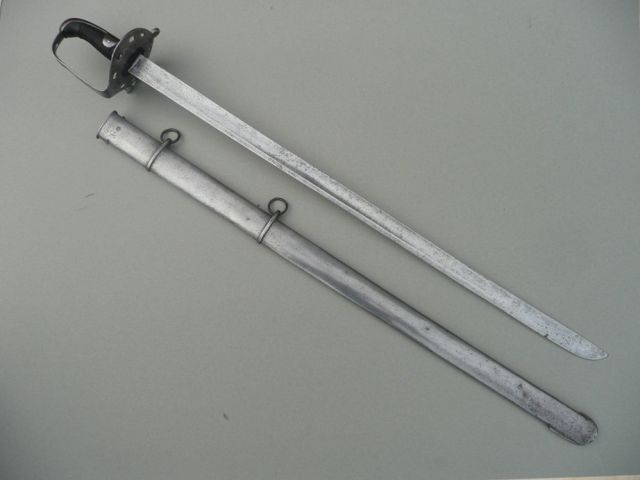
However, my favorite Context note is how Colonel Fitzwilliam’s sword is referenced. Austenesque writers have often credited the good Colonel with offering that he “should have run that (pick your epithet) through with my sword.” I immediately wanted to ask…and what was that sword? Describe it.
There is a psychological reason behind that, I think. I will answer with a question: “While a steak knife is as deadly as a sword, which freaks you out more?” The sword, of course, is the most common response. Why? Because it is a brutal weapon, hacking, amputating, capable of splitting you from (as Sir Thomas Malory wrote) “from guzzle to gatch,” and inflicting such heinous damage that you would run from the field.
Would General Sir Richard Fitzwilliam have fought with a gentleman’s rapier? I think not and put those thoughts into the mouth of Mary Bennet in The Keeper as she dressed down three militia officers who had the temerity to harass her, Maria Lucas, and Georgiana Darcy on the streets of Meryton. She was telling them that Fitzwilliam was protecting all those who lived in Meryton, but particularly the Bennets and Darcys.
“I have seen his working sword. It is not shiny and bright like that little toad-sticker you wear. His is a man’s weapon, heavy to cut through bone and gristle, hued like pewter and with a blade longer than your arm. It is nicked and scarred and so worn from constant sharpening that it is more rapier than saber.”

But, what sword would the General carry? His daily weapon with which, as Mary put it, “dispatched more of Napoleon’s horde to Hades than you can imagine,” was likely the Pattern 1796 Heavy Cavalry Sword. See the note:
“The trooper’s sword, and the officer’s undress sword, was a dedicated cutting weapon with a broad heavy blade and was renowned as being completely unfit for delicate swordsmanship.” https://en.wikipedia.org/wiki/1796_Heavy_Cavalry_Sword
Dialogue Notes
In The Exile, a character in 1886 comments that new legal protections protected young Kitty Bennet, unlike Miss Darcy in 1810, from fortune hunters. The danger to Georgie was the practice known as coverture. That word was never used in the body of the book. More needed to be said, and I took that opportunity in the note.
Coverture was a practice based upon the legal fiction that upon marriage a man and a woman became one in the eyes of the law. Thus all of a woman’s property became her husband’s to do with as he pleased. Hence Wickham’s search for an heiress—or for that matter Colonel Fitzwilliam’s. Darcy and Bingley’s ability to “marry for love” was, sadly, based upon their income. The woman could only regain direct use of and title to her remaining pre-marital property if she outlived her husband. The Married Woman’s Property Acts of 1870, 82, 84 and 93 gave women rights to their property even within the confines of her marriage.
I did refrain from editorializing here…in spite of my distaste at coverture.
Of course, one can have fun in the notes. Consider the name of Maggie Smalls’s abuser in The Exile—Charlie Watts. My note:
Sorry Stones’ fans…I needed a “w.”
Then there is my fascination with not necessarily useful information as when referring to Lord Henry Fitzwilliam’s 1907Rolls-Royce Silver Ghost. My wife’s great uncle was Art Souter, so I loved the idea of getting him into my book.

Rolls Royce manufactured the chassis and drive train components. Those who purchased an automobile from R-R would then order a body from a coach-maker. An excellent reference on classic Rolls-Royce motorcars is Arthur Souter, The American Rolls-Royce, Mowbray Co., 1976
Finally, when Mary awakens on December 12, 1811, her first day as Miss Bennet, she recalled the dreams she had been having and referenced Samuel Taylor Coleridge. The front end of the note is straight-forward, but I did have fun with the last sentence.
Coleridge composed “Kubla Khan: Or, a vision in a dream. A Fragment” in 1796 after dreaming that he had been composing a poem. He awoke and raced to write down all he could recall as his senses returned. Some argue that he had been under the influence of Mrs. Bennet’s favorite nerve restorative, a tincture of morphine known as laudanum.
For me, taking note of reserch both adds veracity and shows some of my fascination with tidbits that mske for more interesting reading.
I have started the editing of my latest book, Ghost Flight: A World War II Pride and Prejudice Variation.

Please enjoy this excerpt with appropriate endnotes.
&&&&
This excerpt is from a work in progress. ©2025. No reproduction, either through mechanical or digital means, is permitted without the express written consent of the holder of this copyright. Published in the United States of America.
Chapter Thirty-six
Baker Street, London, Tuesday, 9:30 A.M.
Richard Fitzwilliam shook off sleep’s muzziness as he answered the Twenty Committee’s summons. The morning train from Bedfordshire and RAF Tempsford gave him another hour or so of kip, but it had been a short night. His Lysander touched down only four hours earlier. Being in France, even for only a few days, was exhausting. Fitzwilliam wished he had seen Darcy, but after giving the new radio to Eileen, he exited from a field outside Lille. He had barely taken time to shower before he fell into a deep sleep interrupted too soon by an Aircraftman bearing a cup of tea, a bun, and the message flimsy. A cold douche and shave were all he could manage before being sped to the station.
Rockets from the XX Committee—known by a select few as Double-Cross—were reserved for only the most important news. Britain’s counterintelligence wallahs had spent years perfecting the disinformation channels they used to feed the Abwehr. These had proven so good that they knew—from German communications discerned through other means—the Germans implicitly trusted information sourced from what they believed to be several well-placed agents throughout the country. Little did Jerry Hun realize that every German spy landed in Britain had been captured and turned or dropped to the bottom of a Cornish tin mine.
Something big must be up.
After passing muster with the sentry, Fitzwilliam climbed the stairs to Room 306, one of SOE’s favorite haunts, although Double-Cross had seconded it for this meeting. He knocked and waited. The door was pulled open, and a dapper man, well-known to Fitzwilliam, set the tone for their session. “Ah, Preacher: so good of you to come running when you heard twenty bells.”
All right, then, no names: just an SOE operative and a friend from Naval Intelligence. “Yaas,” Fitzwilliam drawled, “I usually require more beauty sleep than four hours.
“How are you holding up in Room 39, Monsieur 17F?
“Listen: I will break my jaw if I keep calling you by that ridiculous alphanumeric nonsense you in the Andrew insist on using. No sense of style whatsoever: at least we in SOE select our work names with some panache.”
The man in the dark blue suit smiled. “You mean like Jeeves?
“These walls are about two feet thick. The Edwardians built to last. I wager Jerry could drop 250 kilos right down the chimney, and the boiler would probably belch kraut fumes. Nobody will overhear us.
“Thus, I have no objection, Richard, if we drop work names and pretend to be one of Miss Austen’s heroines and allow the use of Christian names.”
“In that case, Ian, it is very good to see you again. I hope you are holding up under that old tyrant. Not many would do what you do,” Fitzwilliam replied.
Lieutenant Commander Fleming smiled indulgently, knowing that SOE’s Buckmaster also had a legendary temper. “Oh, his highness is all right. You must remember he hates timewasters and nest-featherers.
“Speaking of that, let’s not shillyshally about.
“We have become aware that someone in the Abwehr is interested in one of yours. Our intercepts people put their ears up yesterday evening and tuned in Wilhelmshaven. They pulled in a request from Paris via Berlin and routed by the Abwehr to one of the Twenty Committee’s pets.
“They quizzed him about an Irishman named Fitzgerald, William Fitzgerald.”
Fitzwilliam’s face froze, and his eyes widened as Fleming continued. “We know that William Fitzgerald is on your books. You turned the Jermyn Street forgers to building paperwork for his legend late last year, although you did lean on a mutual friend in Dublin for a bonafide passport. If I am not mistaken, he went feet-dry through Stockholm and Copenhagen in February using the field name Jeeves.
“I am sorry I twigged you about that before. It was at the top of my mind.
“Whoever is asking knows quite a bit: like that Fitzgerald was injured by my brethren steaming the Western Approaches. He arrived in Deauville to collect on an inheritance.”
The two men were comrades, if working in different organizations. Fitzwilliam was neither coy nor cute. “That’s the cover we had arranged with one of our French agents—Adrien—a working lawyer who held the paperwork on that legacy. Fitzgerald is a distant cousin of one of our Special Duty VCs—Will Darcy.”
He looked knowingly at Fleming who dipped his head, shaking it. “And I thought the Admiral would choke when he read my Trout memo back in ’40. Some of my suggestions were audacious—although not too, given that Cholmondeley came up with the old body off the Spanish coast disinfo.”(2)
“Now you have given a posh funeral to a posthumous VC and earl with a sprinkling of royalty so you could drop a cuckoo in Fritz’s nest in the form of a distant Irish cousin. Distant, my delightful Scottish arse, you inserted that shell we both knew at Eton, Will Darcy. How original, how wonderfully novel,” he hooted.
Fitzwilliam tipped his head, accepting the praise. “Well, thank Darcy’s father for giving us a platform. He bought the bequest back in ’26, but with the death of Darcy’s mother, Uncle George never updated his solicitor and forgot to put it in his will.
“I have found that the best tales are spun around a kernel of truth, something I learned from an old playmate.
“But enough of the past. We can canvas techniques another time at the club. Let me bring you up to speed.”
Fitzwilliam offered an edited version of his trip to France—no need to spend time on Agent Rose and her radio. He explained that the relationship between Jeeves and Madeline had been escalated into a romance to allow them to meet without causing speculation beyond that of the titillating sort. With the invasion looming, Buckmaster felt it best to clear them from the destruction zone. Wedding bells thus had rung for Mademoiselle Lopinat and Monsieur Fitzgerald. Now, with Irish passports and Berlin-endorsed travel documents in hand, the couple will embark on a belated wedding trip to Switzerland.
The colonel concluded, “I may have been barely in time if the Abwehr is sniffing around. At least they do not know what he looks like, although that is no comfort. I gave him Madeline’s papers early Saturday with the order for them to close up shop and get to Basel.
“You know Darcy. He feels responsible for Madeline, and now that we have ‘officially’ placed her under his protection as his wife, there is nothing he will not do to ensure that young woman reaches the land of chocolate and snow.
“I hope he has managed to find a way to get to Paris. With the lifting of the prohibition against bombing French trains and rail lines, travel west of the capital will be dicey. However, most missions are concentrated within forty miles of the coast to keep Jerry’s reinforcements away from invasion sites. Get on the other side of Paris and closer to the German border, the less destruction and danger there will be.
“That’s why we did not opt for egress through Copenhagen and Sweden. Harris’s boys have been raising merry hell all around Hamburg and Bremen.
“Mulhouse is as far away as you can get from actual fighting in Europe. They can take a streetcar to the Swiss border and Basel from there.
“What now, Fleming? We have them on the move, at least I hope so. Knowing Darcy, he spent the day meeting with his French contacts and closing up La Ferme and getting all dependents out of the way of Jerry’s attentions. Shortly, Fritz will be too busy to care about them.”
Fleming dug into a pocket and pulled out a disreputable looking pipe which he scraped and refilled with tobacco. Lighting it, he filled the room with an aromatic cloud.
His eyes turned inward. After about five minutes, he carefully laid the pipe in a stained brass ashtray. “My first inclination was to ignore the Abwehr request; let them think their agent came up dry. Then the name ‘Fitzgerald’ rang a bell. So, we started the ball rolling. We must give them just the right amount of sugar to set them haring off on the correct wrong track.” He rolled the last sentence’s opposing adjectives about his mouth like an aficionado enjoying the accent notes of a rare cognac.
“We’ll have a Nazi sympathizer in Dublin—someone we planted years ago—do a bit of reader’s theater. We’ll call him O’Brien. He has been helpful to us when Berlin asks one of our doubles about Irish affairs. O’Brien has made all the right noises in his fellow travelers’ ears, seeking information about a particular Irish smuggler who recently dropped out of sight.
“When yesterday’s request came in, we waited until the correct response window for the agent—dead since 1940—before advising Berlin that the question will be put to a trustworthy Dublin contact.
“This is a medium-to-low priority item, so waiting until tomorrow’s packet to answer will not be seen as unusual. Too long might cause some whiskers to quiver. Forty-eight hours in the German bureaucratic state is natürlich.
“By the time the agent looking underneath Darcy’s skirt, it will be Thursday, giving Darcy a five-day head start.
“The game is deeper than a one-level deception confirming Fitzgerald’s legend. Our agent also sends a dispatch to his party handler in Berlin using the diplomatic pouch. However, he communicates directly with the SD through Bormann’s crowd. The Sicherheitsdienst believe him to be a dedicated Nazi.
“But this is a left-hand, right-hand situation. The Abwehr knows him only as one of their agent’s contacts in the Republic. The SD knows him as their man in Eire. There is no way either will reveal their sources to the other. Himmler’s people despise the Abwehr, and the military types return the compliment. The SD will undoubtedly confirm or offer information when it serves their purpose, but they will be thoroughly confident that it is solid gold truth.
“Neither knows he is working for their rivals, let alone us.
“The written report to the SD—which they will receive in about a week—will be nearly identical but also will advise them that the Abwehr was asking. Even if the Abwehr tries to force the issue and press for a more active investigation, the SD will stand by their man, convinced he is a fanatic delivering sterling. They’ll pooh-pooh every attempt to examine more as a waste of time and resources. They can make it stick because the security police hold more cards and have an unexpected ally in this interdepartmental squabble: the Foreign Office.
“Von Ribbentrop knows who holds the whip hand—Himmler and his minions. His signature is all over Jeeves’s and Madeline’s travel documents, so little Joachim will happily take the SD’s side if anyone in the Abwehr becomes difficult. Adolf loves to play his princes off against each other so he can make the final decision.”
Fitzwilliam was astonished at how quickly Fleming had solved the conundrum that had left his stomach sour and acid burning in the back of his throat. He was about to say so when a knock sounded at the door. The commander looked at him, and Fitzwilliam raised an eyebrow.
Fleming pushed a hidden button which buzzed the latch, and a severe-looking bespectacled young woman, hair pulled back into a bun at the nape of her neck, entered. She clutched a buff envelope to her chest like a shield, the only indicator that she believed she was entering a free-fire zone.
Smiling, Fleming introduced her. “This is Miss Pettigrew, Kathleen Pettigrew. She is ‘C’s’ personal assistant, which explains why she, amongst all in the intelligence establishment, has the chutzpah—as our Hebrew friends would say—to knock on Room 306’s door when the red light is lit! (3)
“Her presence in Room 306, since ‘C’ is SOE’s master, tells me Miss Pettigrew is here for you.”
The lady replied in a rich alto filled with smoky heather and heath’s grace notes. “Ever the flirt, Monsieur 17F, such talent I am sure you have employed to charm the knickers off WRENs and WAAFs.
“However, begone Satan! The Kirk has your number, and, I am sure, so does ‘C.’ I am immune to your blandishments, and I only agreed to enter your lair because I have business with Preacher.”
“I can see that our naval friend has been thinking. He is usually one to smoke cigarettes, but when he wants to weigh beans and bacon, he resorts to the foul weapon of choice is a pipe.” She theatrically fanned the envelope to disperse the cloud hovering over the desk.
Pettigrew turned on the colonel. She did not wag a scolding finger at him. Still, her raised eyebrows above her glass’s rims left Fitzwilliam mentally standing in the nursery scuffing a toe in the carpet as Nanny dressed him down for a malfeasance against propriety and the Matlock earldom. “You have led us a merry chase, Preacher. We last had you landing at Tempsford ten hours ago. Thank you for condescending to let Colonel Buckmaster know you had returned.”
“Yet that miscreant,” she tipped her head toward Fleming, “spirited you away on the dawn train. Since then, we have been checking under every hedge between Bedfordshire and London for your ravaged corpse, dumped there by fifth columnists.”
She shook herself to purge the image. “However, travel warrants, especially those that turn milk runs into expresses, are pretty things. They jump to the top of the pile, blinking and blushing. Orders dispatching Royal Navy staff cars with WREN drivers are only slightly less eye-catching, especially to, ahem, trained intelligence officers.
“Once ‘C’ interrupted my breakfast in the canteen at Seven o’clock and put me on the case, I quickly salted your tail despite the Navy’s best efforts to obscure what they had done.”
Pettigrew held out the missive to Fitzwilliam. “Sign the chit to show you received it. The other gentleman is cleared for the information.”
Fitzwilliam cadged Fleming’s Waterman and initialed where he must. He handed the slip to Pettigrew and thanked her as she turned away and left the room.
He removed a single sheet after breaking the wax seals securing the flap. Running his eyes over the message, he whistled. “This is absolutely a ‘good news, bad news’ situation. Which do you want first?”
Fleming shrugged. “Hit me with the good, old man. That way I’ll have something to hold onto when the torpedo breaches the magazine.”
Richard enjoyed Ian’s affection for naval allusions. “This is a decode from Madeline from Saturday, her first transmission time, around half-eleven or five bells in the first watch for you in the Wavy Navy.(4)
“The good news is that Madeline identifies this as her final transmission. I assume that means she and Darcy were preparing to leave Sunday, the 28th. The Abwehr sent its inquiry on Monday. That’s twenty-four hours right there for our people.”
Fitzwilliam fell silent. Upon Fleming’s prompt, he continued. “The bad news could be awful, although Darcy and Madeline’s lead might mitigate it. Stones that might have hidden something now will be dry holes.
“We know the Abwehr agent assigned to the case. You know him because he escaped your net six months ago. But Darcy and I know him intimately, as he knows us.
“An eyepatch is not much of a disguise, especially to someone with whom you grew up. If he and Darcy collide, the game will be up.
“It’s Wickham, Fleming, George Wickham. That bastard has a penchant for turning up in the most inconvenient places with the worst timing.
“He could be why a Gestapo bullet makes Darcy’s posthumous VC and earldom real.”
&&&&
- Significant events and anniversaries whether royal, national or Abbey related are marked by the ringing of a full peal [at Westminster Abbey]. This comprises a minimum of 5000 different changes (or sequences) and is performed without a break. A peal takes over three hours to complete… from http://www.westminster-abbey.org/our-history/abbey-bells accessed on 11/12/16.
- See Operation Mincemeat, classified for decades, which used a corpse carrying “war plans” to divert the Germans from the Sicily Invasion in 1943. Fleming had suggested something of that nature in a memorandum to Rear Admiral John Godfrey, the Director of Naval Intelligence.
- Kathleen Pettigrew was Sir Stewart Menzies’s (MI-6’s ‘C’) personal assistant and seen as a primary inspiration for Miss Moneypenny in the James Bond novels beginning with Casino Royale (1953).
- The Royal Navy Volunteer Reserve (RNVR) was referred to as the “Wavy Navy” because its rank rings were wavy rather than straight, as in the regulars. Fleming ended the war as Lieutenant Commander Ian Fleming (RNVR).


Leave a Reply to Don JacobsonCancel reply