
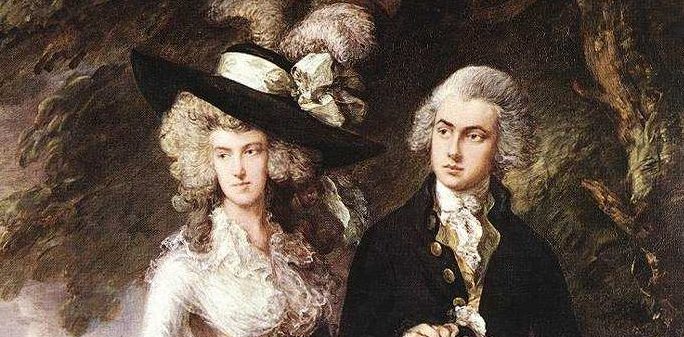
Happy Valentine’s Day. This column has nothing to do with the celebration but does dip into the idea of love.
The Unbearable Weight of Massive Talent is an interesting character study headlined by Nicolas Cage. This has nothing to do with me. I am arrogant enough to realize that my stories rise from a competence that may lean toward talent, but I am also humble enough to understand that I, at best, am a teller of workmanlike tales. No, I mention the movie because of a snippet found in a trailer. One character asks Cage about his favorite movie role, and he replies that it is impossible to answer.
I agree with Cage. I would have a difficult time if you demanded I pick which of my fifteen books stands above the rest. Each was written with a specific intent and offers deep personal insights into my characters that find roots in my personality. I speak of love and loss. You can decide which I have experienced, and which are created from the whole cloth.
That noted, perhaps the sixth volume of the Bennet Wardrobe Series—The Avenger: Thomas Bennet and a Father’s Lament —resonates the loudest. We can surmise that Mr. Bennet was in his early fifties and Mrs. Bennet in her early forties in Pride and Prejudice. I was about a decade older than him when I wrote Avenger; however, I was not so far removed that I could not identify with Thomas Bennet at that age. As an aside, when I wrote a seventy-one-year-old Fitzwilliam Darcy in Grail, I found much that spoke from my sixty-nine-year-old soul.

Volume Six is a bit of an espionage book wrapped in romance. Not only will love be found, but also there will be a ball at Netherfield, albeit in 1947. For those on the younger side, there is the romance that springs back to life between Eileen Nearne (Agent Rose) and the Reverend (Lt. Colonel) Richard Fitzwilliam (Agent Preacher). But the most important love to be rediscovered is fervor between the elder Bennets, which flared brightly in 1789 and slowly dimmed until 1800.
Miss Austen did not flesh out either of the elder Bennet’s characters. For her purposes, a fluttering and loud Mrs. Bennet and a reclusive and indolent Mr. Bennet served her literary purposes. To use them to advance the Bennet Wardrobe arc, I had to build plausible pasts and realistic futures for both partners in the marriage.
There is a plot reason for this beyond the fact that I believe that Elizabeth Bennet’s observations of her parents’ loveless marriage—which shaped her firm resolution to only marry for the deepest love—were those of an adolescent girl who is utterly convinced of the veracity of her conclusions. I know we meet Lizzy at twenty, but can we believe that the scales only fell from her eyes at the start of P&P? Or, is it more realistic to look backward into her teens for her to be shaped by her observations?
Austen also never really explored why Mr. Bennet was attracted to Mrs. Bennet in the first place. We know he was a bookish man, so we are free to conclude that he was highly educated. Are we also to believe that he was so socially inept—as is the trope of what might be termed the problem of all geeks—that an opportunistic solicitor’s daughter turned his head? No, there had to be something more: her manner, eyes, and joie de vivre.
Using an author’s authoritative voice, I decided to let my readers know that I believe that Mr. Bennet—and Mrs. Bennet—married for love and not infatuation.
While it would have been logical to have Fanny Gardiner seeking to improve her station by snagging a landowner, that would have put her in the class of Caroline Bingley. Mrs. Bennet, while annoying, never appeared consciously venal.
Would Edward Gardiner’s sister, the daughter of a sober legal man who left his son with the idea that marrying for love was the right path, have sought less than love in her life? The elder Gardiner likely received his legal education the cathedral city of St. Albans, no rural backwater. The young woman could have focused her physical charms on a son of one of her father’s professional colleagues without being seen as a social climber. Indeed, her mother would have urged her husband to place her daughters in front of suitable men Those individuals could have been a London barrister or solicitor, either of whom would have been well-off and steps up from young Miss Gardiner’s rusticated roots.
Thomas Bennet would have been a reach for young Fanny even if his mother, who likely would have objected to such a match even though she was a country rector’s daughter herself, had not died in the fever of ’77. (Mrs. Elizabeth Bennet lived and died in the Wardrobe’s Universe.) Many Austenesque writers have had Fanny entrapping Thomas through a staged compromise. These stories tend to cast Mrs. Bennet in an avaricious light. I have never been satisfied with such a characterization because I wonder why Jane and Lizzy, the daughters most exposed to her nature, are shown to be paragons of gentle womanhood in these same works. While their Aunt Gardiner in London is frequently cast as their savior in department, I felt that to be a pat solution leaving me to wonder how a fourteen-year-old Jane did not unlearn much in nine months at home.
However, my Bennets live in the Wardrobe’s universe.
And so, using an author’s conceit, I have concluded that Frances Gardiner married for love. I determined that the young lady with the sky blue, near purple eyes, was entranced by the wry man with the hazel orbs.

Early on in The Avenger, I took the Canonical parents and turned them into humans with foibles rather than being served up as caricatures. I spent some pages to create a backstory of their lives after 1800. Mrs. Bennet’s story is found in the latter pages of Volume Three—The Exile: Kitty Bennet and the Belle Époque. Mr. Bennet changed his behavior by withdrawing into his bookroom as his wife became progressively more depressed after the awful summer of the Year Zero. Then he responded to the instructions (take Lizzy in hand to obscure her memories of the future) he received in the “reverse” Founder’s Letter delivered to him in Volume Four, Lizzy Bennet Meets the Countess.
To rebuild Mr. Bennet’s respect for Fanny, I sought to portray the lady as a clever and practical observer of the world around her. Her fears of society’s treatment of her unmarried daughters after Mr. Bennet’s oft-anticipated death had by 1814 calmed with the three 1811 weddings as well as Mary’s betrothal to Mr. Benton. Now, only Kitty remains to be settled. And that, of course, is the underlying plot mover: Mrs. Bennet’s desire to see her daughter conflicting with Mr. Bennet’s knowledge that Kitty lives well over a century in the future. Except…
In order for Bennet to give Kitty, Jacques, and Schiller justice, in the tale, he must have a confederate who knows him beyond words. This individual also must be utterly committed to the task. While Lord Thomas, Earl of Matlock, has every motivation to avenge his mother, Lady Kate, he only met Mr. Bennet in July of 1947. While the two men are of an age, Lord Matlock does not appreciate the vagaries of Bennet’s weltanschauung. Likewise, he is in awe of his grandfather. Even though “young” Thomas is the Twelfth Earl of Matlock, the Managing Director of the Trust, and “M,” he will never be more than a lieutenant to The Founder.
Who better to serve as co-consul than someone who shares the same Regency discursive context—in addition to the deeper reaches of a spousal relationship? And, to do that, Tom Bennet needs to regain his respect for his wife as well as win back her heart.
This he accomplishes, I believe, in the early chapters The Avenger: Thomas Bennet and A Father’s Lament.
Please enjoy this excerpt of another dear couple rediscovering their love. Happy Valentine’s Day!
Dear friends: If you subscribe (it is free) to my newsletter, Austenesque Thoughts at Austenesque.substack.com , I will send you an Audible code (US or UK only) for the sixth volume of the Bennet Wardrobe Series: The Avenger: Thomas Bennet and a Father’s Lament. I will reach out via email when I receive notice of your subscription. Note that Avenger is the sixth volume in a series, so if you would prefer the Audible for Volume One, please advise.

&&&&&
This excerpt from “The Avenger: Thomas Bennet and a Father’s Lament” is ©2018 by Donald P. Jacobson. No republication or other use of this material without the expressed written consent of the creator of this work is permitted. Published in the United States of America.
&&&&
It is August 1, 1947. Mrs. Bennet has destroyed Mr. Bennet’s prevarication about her current where/when. He has decided to read her into the secrets of the Wardrobe and the situation in which they find themselves. Mr. and Mrs. Bennet have left Longbourn House to seek privacy atop Oakham Mount.
&&&&&
Chapter Thirteen
The path up Oakham Mount’s slope was not taxing as it gradually rose away from Longbourn’s fields and wound gently through the ancient deciduous woodland. The undergrowth along the rolling slopes bore testament to the benign neglect that had been the watchword for the last two decades. The economic calamities before and after the most recent war had dictated different priorities for the current master of Longbourn. That six-year cataclysm had been a great winnowing that had stolen away and never repatriated tranches of young men who might otherwise have been put to work by a competent forester clearing away the brush and juvenile trees that burdened the hump. Thus, the timberland had undertaken what it always had: exercising its arboreal privilege of entropy by reclaiming what Man had sought to turn to another purpose.
To a twentieth-century observer, the two figures toiling up the slope would have appeared to be actors stepping directly from the sound stages at Gainsborough Studios in Shepherd’s Bush. Their quaint and stifling garb—she in a long-sleeved muslin gown, gloves, and a broad-brimmed straw sunbonnet, and he decked out in pantaloons, waistcoat, and topcoat as well as his planter’s hat—were redolent of a sesquicentennial celebration honoring Jervis’s great victory. The summer heat simmered in full intensity above the leafy canopy. However, the couple was shielded from its glaring worst by shadows thrown by massive branches flying up and away from equally colossal trunks. The air beneath eased and freshened as the pair moved further away from the manor house now hidden by the thickened forest. The great arbor dwarfed the master and his mistress in all but the enormity of their contemplations.
“I always wondered how Lizzy could wear out boots and slippers at the pace she did,” gasped Fanny Bennet. “And now I know. That girl was up top of this knob at least five days out of seven! And this trail: ’tis new to me, but—and please correct me if I am mistaken—’tis also surely age-old when you consider how deeply it has been worn through that ledge up ahead.”
Bennet marveled at Mrs. Bennet’s powers of observation, for he had never considered her able to leap beyond household matters. There, her knowledge and management skills were unparalleled. Yet again, his wife offered another compelling argument against his earlier estimation of her capabilities. She was no foolish female but someone with a laywoman’s appreciation of natural philosophy and longue durée history.
Bennet had penned a monograph in which he had employed the findings from excavations of the ruins atop Oakham. His colleagues at Cambridge had been perplexed to find old strongholds or watchtowers using even older stockades as foundations. The fortifications were stacked like so many griddlecakes. Bennet had demonstrated—using recovered artifacts—that the Romans and predecessor Celts had taken advantage of the full-circle field of vision afforded from the crest, effectively pushing the history of the Meryton region back by two millennia.
Thus, Fanny had the right of it—almost as if she had read his essay. Not only had the dainty booted feet of Elizabeth Rose Bennet trod this path but also those sporting medieval English clogs and imperial Roman sandals. Perhaps the leathery bare feet of Wessex warriors were the first to ascend the chalky slopes. Oakham’s prominence above Longbourn’s rolling fields gave its owner control of the Mimram Valley’s reaches as the river coursed through the alluvial deposits between the shire and the Lea.
Bennet stopped momentarily—as much to catch his breath as to respond to his wife. “Have you been listening at the door when Lizzy and I talked about archaeology?”
At his wife’s look of reproof, he raised his hands in defense. “I was simply teasing, my dear. I was offering what turned out to be, I fear, a backhanded compliment. I am afraid, Fanny, that I must relearn proper behavior. I have been lax, and you have been the victim.
“Let me try ‘forehand’ praise.
“As you said, you have never climbed Oakham through all the years of your life. Yet, you just offered a sophisticated reading of the antiquity of the path beneath our feet.
“You may recall my journey up to Cambridge in ’03. ’Twas then, I delivered my paper Considerations on the History and Pre-History of the Mimram Valley in Roman and Celtic Hertford to the fellows at Trinity. You may have heard me mention the late Professor Gibbons. I thought to revise his assessment of the historiography of the scholars of the last century…”
He almost heard an audible click as she rolled her eyes in response to his rambling monologue. Bennet glanced expectantly at her. Those near-purple orbs peered up at him from beneath the brim of her hat, its lip fetchingly bowed beside her ears by a broad azure ribbon tied neatly beneath her chin. A small smile played across her lips, showing a hint of even teeth.
She asked coquettishly, “And the compliment?”
Bennet stammered, having lost his ability to speak when she had speared him with those sparkling beams emanating from her orbs. “Uh…I meant to say…that…you sounded just like Elizabeth. Oh, no, not that…rather that Lizzy sounded like you! No…uuuh.”
He stopped talking and loped up the hill a few paces, leaving Mrs. Bennet standing where she had halted. He arrested his flight and froze in place, his back to the lady, one fisted hand planted in the small of his back, the thumb worrying the forefinger as he sought to regain his composure. Mrs. Bennet, using the wisdom earned through a quarter century of managing her husband, awaited his assured return.
After two or three minutes, during which she closed her eyes and focused on the sounds of the birds calling to one another across the forest, he rejoined her.
At first, a solemn Bennet faced his wife. Eventually, though, the façade cracked, allowing the wry Thomas to escape. He had begun to smile before long. Finally, he spoke to her. “I thought I had become immune to your arts and allurements, so long has it been since I have appreciated you as an object of desire. Yet, when you turn those lighthouses of your soul—your incredible eyes—my way, I forget how to breathe.
“Miss Frances, for now I address you as such because you sparkle like the girl who poured my tea in her mother’s parlor facing out onto Meryton’s High Street, you are nonpareil. You are an original. You are the woman without whom I would not have become half the man I am today.
“Wait, that statement is not well put, for you may believe I am implying that I became the indolent man I am because of you.
“On the contrary, I would have only become more lackadaisical and more withdrawn in my private anguish and pain if you had not found your way Home from whatever ring of Hades where you had found yourself after that horrible day. Only the good Lord knows what would have happened to our girls if you had withered like a bloom past its prime.
“Even though you were distracted, you found the path back to becoming the mistress of my house and the truest, fiercest, and—might I suggest—only defender of our daughters.”
Thomas paused, grief coloring his hazel eyes, recalling the years he had closed his heart to the woman he had loved for nearly a dozen before. “As you so aptly noted earlier, I can convince myself of the veracity of my acts. And, upon reflection, that is what I did with you.
“’Twas easier to ascribe your uneven moods to nerves or silliness. That allowed me to ignore my responsibility to you. Did I not vow to protect you the day you changed your name to mine? However, what did I do to help you ride the waves of loss? Nothing, absolutely nothing!”
He shook himself like a sheepdog as if doing so would rearrange his turbulent feelings around his longish frame. “Frances Lorinda, you are the soul that makes my life meaningful. I had forgotten that singular fact and, instead, began to find ways to moderate and diminish my respect for you. Why? Because I had lost my own self-respect. And convincing myself that you had a second-rate mind was the worst of my transgressions!
“True, you are unschooled, like most women in England. And, unlike Madame de Staël, you never had the advantage of a parent who would see to your informal education. That you, the younger daughter of a country solicitor, bravely entered Longbourn, the estate of a Cambridge don, and meekly submitted to instruction from first Sally Hill and then our current Mrs. Hill speaks volumes about your modesty and self-effacement.
“Every step along the way, you never asked what was best for you—only your family and Longbourn. I could not be prouder of you or your list of accomplishments that, I assure you, would put any female of the ton to shame. I imagine they would succumb to fits of the vapors if they had to undertake half of what you have done since ’89!
“Now, all that remains is for me to beg your forgiveness and pray that I live long enough to earn it.”
There, amongst the softly swaying blades growing beneath Oakham’s boughs, Mrs. Bennet forgave Mr. Bennet in the tenderness of her wifely embrace.


Leave a Reply to Don JacobsonCancel reply