
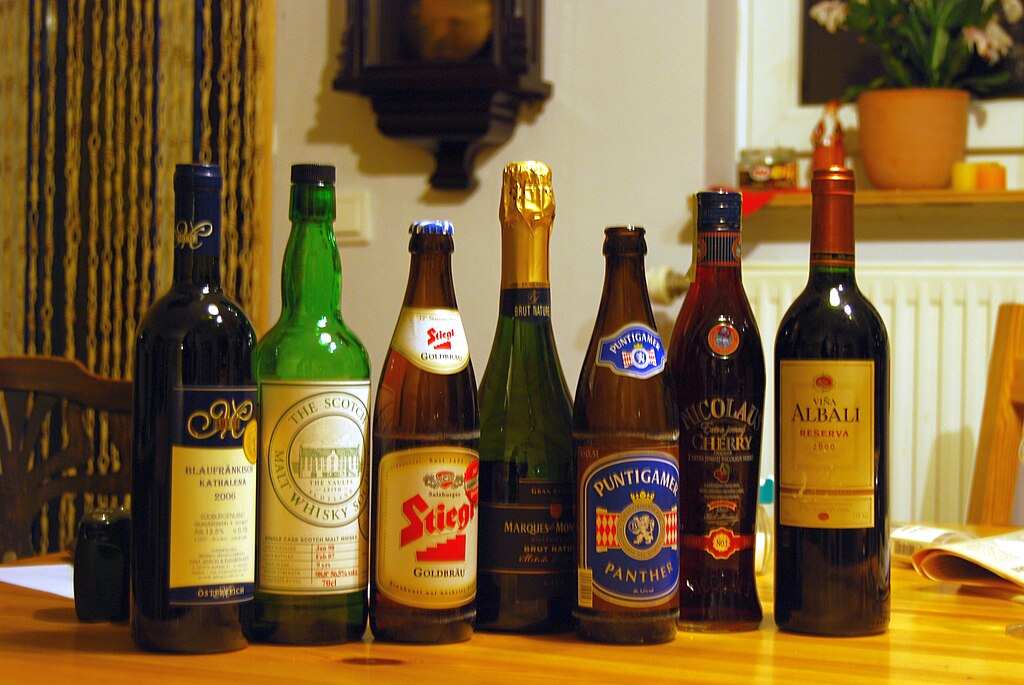
Hi everyone. Hope you all had a wonderful holiday season. We are now being bombarded with storm front after storm front over the next couple of weeks, so it is a real joyous time. To all of you in the path of all the winter storms, stay safe, stock up on provisions, and keep LOTS of reading material at hand.
This time, as we look into the inner dysfunction of my brain, I want to talk about a bit of history with something we see at many celebrations during the holiday season…alcoholic beverages. It is interesting to learn more about the subject, though I have been sober now for 40 years (stopped drinking when I was 20), so I am only learning for writing purposes.
Alcoholic beverages have been around since the dawn of man, and used for many reasons, from cultural, medical, and religious purposes. It is also notable at the types of alcoholic beverages that depict the rungs of society.

The earliest verifiable brewery has been dated back to 13,000 BC, found in what is now Israel. Residue of 13,000 year old beer was found in a burial site in a cave, leading to the assumption that it may have been used in funeral rites or feasts for the dead. It is amazing that they can date some of these things so far back. Other areas of Asia and the Middle East have had jugs with residue that dates back to 7,000 to 6,600 BC. At this time, beer or ale and wine were beginning to be made in more areas of the Middle East.
We find mention of alcohol use Sumerian and Egyptian text around 2,100 BC. It was suggested to be given to those who were dying or depressed, to aid in relieving their misery. Even the Hebrew bible made such a recommendation, in Proverbs 31: 6-7.
Europe was a delayed from Asia and Middle East, and they turned more to alcoholic cider and wine. Greeks and Romans had some sort of alcoholic beverage in their daily diet, though it was usually watered down, especially for those who were of lower class in society. During the Middle Ages, beer in varying strengths was common drink for all stages and ages. Cider and wine were more common for the wealthy.

When Europeans arrived in the Americas, there were only a few native Americans who had developed alcoholic beverages.
China abandoned beer during the Han dynasty, turning to huangjiu which is brewed by mixing boiled grains, including rice.
Almost all the nations and people who had brewed some sort of alcoholic beverage had health reasons and ceremonial celebration for which they used the beverage. Some think that a small glass of wine a day could be good for your heart. It can be used in cooking, to sterilize if there is nothing else available, and more. Religious services include wine in memorial ceremony, offering sacrifices to gods or their ancestors, pledging resolution before going into battle, celebrating victory, official executions, for taking an oath of allegiance, while attending the ceremonies of birth, marriage, reunions, departures, death, and festival banquets. Now let us look at the history in the UK. The production of spirits in the UK and Europe had a great influence on the making of spirits in the US.
The oldest recorded sparkling wine is Blanquette de Limoux, in 1531, though English scientist and physician Christopher Merret documented the addition of sugar to a finished wine to create a second fermentation six years before Dom Perignon joined the Abbey of Hautvillers, almost 40 years before it was claimed that he invented Champagne. We have all heard of Dom Perignon and champagne, it is surprising to see that is has been around for so many centuries.
Whiskey was the original grain spirit though the specific origins are unknown but the distillation of whisky has been performed in Ireland and Scotland for centuries. The first confirmed written record of whisky was from 1405 in Ireland, the production of whisky from malted barley is first mentioned in Scotland in an entry from 1494, even though both countries had the ability to distilled grain alcohol before this date.
Distilled spirit was generally flavored with juniper berries. This beverage was known asjenever, which is the Dutch word for “juniper.” The French changed the name to genievre, followed by the English changing it to “geneva” and then changed to “gin.” Originally used for medicinal purposes, the use of it a social drink did not grow rapidly at first. It was in 1690, when England passed “An Act for the Encouraging of the Distillation of Brandy and Spirits from Corn” and within four years the annual production of distilled spirits, mostly gin, reached nearly one million gallons. That seems like a LOT of spirits.
Early in the 18th century the British Parliament pass legislation designed to encourage the use of grain for distilling spirits. In 1685, consumption of gin had been slightly over one-half million gallons but rose until by 1714 it increased to two million gallons. In 1727, the official declared and taxed figures of production reached five million gallons; six years later the in the area of London produced eleven million gallons of gin. The English government actively promoted gin production in effort to utilize surplus grain and to raise revenue. Encouraged by public policy, very cheap spirits flooded the market as there was little stigma attached to being drunk and when the growing urban poor in London sought relief from their difficult life. Thus developed the so-called Gin Epidemic, followed in 1736 by Parliament passing legislation to discourage consumption by prohibiting the sale of gin in quantities of less than two gallons and raising the tax on it dramatically. The peak in consumption was reached seven years later, with a population of six and one-half million people drank over 18 million gallons of gin. That was mostly consumed by the small minority of the population which were then living in London and other cities; people in the countryside largely consumed beer, ale and cider. If all those people drank just gin, it would mean approximately 4 gallons per person. Just of gin. That isn’t including all the other alcoholic beverages.
After the peak, gin consumption rapidly declined. From 18 million gallons in 1743, it dropped to just over seven million gallons in 1751 followed by less than two million by 1758, and continuing to decline. A number of factors appear to have developed to discourage consumption of gin, Including the production of higher quality beer at a lower price, the rising corn prices and taxes which changed the price advantage of gin, a temporary ban on distilling, an increase in criticism of drunkenness, a newer standard of behavior, and the increase in tea and coffee consumption. As time went on, public drunkenness continued to decline in acceptability. Gin lost its popularity, while other beverages gained in being acceptable. Wine, port, brandy, and whiskey were signs of being a higher status in society.

Now, to tell you a funny. My great grandfather had a still in his home. part was in the attic, part was in the basement, and the pipes were inside the walls running from top to bottom. If the feds couldn’t get all the still at once, they couldn’t take any of it. My grandfather and his brothers made money when they were kids, cleaning the bottles for the moonshine, and they would go with their dad to help deliver the moonshine and collect the empty bottles to be washed and reused.
If you want to learn more about different alcoholic beverages, I recommend going to this link. https://en.wikipedia.org/wiki/Alcoholic_beverage


Leave a Reply