
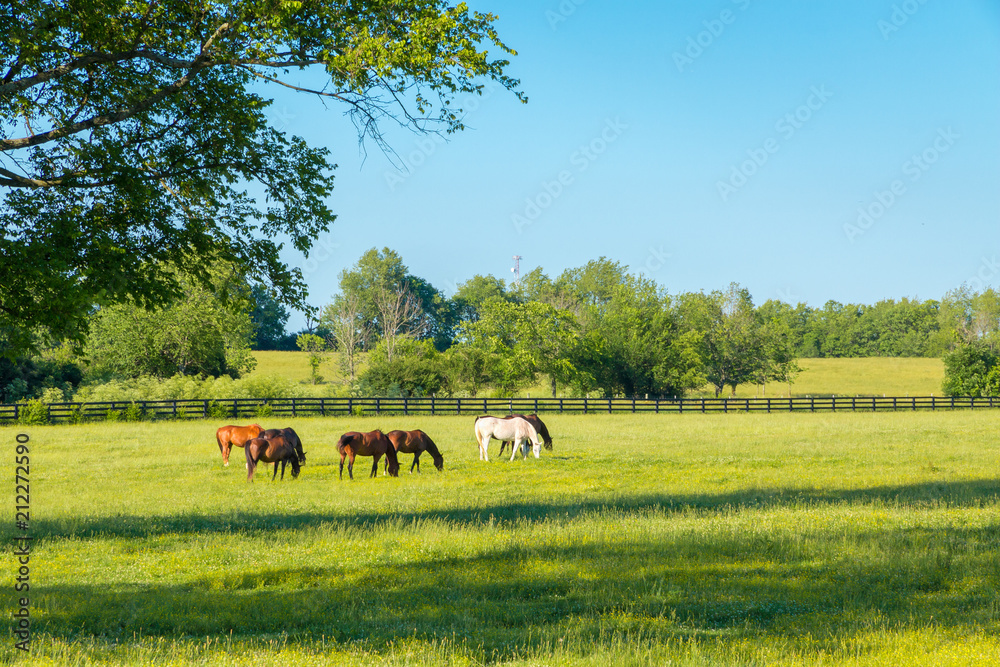
Happy October, dear readers! In North America, autumn is upon us, and most of us associate this month with harvest time. It is likewise the month the Netherfield party arrives in Meryton.
I feel like continuing one of my favourite themes: Bingley sister bashing! An aspect of the much be-hated Superior Sisters I failed to understand – in my modern viewpoint – until we joined the Amish community, was how their invitation to Jane Bennet, sans offering to send their carriage for her, exposes their tradesmen roots. Austen’s contemporary gentry readers would have immediately recognised they were presumptuous Cits (a Regency epithet for new money, city dwellers), completely ignorant of life in the country.

Though I grew up in rural mid-western America, but with no farmers in my family, I had no preparation for the dominance of planting/harvesting on a, literally, horse-powered agrarian society. The Amish are a unique group. Each church has its own set of rules – called the Ordnung – and these can vary drastically between congregations. There are as many Mennonite and Amish – who are an offshoot of the former – variants are there are Protestant denominations. Our church allowed horse drawn farm implements, most of which date from the late 19th-century (before planned obsolescence), so the multi-ploughs, dung spreaders, etc used in the community were not available in early 1800s Hertfordshire. However, even in those crops which required planting or harvesting by hand (with a machete instead of a sickle), we immediately learned that not only was every able-bodied person busy in the fields, but every horse was also at work.
In the 19th century, horses were not just an amusement of the wealthy – they were every bit the investment a tractor is for a modern farmer, or a car is for the average family. Horses were work animals: purchased to ease heavy tasks, from reliable bloodlines, and with particular temperament traits. Just like when our cars break down, and we don’t keep them, an unproductive horse is an expensive waste of resources (hay – cut, turned, and stacked by hand; oats – cut and shocked by hand; pasturage; stable space, etc).

Dedicated carriage horses – usually a draft horse cross – were part of city living, because a horse broken to harness doesn’t know if it is pulling a fancy carriage or a wagon filled with dross. They can also pull a plough; they don’t care. Riding horses provide transport for the master (or whoever is overseeing the work), pull lighter conveyances, bring food and drink to those in the field, or power a thresher (invented in the 1790s) or a mill to process grains (or sweet sorghum as a substitute for sugar). In truth, during the height of the various harvests – from late July through mid-November – every horse in the community was in use. The same is likewise true during planting and haying, excepting heavily pregnant mares or those resting. (If you put a horse to heavy use, it needs 1 rest day out of 3 to protect your investment; a resting horse would not pull a carriage.) Therefore, the only horses not in use in all of Meryton were likely those at Netherfield.

I would imagine it would require wealth significantly greater than Mr Darcy’s to afford specified carriage horses, even in the country. And forget about the racing horses: we don’t expect a Ferrari to tow a little red wagon. (And again, these racing thoroughbreds were owned by families who dwarfed Darcy’s 10,000 a year. Not to mention they are foul-tempered, flighty things – more on this later.)

Please, dear readers – judge not Longbourn for not possessing enough horses to take Jane to Netherfield, following an impromptu invitation. (Etiquette books from the late Georgian Era all stress the importance of sending invitations with several days’ notice – one reason being horse availability.) Of course, Mrs Bennet – for whom I have a degree of sympathy – fails to cover herself in glory here, too. The horse she sends poor Jane to Netherfield upon, was probably resting – meaning she’s endangering the horse’s productivity along with Jane’s health.
You may boo and hiss at Mrs Hurst and Miss Bingley to your heart’s content in your next read through of Pride & Prejudice – or your next read of JAFF works, too.
Godspeed to you!

Leave a Reply