
Good morrow, dear readers! How are you this fine September morn?
This week, we shall address what I learned of clothing during our time with the Amish and how that pertains to life in the Regency period. One of my biggest pet peeves with the 1995 Pride and Prejudice adaptation is their choice to deem Louisa Hurst an accurate witness of Lizzy’s arrival at Netherfield: “I hope you saw her petticoat, six inches deep in mud, I am absolutely certain”. That line is so memorable everyone forgets that, at the end of the previous chapter, Lizzy’s state is described: and finding herself at last within view of the house, with weary ankles, dirty stockings, and a face glowing with the warmth of exercise. (The last being the only sentiment Darcy, our other reliable narrator, seconded.)

In the Amish, our dresses were shorter than the gowns of the late Georgian era – approximately 4 inches above our toes; we likewise wore underclothes very similar to a petticoat. These were about 2” shorter than the dress and were usually a similar colour to our skirts and served the same purpose of the Regency petticoat: modesty, protection for the actual dress, warmth, and to keep the dress cleaner, longer. When gardening, tending the animals, cleaning the house, or even doing laundry, we wore our oldest, dark or stained dresses. Even when visiting a neighbour in muddy conditions (which abounds after heavy rains in the Southeast US) we wore nicer, dark dresses
So, my first issue with 1995 Lizzy is her light-coloured dress when walking 3 miles in ‘all that dirt!’ – to quote Mrs Bennet. Second, why is she jumping right in the middle of a mud slick? Particularly when – but a few paragraphs before Caroline and Louisa condemn Lizzy’s appearance – we’re told Lizzy sprang ‘over puddles’. The Amish community had walking paths through the fields and stiles to traverse boundaries, and yes, the base of them turns a lovely pudding consistency after a bad storm, but I have never not seen a place where anyone with the agility to climb said stile could not land cleanly with but a step to the side or a large step forward. Thirdly, why, in the 1995 series, is Lizzy not holding up her skirt? Even Mrs Hurst gives her credit for that: “…the gown which had been let down to hide it, not doing its office.”

One of the reasons I trust Lizzy’s account of her appearance over Louisa’s (meaning I believe she did all the above) – besides the Bingley sisters wanting to ridicule ODG after Darcy praised her ‘fine eyes in the face of a pretty woman’ – is because there is no way Lizzy and her sisters did not sew their own clothes. Mayhap not their fanciest gowns, but their undergarments, absolutely! ODG would have learned to choose dark fabrics for her walking gowns and petticoats, lest she would be continually sewing a new one – leaving her no time for walking, reading, or anything else. Nor would there have been enough servants to sew all those gowns/petticoats, either. With Longbourn’s £2,000 yearly income, the Bennet family would likely have had only about ten servants, including the kitchens, the laundry, the gardens, and the stables.
The Bennet ladies were not alone, either. Dear Georgiana would likely have spent more of her time with a needle and thread than she did at the piano-forte. Whilst Miss Darcy was likely not sewing her own chemises, nightrails, and petticoats, she and every other Lady, gentlewoman, or successful tradesman’s wife, would have been consistently sewing for the parish poor, workhouses, and foundling hospitals; in fact, pieces of such work were available for lady visitors to take up and work a hem or attach a sleeve during morning calls. In addition, as Zach Pinset – the tailor beloved by Austenites for his devotion to authentically making, and wearing, only men’s Regency era fashions – says in his demonstrations, Georgiana Darcy would also have been doing fine white-on-white fancy stitchwork on the visible portions of her petticoats, her fichus, and Mr Darcy’s cravats, cuffs, and collars. Eligible young men would look at an accomplished young lady’s work, not only to flatter her, but to judge whether she could keep him well dressed.

Winter Ball Louisville, KY, 2019
Sewing machines could not help, either; those invented before the 1830s were unwieldy, skipped stiches, and were strictly for industrial use. Reliable machines suitable for home use were not available until the latter half of the 1800s. Whilst with the Amish, we had 3 treadle sewing machines (1898, 1921, and 2004 – yes, some manufactures still make machines for treadles), and two of those machines were in use nearly every day making the clothes for my family. Even now, with my electric sewing machines, including an embroidery one, it takes me most of a week to make a gown for my Regency cosplay (as my kids call it). I cannot imagine how long it would have taken when I was doing every single stitch by hand; a single elaborately embroidered ballgown must have taken at least a fortnight to make, even with assistants.

Every single stitch includes all embroidery, every bead, and each tuck, ruffle, and other decorative designs. The fancy net overlays, which I, too, have described in my P&P variations would have been painstaking embroidered by someone sitting upon a table in a window. Think about it: there was no Simplicity or McCall’s at your favourite fabric supplier. Every dressmaker – which would have been most women – would have known how to make their own pattern, using but their measurements and mathematics. Then, to space a design correctly, a dressmaker must first cut out the pieces of the gown ere she can embroider or otherwise decorate the edge of a neckline or sleeve; larger designs along the bottom of a skirt could have been pre-worked piecemeal or by assistants, possibly.
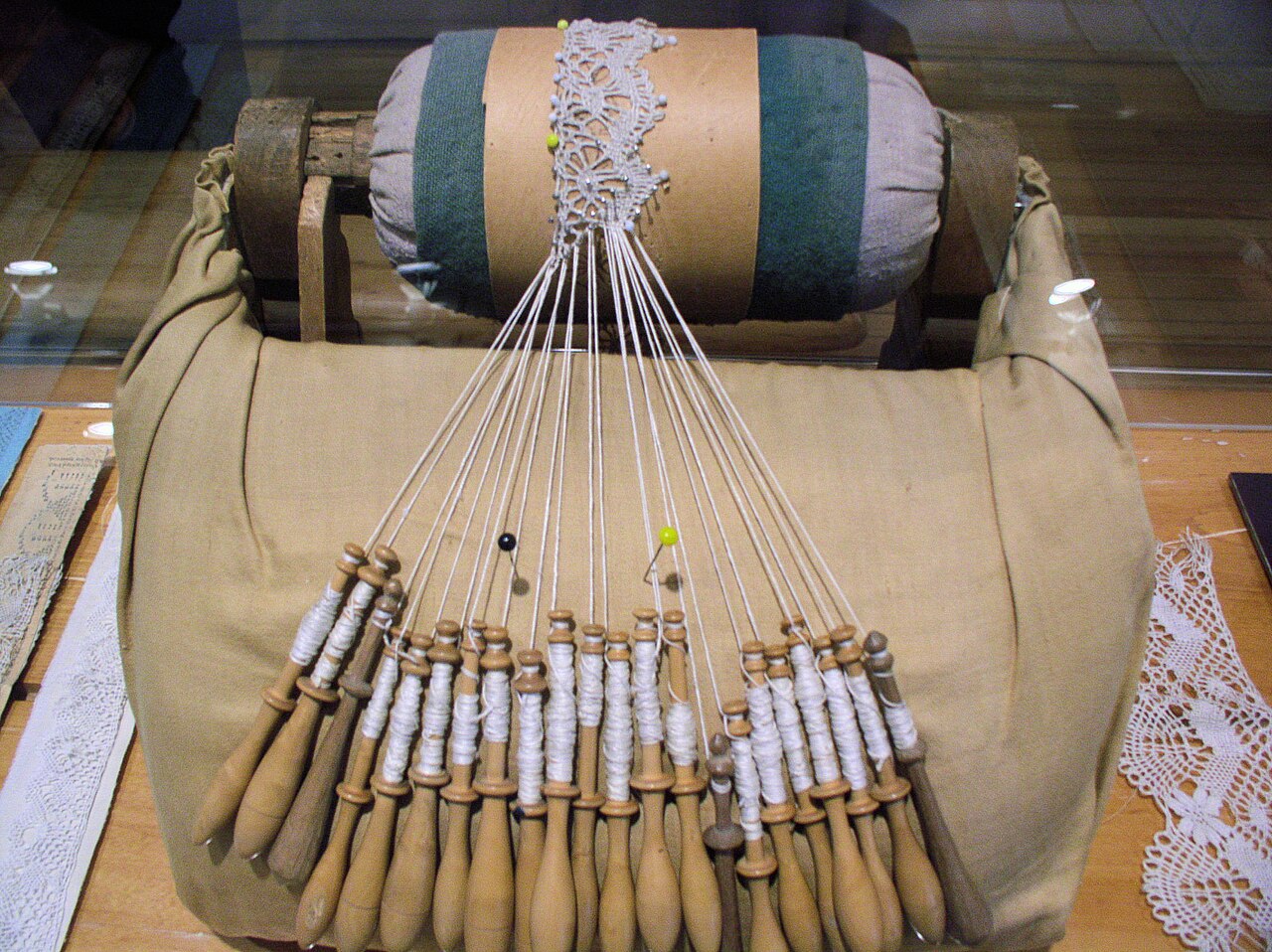
Additionally, handmade lace still reigned supreme since machine lace was in its rough infancy. Lace making was a robust cottage industry for entire households in Ireland and England – most famously Devonshire and the midlands. There are fantastic books reviving the historic lace patterns, if anyone is interested; my youngest son, my thread crafter, is daunted by the intricacies of the designs and won’t make me any. ☹


I hope you have enjoyed my stroll down Amish/Regency Parallel Lane and can better appreciate the work and effort that went into making all those gowns we love to read about. Godspeed to you, my dear readers; I wish you all a blessed weekend.


Leave a Reply