
The Journal
I began skimming the newly digitized journal of Augusta Hendee, the wife of ship captain Thomas Hendee, and I fell in love. I have now spent two days reading the whole thing in depth. At moments hilarious and at others tragic, it is at all times relatable. The first half of the digitized version includes Augusta and her husband’s handwritten pages, and the second half is a typed transcription done at a later date. You can even see the fins of a flying fish that were pressed into the inside cover.

The Hendee Family
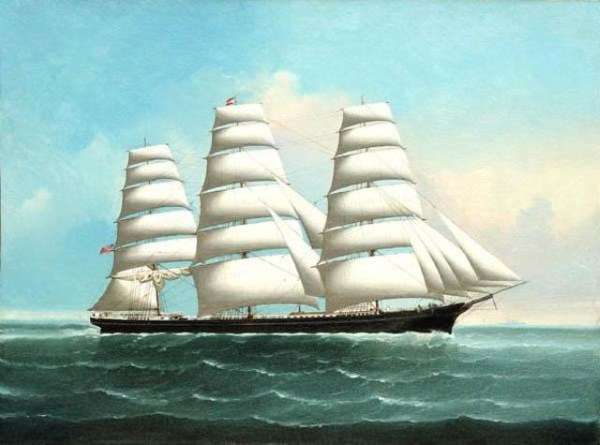
Thomas and Augusta were Americans, and they traveled to and from Bombay, starting in 1859 and reaching New York again in 1860. (This is definitely after the era of the 1810s of my story, but the Sabine was not a steamship, and in many ways, the great sailing ships had not changed greatly in the previous fifty years.)
Partly what makes this journal so interesting and tragic is getting drawn into Augusta and her young husband’s alternate viewpoints. For instance, Augusta writes about how her husband needs to drink less, and he writes about urging her to drink more to feel less sick. Augusta also writes about Nancy–the servant(?) they took with them–and how amusing and helpful she is. Then Thomas is writing, and it is all, “Why did we even bring her? She’d walk off the side of the ship if we didn’t watch out!”
And then–tragically–as they are passing within sight of the coast of Africa, Augusta writes of Nancy looking at it and calling it, “Faderland.” I was terribly startled because I was so immersed in Augusta’s and Thomas’s funny POV, I didn’t realize that Nancy might very well be a slave, or had been a slave. I had to reread some of those portions to put it in context.

Childbirth
Augusta–Gus, to her husband–is vilely sick at first, and its hard to tell if it is just sea-sickness or also pregnancy nausea. Either way, the poor girl is miserable. But she describes so many things in detail that I can just picture her lying on the sofa in the cabin or retreating beneath the mosquito curtain on the bed. The roaches absolutely appalled her, so many and so bold, but the kitten she brought was a source of fun and comfort.
Also fascinating, and less tragic, are Augusta and Thomas’s reflections on labor and delivery. Thomas–not trusting Nancy’s abilities–handles the birth himself. When Augusta gives birth to a boy, he wraps him up and Augusta starts nursing right away. But Thomas waits anxiously for Augusta to deliver the afterbirth (placenta), which he knows needs to happen. But hours go by and it doesn’t. He consults the reverend on board, who says, “You must just trust God.” Thomas is understandably annoyed, feeling that that is what he has been doing. Eventually, afraid that she’ll die if it doesn’t come out– and not to get too detailed–he removes it himself, and she has a full recovery. (I was impressed!)
Taking Care of a Baby
Thomas takes over the journal for the next month because Augusta is too exhausted. His reflections on the bright yellow poop staining everything are wonderful. They tried to wash it out, but apparently the stains wouldn’t come out with salt water. They are both convinced the baby poops at least once more every day than any other baby in the world, and they are ripping up old sheets and petticoats to make more for the first few weeks. I think maybe Augusta wasn’t okay with using the stained diaper cloths at first, but she comes around.
Poor Augusta’s breasts get sore and hard and her husband–accustomed to keeping a ship’s log!–records that she expresses half-a-teacupful from each side to much relief. The baby has a “belly band” to cover the umbilical cord, but Augusta is afraid to remove it. Thomas does, eventually, and discovers that the cord must’ve detached several days before. A sore has formed where it was pressed against the baby’s stomach, and he dresses it so it’ll heal. He even describes the baby peeing in his face while he is changing him, which almost any parent of a boy can relate to!
Although Thomas doesn’t always appear to the best advantage, he does get up eight to ten times a night with his wife at first to change the baby, while still dealing with his duties as captain. I got tired just reading his portions. He even expresses thanks that Nancy is willing to scrub diapers forever, as there have been other things she (apparently) flatly refused to do.

Post-partum
Poor Augusta definitely has some baby blues or post-partum depression, as Thomas writes of her constant crying and paranoia that the baby is sick or cold or dying. She doesn’t leave the cabin for a month, but after that, she starts writing in her journal again, and seems to be better off. She definitely picks up as the baby begins to sleep in a hammock slung over their bed, and sometimes she can even leave him sleeping in order to take her exercise on the deck. She resumes her weekly salt-water baths, and when it is warm enough, she bathes the baby as well. Her only major complaint after that is Piles (hemorrhoids), and canker sores in her mouth. Her writing is full of historical (and medical) details, but I also just really want to give this woman a hug!
I didn’t even touch on some of the other things, groups of whales, getting hosed off in her night dress, killing an albatross, sea swimming, and more!
A brief post in the New York Times on August 29, 1860 confirms that she and her husband and their ship, the Sabine, arrived safely from Bombay.
Thanks for taking a deep dive onto the Sabine with me, and happy reading!
Corrie Garrett
Coming December 15, Muslin & Mystery!


Leave a Reply