
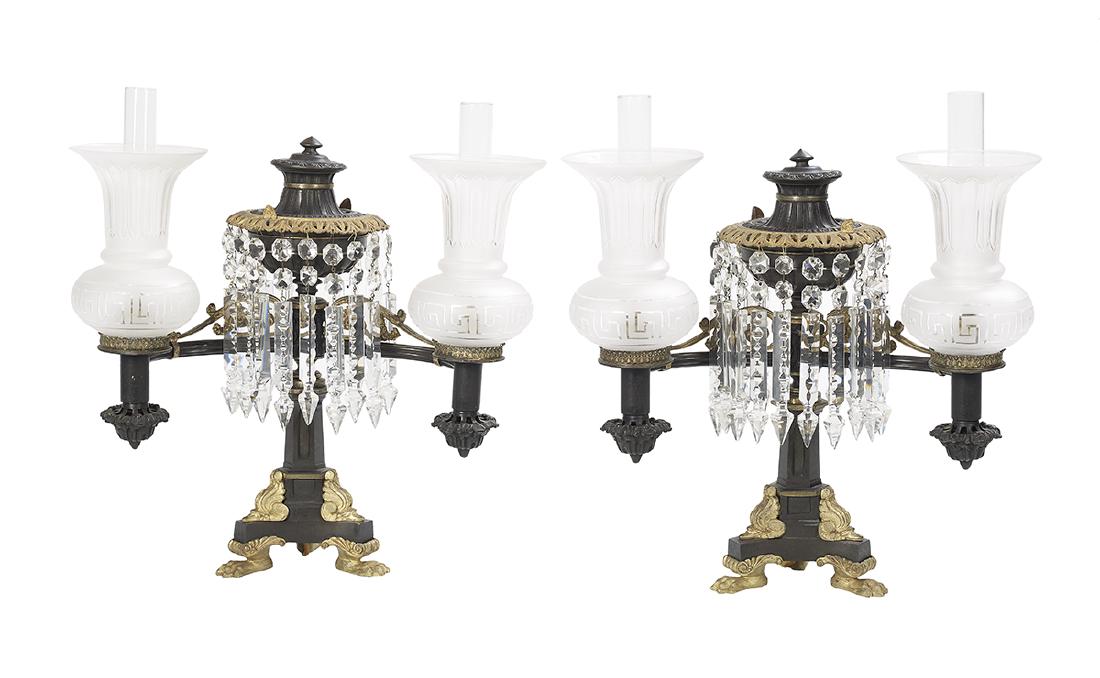
Good morrow, dear readers. Are you having a lovely July? I am trying – and mildly succeeding – to get back to writing this month.
As I mentioned last time, it was reading Louisa May Alcott’s Little Women in the light of our kerosene lamps which first opened my eyes to the parallels betwixt my life amongst the Amish and my favourite classics of the early-to-mid nineteenth-century. Now, during my annual indulgence of P&P, my eyes physically ache when Darcy reads before the fire in the drawing-room of Netherfield, after dinner on a November evening (when the sun sets at approximately 4:20 in Hertfordshire).

Likely the most unrealistic part of the 1995 BBC adaptation of Pride & Prejudice is the lighting. So, dear reader, erase those entirely too well-lit images of that important scene from your mind and replace it instead with the dim scene of Mr Collins conversation with Mrs Bennet in the 2005 production instead. The latter is much closer to the reality of the wealthy (and trying to prominently display that wealth) Bingleys’ drawing-room – and in fact, it still might be too well-lit.
If ODB was reading by candelabra that night in Netherfield, he has my sympathy! Have you ever tried to read with the flickering light of multiple candles? The words jump all over the page as each flame dances independently of its companions. Paraffin – our modern wax, invented in 1850s – is brighter and cleaner burning (less smoky) than the beeswax candles (below, left: expensive and favoured by wealthy homes for the brighter, cleaner, and less smelly flame) or tallow candles (below, right: made from the fat of sheep or cows, these were the lights of the masses) available in the Regency.


Now I love my scented candles, and their warm glow in the evening as I read on my backlit Kindle, but I will never read anything by flame-light again. Aye, I was 35 on that fateful night as I started Little Women, and Darcy was but twenty-seven – but dang! My eyes grew tired within a half-hour as I read aloud to my family with the equivalent of three 1.5-inch wicks in kerosene lamps (equivalent to about 20 candles each).

These were in two lamps – one a double wick – on either side of me, to reduce the amount of word dancing, and were but two of the seven lamps throughout our living room. (We were the running joke in the community for the number of lamps we used; the Amish considered seven extreme.) Furthermore, kerosene lamps are brighter than anything Darcy would have used, for kerosene and its lamps were not invented until the 1850s. These lamps, with their cheaper fuel, brighter light, and steadier flame, quickly replaced the expensive, smelly, and smoky vegetable and whale oil lamps.

Netherfield’s drawing-room would likely have supplied Argand lamps (pictured at top) – with the equivalent of 6-8 candles each – for poor Darcy. These were invented by a Genevan physicist, Ami Argand, in 1780 and were considered the first great innovation in lighting since the time of the Romans. They had a round wick that could raise and lower, lower ventilation to feed air to the flame, a glass chimney to protect the flame, a shade to diffuse the light, and utilised the aforementioned whale or vegetable oils as fuel. These heavier oils required gravity to reach the wick, meaning the reservoir was above the light, creating shadows. Notwithstanding this, they were a significant improvement and were popular amongst England’s elite and wealthy – I have even seen images of Argand chandeliers.


What about gas lighting? some might ask: whilst there had been some limited use of gas lighting in factories and streets in Lancashire and Birmingham during the first decade of the 19th-century, in London, it was limited to Pall Mall, usually on special occasions, fed from a furnace inside two houses on said street. (The first demonstration had been in honour of King George III’s birthday on June 4th, 1807 and attracted huge crowds. Widespread plans for gas lighting in London (the City) and Westminster (Town), first became a possibility with an 1810 act of Parliament and an 1812 Royal Charter, and on New Years Eve 1813, the lighting on Westminster Bridge was the first achievement of this corporation.

I hope, dear readers, that you can now have greater appreciation for Darcy’s reading by the fire at Netherfield. And remember, protect your eyes: don’t read by candlelight!


Leave a Reply to HollisCancel reply