
In her own time, Austen’s novels received praise, including a review from Sir Walter Scott and a commendation from the Prince Regent himself. Still, Austen remained relatively unknown, her books never earning their potential. I imagine the praise helped, but it must have been discouraging that her novels weren’t more widely read. This made me wonder: What did Austen think of her own writing?
First, let’s look at how Austen described herself as an author.
Austen did not write romance
Austen is often called a romance writer, but she did not consider herself one. In a letter to the Prince Regent’s librarian (pretty fancy correspondence, Jane!), she wrote:
I could no more write a Romance than an Epic Poem. – I could not sit seriously down to write a serious Romance under any other motive than to save my Life, & if it were indispensable for me to keep it up & never relax into laughing at myself or other people, I am sure I should be hung before I finished the first Chapter. – No – I must keep to my own style & go on in my own Way. And though I may never succeed again in that, I am convinced that I should totally fail in any other. (Apr. 1, 1816)
“I must keep to my own style & go on in my own way.” Isn’t that a great line?

Austen wrote what she wanted
James Stanier Clarke, the Prince Regent’s librarian and chaplain, suggested that Austen include a character who was a learned clergyman…much like himself. Isn’t this a funny request? “Write about me, Jane!”
Austen declined, saying that she hadn’t the education or life experience to do this character justice. She wrote: “And I think I may boast myself to be, with all possible Vanity, the most unlearned, & uninformed Female who ever dared to be an Authoress” (Dec. 11, 1815).
Stanier Clarke also suggested she set a novel in a house of royalty, but Austen replied that, while she knew this would be “more to the purpose of Profit and Popularity,” she preferred to focus on “pictures of domestic Life in Country Villages” (Apr. 1, 1816).
Here’s this fancy man telling Austen what to write, but she holds her ground. She wanted to gain money and readers, but not so much that she couldn’t write exactly what she wanted.

Now let’s take a look at what Austen thought of three of her novels: Pride and Prejudice, Mansfield Park, and Emma.
Pride and Prejudice
What did Austen think of her most beloved novel? She loved it too. She called it “my own darling Child” (Jan. 29, 1813).
And she questioned it. She tells her sister, Cassandra:
The work is rather too light, and bright, and sparkling; it wants shade; it wants to be stretched out here and there with a long chapter of sense, if it could be had; if not, of solemn specious nonsense, about something unconnected with the story; an essay on writing, a critique on Walter Scott, or the history of Buonaparte, or anything that would form a contrast, and bring the reader with increased delight to the playfulness and epigrammatism of the general style. (Feb. 4, 1813)
She’s joking—we don’t really think she wants to add a chapter of specious nonsense. But perhaps she’s not entirely kidding because she follows this novel with Mansfield Park, a work that is more serious and has more discussions on morality.

Mansfield Park
Did Austen like her shift to a more serious novel? She now worries it’s too serious! She writes that she hopes Mansfield Park will sell as well as Pride and Prejudice, even though it is “not half so entertaining” (Jul. 6, 1813).
Ah, Jane. I get it. How do you find the right balance?
Still, Austen’s letters show she was proud of both novels, and, like any author, Austen cared what her readers thought. Here’s a look at how she felt while her brother Henry read Mansfield Park:
Henry’s approbation hitherto is even equal to my wishes; he says it is very different from the other two, but [does] not appear to think it at all inferior. (Mar. 3, 1814)
Henry has this moment said that he likes my M. P. better & better; – he is in the 3d vol. – I believe now he has changed his mind as to foreseeing the end; – he said yesterday at least that he defied anybody to say whether H. C. would be reformed, or would forget Fanny in a fortnight. (Mar. 8, 1814)
Henry has finished Mansfield Park. & his approbation has not lessened. He found the last half of the last volume extremely interesting. (Mar. 9, 1814)
I can picture Austen, waiting with anticipation each day to see what Henry thought of her work, then writing everything he said to her sister. Henry acted as Austen’s agent for many of her novels, so his approbation was important, but I think this glimpse into Austen’s thoughts shows her need for his good opinion ran deeper than that.

Emma
Emma is different from Austen’s other heroines, and Austen knew this too. She says of Emma: “I am going to take a heroine whom no one but myself will much like” (Memoir of Jane Austen by James Edward Austen-Leigh).
Pride and Prejudice is light and bright and sparkling, and Mansfield Park has deeper discussions of morality. Does Emma find that perfect in-between spot? No, Austen worries it falls short on both counts:
My greatest anxiety at present is that this 4th work [Emma] shd not disgrace what was good in the others. … I am very strongly haunted with the idea that to those Readers who have preferred P&P. it will appear inferior in Wit, & to those who have preferred MP. very inferior in good Sense. (Dec. 11, 1815)

Such beloved works, and Jane in turn loved and questioned each of them. One is too bright, one too sensible, and the third somehow lacking in both qualities. She loves them! But will her brother like them? Will readers pick up her newest novel and say she’s lost her touch? There’s pride and there’s worry, and doesn’t it all sound refreshingly normal?
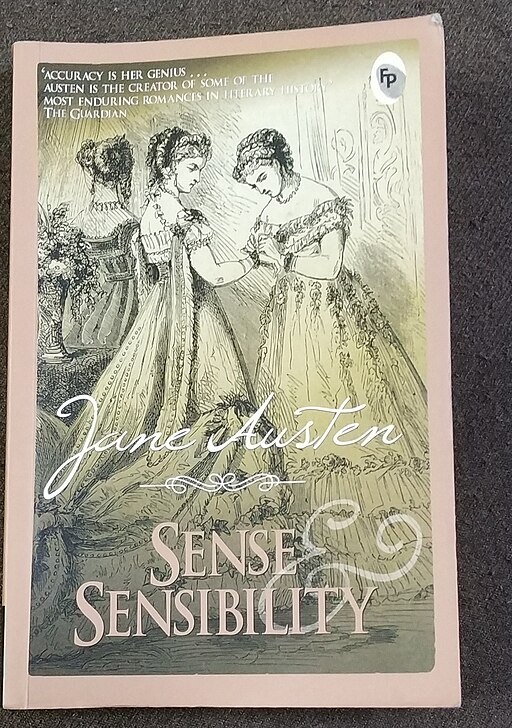
And what did Jane think of success and earning money? In a letter to her brother, Captain Francis Austen, she wrote: “You will be glad to hear that every Copy of S&S is sold…I have now therefore written myself into £250. – which only makes me long for more” (Jul. 6, 1813).
Beautiful, Jane. Me too.
I’d love to hear your thoughts below!
I found these sites useful when researching this post: this one on Mansfield Park, this one on Emma, and this one on Pride and Prejudice.


Leave a Reply to Kirstin OdegaardCancel reply