
When doing research for my writing, I love looking at time frames of when things came to be. People are surprised when I don’t use techniques from my forensic background, but I can only use things that were available in the early 1800’s, which were very few. In the years I worked in the field of forensic, things changed constantly. In 1993, we were told that there was no possible way to retrieve fingerprints off surfaces what are textured. Ten years later, there was a method to retrieve latent prints, including a method I came up with.
In my writing, I try to have some true facts. Whether it is a character based on a real person in history or treatment for injuries or illnesses, I add something real. In Pemberley Quaking, there was an actual earthquake on record that happened in Derbyshire in the late 1700’s, so I changed the date of the story from the 1812 time frame. Some of the medical treatments were actually from history of medicine during the time frame. The royal family members I have added to my fiction stories were actually real, and I try to add some of their known history.
One of the areas of research I love is when things are invented. Like when using a firearm, at the time of when Pride and Prejudice was supposed to be, were only a single shot. Multiple shot weapons were in the making, and with someone such as Fitzwilliam Darcy who is supposed to be one of the richest men in England, he might have been able to purchase such a weapon. When, in my book The Bridge to Pemberley School, I wrote about the hot water heating system, it actually was available in the early 1800’s.

So, I thought I would have some fun giving some “invented when” information.
This is a photo taken with a camera obscura.

- Buttons. Did you know originally, buttons were used as ornaments or seals. They are believed to have originated during the Kot Diji phase (2800-2600 BC).
- Bricks. In 4400BC, the first fired bricks were made in China.
- Plumbing. 4000BC was the the earliest pipes. They were made of clay, found in the Temple of Bel at Nippur, in Babylonia.
- Scissors. Surprisingly, scissors were first found in Mesopotamia in 2000BC.
- Windmills. These came from Persia in 650BC.
- In the 6th century to 2nd century, medical advancements include cataract surgery, Caesarean section.
- Light house. The first light house was in Greece in 500BC.
- Paper. Paper was invented in the Han Dynasty China (good grief, even thousands of years ago, we were still reliant on items coming from China) in the 2nd century.
- Plastic surgery. There are many types of prosthetic devices traced back In the 1600 BC, the first mentioned plastic surgery was performed to repair a broken nose. It was done in Egypt. It was in 1816 when the term “plastic” was used.
- Prosthesis. There are numerous examples of some sort of prothesis made, back to 3000BCE. In the beginning of the 16th century, Roman general Marcus Sergius had an iron hand to replace the hand he lost in battle.
- Fishing reel. The earliest fishing reel was invented (of course, in China) have existed since the 3rd century. Surprising, when we see movies set in the 1700’s and 1800’s you always see a person fishing with a string on a pole. The fishing reel first came about in England is in 1650 AD.
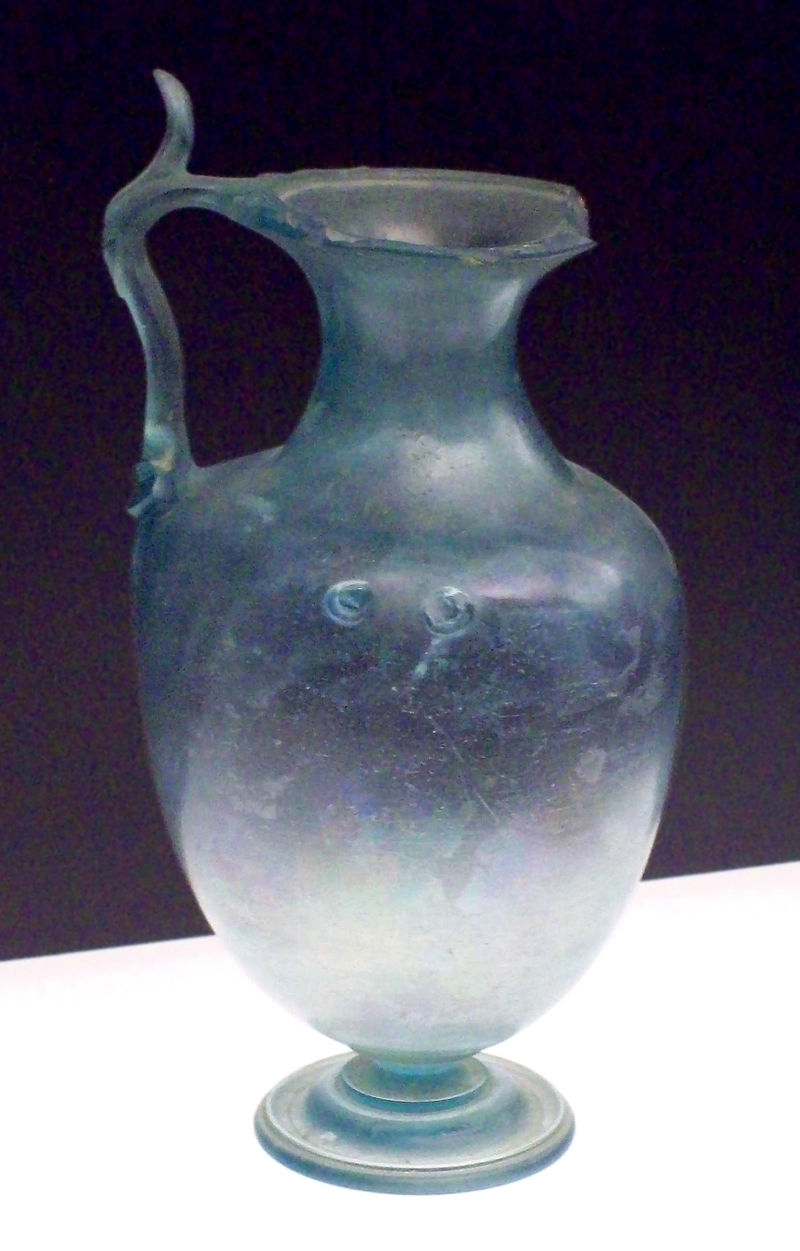
- Glassblowing. I love blown glass. As a kid, I collected glass animals and unique glass items. Free blowing originated from the 1st century and lasted until the 19th century, when this type of glass has become more decorative rather that of mass production which is used in making glasses and windows and such
- Lawn “mowing” and lawn tending. Prior to the middle ages, lawns or grassy areas, were for grazing livestock. It wasn’t until the 1700’s and 1800’s when the aristocrats had more what we would have. Having such lawns would be costly, which was why it was considered that only a wealthy person could afford to have one. Prior to the use of a lawnmower, scythes or shears would be used to keep a lawn looking good. Can you imagine having to do that on large properties such as Pemberley would have been? It would be a task requiring multiple people for a large estate garden. The first lawnmower was invented in 1830.
- Battery. The first battery was invented in 1800 by Count Alessandro Volta. Wonder if that is why the strength is called volts, for the count’s name.
- Silk weaver. French silk weaver JM Jacquard invented the Jacquard loom.
- Steam locomotive. First steam locomotive was built by George and Robert Stephenson for Cambrian Railways in the UK between 1810-1819.
- Camera. Joseph Nicephore Niepce took the first photograph with a camera obscura. Such cameras were simplistic, what we would call a pinhole cam (in my photography classes when I was in college, we actually made our own pinhole cameras, and it is surprising the images that can be done with such a camera.
- Miner’s lamp. It was in 1815 when Humphry Davy invented the miner’s lamp (Davy lamp, which used a thin mesh to assist in enclosing the flame so the gases in the mines didn’t cause an explosion).
- Stethoscope. In 1816, Rene Laenuee invented the first stephoscope.
- Soda fountain. Samuel Fahnestock patented the soda fountain in 1819.
- Matches. It was in 1827 when John Walker invented the first modern day matches.
- Revolver. The first revolver was invented in 1836, by Samuel Colt which was called the Colt Frontier revolver.
- Sewing machine. In 1830, Barthelemy Thimonnier invented a rudimentary sewing machine
- Ice machine. Jacob Perkins invented an ether ice machine which was a precursor to the modern refrigerator. He used a vapor compression refrigerator cycle and held the first patent in the field, in 1834.
Jacob Perkins list of inventions and work included


- Worked with Oliver Evans in 1816 on the steam power for steam engine locomotive, including the uniflow steam engine in 1827.
- His work with boilers was revived in 1927 when Loftus Perkins (a descendant used it for modern boilers).
- With the high pressure steam technology, he also used it to make a steam gun, which was an early, full automatic, machine gun. It was the first machine gun which had a high magazine capacity. It used musket balls in cyclic firing rate of 1,000 rounds per minute. The Duke of Wellington rejected the weapon, claiming it was to be too destructive.
- Made some of the best steel plates used for printing. They made it extremely difficult to counterfeit bank notes. His work in the US garnered the attention of England, who held a contest which awarded twenty thousand pounds for the person who printed unforgable notes. The bank notes in the UD brought Perkins to the attention of England, where in 1819, had a widespread problem with forged English notes.
- Held patents, including for the system for heating and air conditioning.
Talk about one busy guy. In all, he had 14 patents for many of his ideas.
Well, I will leave it here. Hope you found some interesting facts in the list. Have a great week and weekend.


Leave a Reply