Where Would One Find Sheet Music in the Regency Era?

Posted

in

, ,

by

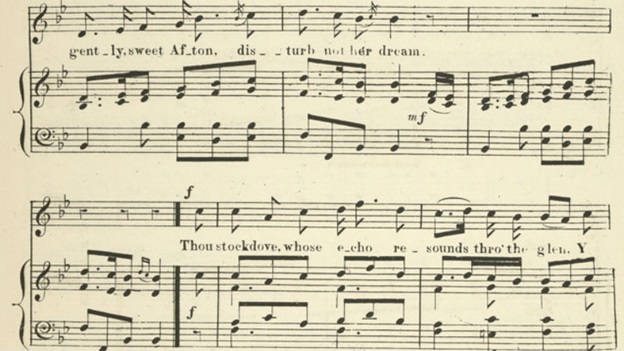
Although quite expensive, sheet music was readily available during the Regency era. Many a person subscribed to services offered by music publishers, among the Schirmer, the most well known of the time. Sheet music was produced for subscribers in bound volumes. This volumes would contain a selection of songs, including popular ones of the times, excerpts from opera, pieces designed specifically for the pianoforte, and, upon occasion, transcriptions of instrumental string music for playing upon the pianoforte. The bound volumes were customarily produced quarterly. 

In addition, one could find sheet music at print book shops. Some book shops offered sheet music in their lending libraries. Not that I condone the practice, but I do consider it innovative: Ladies would take the sheet music out on a loan, carry it home, and copy it into their own music copy books. Copyrights, as we know them, did not exist [Kind of like what META has chosen to do with the thousands of stolen novels, but on a much smaller scale, I would assume].

Most aristocratic homes had extensive sheet music libraries. Sometimes, those ladies not of the house, but somehow connected to the family, would be given permission to copy selections from the home library into her music book. Jane Austen was known to have done so on more than one occasion. 

Although music shops did exist, they were few in number, and they certainly did not resemble anything close to what we might envision today. Music shops essentially produced fine instruments. They specialized in particular instruments: pianoforte (Broadwood); harps, violins, etc. They rarely kept sheet music within the shop because they did not have the space needed for this. Sheet music was seen more as a product of the publishing industry rather than as a product of the music industry.

Naturally, the Napoleonic War affected the availability of music from the Continent. Popularity made some items available more quickly than others, but those in England were often behind the times regarding a new piece or even a new composer. 

Sheet music of individual songs was often published in La Belle Assemblee, as well. I saw one recently from an 1811 issue titled “French Cruelty and British Generosity.” It had several verses.

A word of interesting note: A number of Beethoven’s compositions were seen as too emotionally erotic for young ladies to play. This was not a universal feeling, but many ton ladies, especially those of the dowager and patroness age, would look askance at a young lady playing Beethoven’s more invigorating works.

Special thanks to Louisa Cornell for information for this piece. I do not recall when I wrote down my notes on “music,” (I keep a large file of information as I encounter it) but I did list her name in the margin for me to remember who my source was. 

10 responses to “Where Would One Find Sheet Music in the Regency Era?”

  1. Alice McVeigh Avatar
    Alice McVeigh

    Absolutely believe you about Beethoven BUT what WOULD the Regency lot have made of the real musical romantics??? They’re – favourite Regency word – truly swoon-worthy!!!!

    Probably, they’d have fainted dead away.

  2. Regina Jeffers Avatar

    You made me laugh, Alice. I adore sarcastic humor.

  3. cindie snyder Avatar
    cindie snyder

    Interesting post! That is something about how they would take home sheet music and copy it in their books!lol I guess they didn’t have the worries we do.

    1. Gianna Thomas Avatar
      Gianna Thomas

      Apparently, Cindie, by the eighteenth century the transfer of copyrights for economic gain were primarily for outright sales with no royalties for future sales. That may have spurred the copying of purchased music sheets.

  4. Gianna Thomas Avatar
    Gianna Thomas

    My goodness, Regina. I played piano for years, did recitals every year, and even considered becoming a concert pianist, but I couldn’t have read that last musical score without either needing glasses or screaming. That is so difficult to read. Once figured out, it would not be too difficult to play but getting to that point would be a chore.
    Thanks for the info.

  5. Marion Moebus Avatar
    Marion Moebus

    Would someone like Elizabeth Bennet be able to afford sheet music do you think?

    Also, I have played music from the period that is a reproduction of the original score. It is slow going-in addition to being somewhat fuzzy, the notes aren’t spaced the way we are used to in our neatly printed books today. Very interesting article.

    1. Regina Jeffers Avatar

      Obviously, the Bennets had some music available, for Mary is always “plucking” away on the pianoforte. The Jane Austen site tells us, “Yes, yes, we will have a pianoforte, as good a one as can be got for 30 guineas, and I will practice country dances, that we may have some amusement for our nephews and nieces, when we have the pleasure of their company.” – Jane Austen to Cassandra, 1808
      It continues, “Like many ladies of her era, Jane Austen was an accomplished musician. And so were her characters. In Pride and Prejudice, Mary Bennet, Elizabeth Bennet, the Bingley sisters and Georgiana Darcy could all play instruments with skill. Lady Catherine de Bourgh would have been a proficient, as would her daughter Anne, had she learned and practiced. Before the age of electricity and cable the world was largely silent musically speaking, save for the music played by family members, local musicians, or more famous musicians who were paid to play for the rich. … In Pride and Prejudice, Mary Bennet, while considered technically skilled, was pendantic compared to her sister Elizabeth, whose musical style was more lively and who could sing with more expression. An evening in the Regency era might consist of a family gathered in the drawing room, with the women preoccupied with a household task like sewing, the men reading, or a group playing games, and someone playing a musical instrument or singing a popular song. For larger gatherings, small ensembles would form, prompting others to push furniture aside, roll up the carpet, and dance a jig or a reel, as I imagine Lydia Bennet and her friends might have done at Colonel Forster’s home. Sometimes professionals mixed with amateurs. In 1811, Jane Austen wrote about a get together at her brother Henry’s house in London: ‘Above 80 people are invited for next Tuesday evening, and there is to be some very good music — five professionals, three of them glee singers, besides amateurs. Fanny will listen to this. One of the hirelings is a Capital on the harp, from which I expect great pleasure.’”

      1. Marion Moebus Avatar
        Marion Moebus

        Yes, I am aware of all that. My question was whether the Bennets would buy the sheet music or borrow/copy sheet music as the printed music was relatively expensive. My understanding is that Jane Austen had books of music that she had copied out. Fanfic often has Elizabeth purchase the latest music along with several books as gifts for family. I wonder how feasible that would be. (Would her allowance permit it.)

      2. Regina Jeffers Avatar

        If it is Elizabeth before she meets Darcy, I would venture to say that it would be a mix of purchase and copying out the music. As she rarely travelled to London, and mostly to Cheapside, I would venture to say she on occasion chose a piece of music the whole family could enjoy. There were several “music” shops/warehouses in Cheapside. I have written of Darcy purchasing a pianoforte for Georgiana in one such establishment. Generally, I write Elizabeth with a beautiful voice and only semi-proficient on the pianoforte. That being said, the cost of sheet music in the Regency era varied, but it could be expensive, with prices ranging from a few pence to several shillings, or even pounds, for more elaborate editions or larger collections. For instance, a popular magazine of the time, La Belle Assemblée, offered a version with coloured plates for 3 shillings and 6 pence, or 3s 6d. That was in 1807. Sheet music was a luxury good, and the cost of skilled labor, materials, and printing meant it was a significant expense for many. A common song might cost a few pence, while a more complex piece or a full songbook could cost several shillings. The process of printing music was complex and expensive, which added to the final cost of the sheet music. The value was also tied to the composer’s and arranger’s extensive musical training. Sheet music was considered a luxury item, mainly for the wealthy classes. As Mrs. Bennet did not see to a music teacher for her daughters, I do not imagine she would think the cost of music as easily accessible as the girls might wish.

      3. Marion Moebus Avatar
        Marion Moebus

        Thank you, that’s what I was looking for.

Leave a Reply to Regina JeffersCancel reply

Discover more from Always Austen

Subscribe now to keep reading and get access to the full archive.

Continue reading