
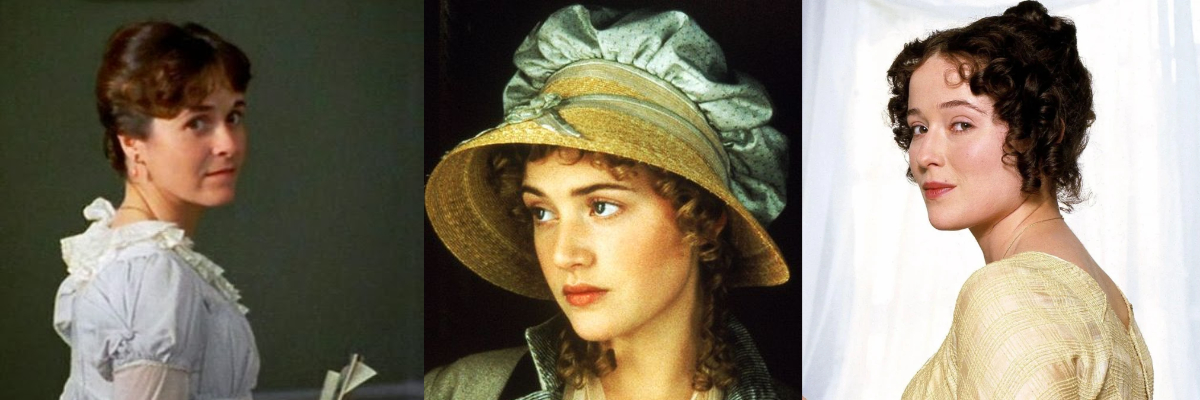
This has been a busy month for me. Our fun fairytale-inspired anthology, Darcy Ever After, was released on February 1st, I’m doing final edits for a non-JAFF Regency Romance for the new Noble Hearts Romance series, coming out in May, writing another non-JAFF romance for the same series, and also writing a short story for an amazing collection to be released later in the year. We won’t talk about the other works I have sitting around in the background, waiting to be finished up or polished to a brilliant shine.

Throw in a few personal and family events and challenges, as well as the odd snowstorm, and whew, I’ll be ready for March when it arrives.
But all these tales I have dancing around my head have got me thinking about the unique relationship between author and character, the writer and the writee, if I may coin a word. Bizarrely enough, it is not a one-way street, where the author invents the character and then puts words in his or her mouth and pulls the strings to make the puppet dance upon the state.
Rather, it’s more of a dialogue, and as so many authors can attest, the characters do not always listen to their creators, nor do they read the plot outlines. They have minds of their own and can lead the author on a merry chase, as they run off in quite unexpected directions and do rather alarming things.
I was talking about this earlier with a few friends, and here’s part of the conversation.
Me: Does it bother you that fictional characters seem to step out of their authors’ heads and take on lives of their own?

Anne Elliot: I can see how that might seem alarming to some, but look at it rationally. If the character in question does not appear fully real to the author, she will almost certainly not seem so to a reader. The author must know the character intimately, so as to draw her likeness in words upon the page.
Me: Of course, that makes a certain amount of sense. We certainly want our characters to breathe and engage their readers. We want them to have memories and favourite foods, little secrets and a pair of shoes that don’t quite fit. These are the sorts of details that let the readers believe, for the duration of the story, that they are stepping into someone’s world. But does it cross a line when the characters start demanding a say in their stories?
Anne Elliot: Once again, let us reconsider the situation. An author does not create just one character, set out in splendid isolation against a blank backdrop, but rather, a whole world. There must be a setting, be it a busy market town or a splendid family estate, or perhaps a quiet seaside village, and if the character is, indeed, as fleshed out as the author wishes, that character will of necessity interact with that setting. Do you recall Lady Catherine de Burgh?
Me: How could I not? She is an archetype!
Anne Elliot: You picture her, I imagine, at Rosings. (I nod.) Now, for a moment, imagine her living at Barton Cottage, or in the Harvilles’ house in Lyme Regis. How does she behave there? Can she hold the same authority over her minions if she only has two rooms to command? Something about her reactions will necessarily change; otherwise she is not a full character, but a caricature.
Me: Ah, I begin to see what you mean.
Elinor Dashwood: And not only will the physical location of the story affect the characters’ behaviour, but temporary or passing aspects as well. Consider the weather. The same person might behave quite differently if there is rain or sunshine.
Marianne Dashwood: Really, Elinor, you might think it not sensible to walk in the rain, but I think it is romantic! Sunshine is so ordinary, so mundane. It is like a poem read without intent, without feeling. It is merely there. There is drama in the rain, in the shapes emerging from the mists, in the deeply shadowed clouds and unexpected gusts of wind.

Me: This is getting rather interesting. I’d love to hear more.
Elizabeth Bennet: May I interrupt? I have some thoughts as well. It is not only setting that gives the characters direction and lets their inner personalities show, but we must consider their companions as well.
Me: Please go on.
Elizabeth Bennet: Imagine one perfect character, who seems so real you can talk to her. Now imagine another, equally real, with his own quirks and foibles. When these two meet, they will interact.
Me: Well, yes. That is the whole point of a story, isn’t it? Something needs to happen. I suppose you could have a story of a person against the elements, but the dialogue would be rather dull.
Elizabeth Bennet: Dialogue—that is precisely what I mean. When these two characters engage in dialogue, their personalities are revealed. And sometimes, they reveal themselves in ways the author did not quite imagine at first.

Me: You mean…?
Lydia Bennet: She means that I might start flirting with the wrong man, although really, if he is wearing a red coat and is handsome, he will do. Lizzy thinks she knows so much, but she can be rather too proud of her opinions, and does like to argue. It gives her the chance to show how clever she is.
Elizabeth Bennet: Lydia!
Lydia Bennet: Well, it is true, Lizzy. And I shall tell Papa—”
Me: Ladies, please!
Anne Elliot: I believe, Ms Everly, that you have just seen what I meant earlier. When characters interact, they do so as the fully realised people the author wishes them to be, and as such, they will sometimes take over. Think of the tale of Pygmalion and Galatea. He is the sculptor who creates a statue so beautiful that he falls in love with her, and for once, the gods are kind and bring her to life. But at that point, she is no longer his ideal, for now she thinks and acts for herself, and he must contend with something other than that which he created.
It is a story from mythology, of course, but it also gets to the core of what art is. The creator of art is never fully in control of it, and must, at times, stand back and let the art become its own entity.
And sometimes, that means letting the characters speak to their author, and then listening to what they say.
Me: Well, this has been a most enlightening conversation. Thank you, my friends. I look forward to our next encounters. And don’t worry. I’ll let you all take the lead.
If you, dear readers, are interested in any of the books I mentioned above, here’s what’s in the works.
My first published non-JAFF romance is coming out on May 15, the second book in the new multi-author Noble Hearts series of historical romances. This series is a set of standalone novels and novellas, all set at noble estates. Here’s the blurb for my novel, Love’s Refrain at Roslyn Court.

The year is 1813, and England is at war against Napoleon’s forces on the Continent.
Sophia Bradley is the poor cousin at Roslyn Court. Only her musical talents save her from being shunned by society for her parents’ sins. Still, she is comfortable and loved by her cousins, and is determined to be content living her life as a companion or other such respectable situation, for she knows she can never marry. How awkward it is, then, that the family’s houseguest is slipping into her thoughts and dreams in a most inconvenient way.
Troubled by nightmares and black moods after his traumatic experiences in the war, Major Isaac Hollimore would rather be anywhere but Roslyn Court where he has journeyed to return the personal effects of his late friend to the lad’s family. Still, he finds comfort in Miss Bradley’s soothing voice and beautiful music, and finds himself most unwilling to leave.
As the two spend more time in each other’s company, a friendship begins to blossom, and then perhaps something more. But like Sophia, Isaac has determined that he can never marry, and the more time he spends with the sensible musician, the more he knows it will break his heart when he finally leaves.
Then Sophia’s aunt pulls Isaac into her own schemes and another suitor arrives in the neighbourhood, perfectly poised to claim Sophia’s hand. Will Isaac and Sophia let their chance at love drift away like the last notes of a mournful song, or will they write their own love song, their own refrain, at Roslyn Court?
My second book for this series will be released in September, with the provisional title A Brush with Love at Brookview Hall.
Miss Mary’s fifth adventure is well underway as well, and I have a wonderful romantic adventure planned for Colonel Richard Fitzwilliam.


Leave a Reply to NancyCancel reply