
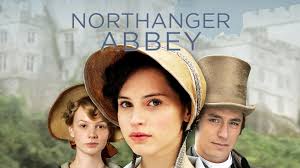
In my ongoing series comparing Jane Austen novels to those of Georgette Heyer with similar elements, I’m up to Northanger Abbey. I admit this wasn’t one of my favorite reads until I saw the movie with Felicity Jones and JJ Field. Mr. Tilney wasn’t that appealing to me until I saw him, and ever since, I’ve enjoyed the book!

Georgette Heyer delves into the gothic style in some of her books, like These Old Shades, Black Moth, and perhaps Devil’s Cub. The first that came to my mind was Cousin Kate. I love Kate and her terrible, conniving aunt and the actual dread and horror the story produces! I felt it wasn’t quite appropriate to compare Cousin Kate to Northanger Abbey, however, because there is actual murder or madness going on.

I decided the Georgette Heyer book that is most similar to Northanger Abbey is perhaps The Reluctant Widow, which is one of my faves. The romance is far less pronounced than her other stories (rather like Northanger Abbey, in my opinion) but it has so many funny moments, I reread it for the humor.
How are they alike?
1. The Reluctant Widow plays with Gothic tropes, including mysterious estates, secretive characters, and an air of intrigue. The hero pokes fun at our heroine’s imagination, rather like Catherine Moreland, although in this book, Elinor is mainly right when she suspects things. Heyer incorporates actual mystery and suspense into the plot, which I must say I enjoy. It feels a little like a crossover between her detective novels and her Regencies.

2. The heroine is in an unfamiliar situation among a family she doesn’t know. Elinor finds herself enmeshed in the Carlyon family (brothers, cousins, uncles, etc.) and living on one of their estates. She is uncomfortable both socially and emotionally. This mirrors Catherine feeling out of her depth when she joins the Tilneys, imagining dark secrets lurking around every corner.

3. A blend of romance and comedy. Both stories mix romance with humor and a touch of absurdity. I love when Elinor gets trapped by Nicky’s overly obedient hound! Catherine creates her own absurdities, and in both, the romantic leads—Lord Carlyon and Mr. Tilney—are men who have a sense of humor but are also grounded and matter-of-fact, offering a steadying influence.
4. A bit of social satire. Heyer, like Austen, subtly critiques societal norms, though Heyer’s story is more playful and plot-driven. Elinor is a disgraced noblewoman (her father’s scandal and tragedies have sunk her) but she shows herself to be more kind, classy, and loyal than others who are “above” her. Heyer is also, through Elinor, partially making fun of the Gothic vibe, although there is actually a mystery to discover.

What do you think? If you’ve read any Georgette Heyer, do you enjoy her Gothic romances or are you more for her brighter stories? I might need to go watch Northanger Abbey again!
Happy reading,
Corrie


Leave a Reply