
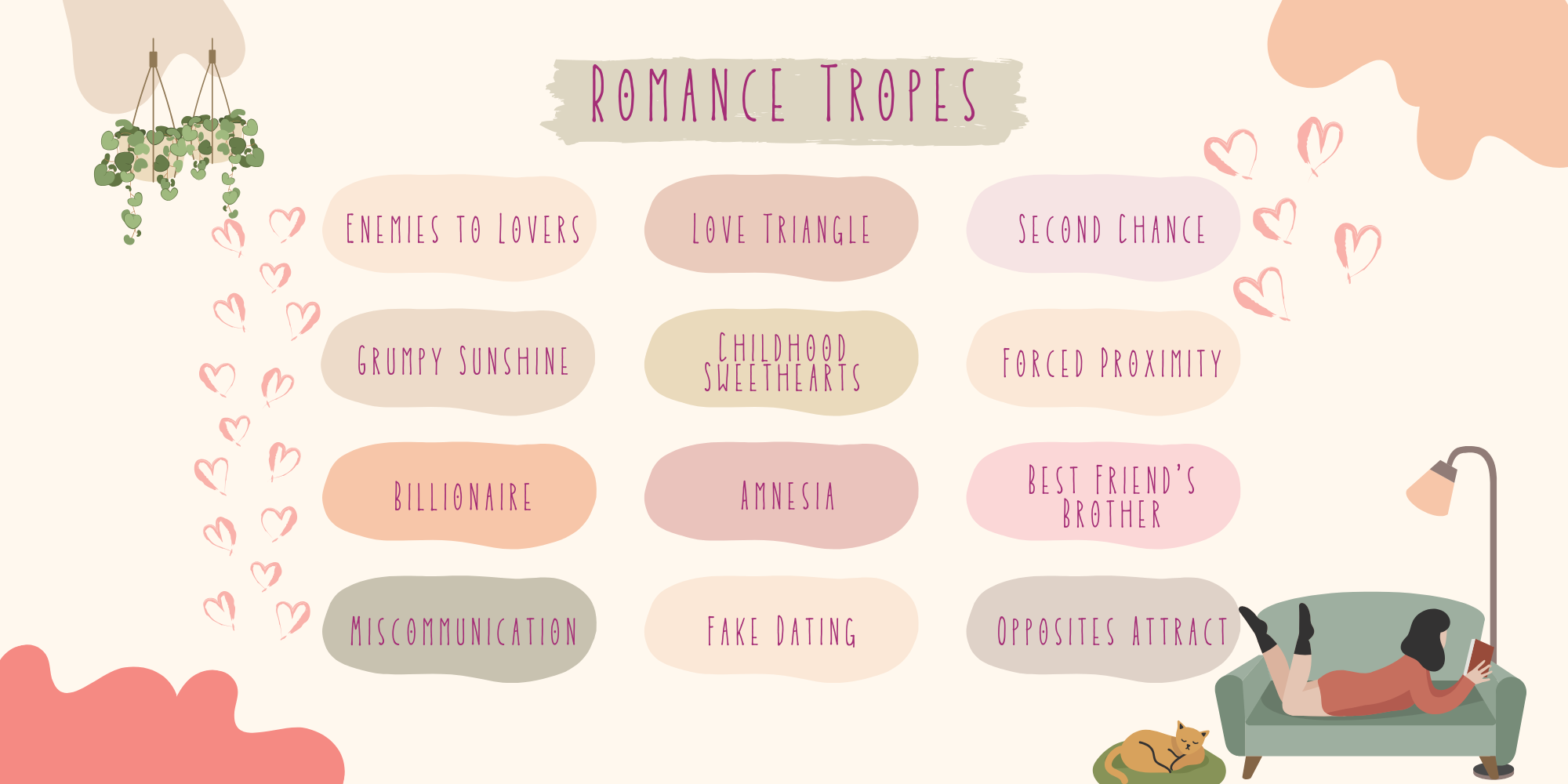

What’s your favorite romantic book trope?
- Forbidden Love
- Grumpy Sunshine
- Childhood Sweethearts
- Second Chance Love
- Love Triangle

The romance genre has grown and evolved over the centuries, expanding to include a diverse range of tropes that captivate readers with their exploration of love, conflict, and human connection. Modern romance books incorporate fresh perspectives, complex characters, and unique situations that resonate with contemporary audiences.
There’s a lot of naysayers to romance books too. How many times have you heard someone say something derogatory about romance novels? That they aren’t “real books” or that they create unrealistic expectations for men in relationships, “chick-lit”, “word-porn”, “vapid”, “frivolous”. So many negative connections to romance. It’s very popular in intellectual circles to be seen as above reading such “drivel”. I’ve even seen it on social media. Some #bookstagram accounts are solely about the latest literary fiction and excludes anything that looks like an easy read women’s fiction novel. Of course, there are plenty of social media accounts that are solely dedicated to romance and erotica, but the bookish accounts with 10K+ followers tend to be curated away from romance. Fantasy is fine, mystery and sci-fi are fine, but romance is still considered as less worthy from literary critics.
But regardless of the people who like to dismiss anything that women like as silly, the romance and erotica genres of books are the #1 selling genre in the world. Well over a billion dollars in just 2021. That’s more than Crime/Mystery PLUS Sci-Fi/Fantasy PLUS Horror.

And those tropes are important because of what they mean to real world experiences. The enemies-to-lovers trope appeals to readers because it portrays the protagonists overcoming their biases and defenses. It’s deeply satisfying to see two characters with seemingly insurmountable differences find common ground and fall in love, showcasing love’s ability to transcend initial judgments and conflicts. The fake relationship trope reflects societal pressures around relationships, such as family expectations or workplace dynamics. By subverting these pressures, authors reveal the tension between societal roles and personal authenticity, making this trope both relatable and amusing. Second chance romances resonate with readers who appreciate the idea that love can endure and evolve over time. By reuniting with a past partner, characters must confront old wounds, unresolved feelings, and personal growth, creating deeply emotional and heartfelt narratives.
Modern romance book tropes continue to captivate readers by blending timeless themes with contemporary storytelling. They serve not only as a source of escapism but also as a lens through which readers can explore their own emotions and relationships, ensuring the enduring popularity of the romance genre.
But have you ever thought seriously about where these troupes started?
Maybe many of you have guessed my answer to that question, since this is a blog primarily about Jane Austen and her literary world, but I shall not keep you in any more suspense. Yes, I’m here to support the notion that Jane Austen invented MANY of the most beloved and enduring romance tropes.
Austen not only pioneered the development of female-centered narratives but also established many of the romance tropes that continue to shape the genre today. Through her keen observations of human nature, sharp social commentary, and nuanced portrayals of courtship, she laid the foundation for the modern romance novel and the broader category of women’s literature.
Before Austen, women writers existed, but their work was often marginalized or forced into specific story arches, such as Gothic fiction or sentimental literature. Austen’s novels stood out because they provided realistic, complex portrayals of real women’s lives, emotions, and relationships (at least women of the landed gentry and wealthy merchant classes). She departed from the sensationalism and infantile moralizing typical of fiction marketed to women at the time, instead offering heroines with intelligence, agency, and personal growth.
Austen’s heroines were neither passive damsels nor overly idealized figures. Instead, they were nuanced individuals with distinct personalities, strengths, and flaws. Elizabeth Bennet (Pride and Prejudice) is intelligent and outspoken, but her prejudices initially mislead her. Elinor Dashwood (Sense and Sensibility) balances duty and personal sorrow with quiet resilience. Emma Woodhouse (Emma) is charming but sometimes vain and misguided. These realistic portrayals helped create a blueprint for complex female characters in literature.
Austen’s influence extends beyond women’s literature into the entire romance genre. Many of the tropes and structures that define romantic fiction today originated in her novels.
Enemies to Lovers
One of the most enduring romance tropes Austen pioneered is “enemies to lovers,” from Pride and Prejudice – which turned 212 years old yesterday! Elizabeth Bennet and Mr. Darcy’s initial dislike of each other and misunderstandings explode by the middle of the book. Gradually, as they both learn more about each other and reflect on their own actions, their relationship transforms into mutual respect and ardent love. The modern romance writer would be lost without this most popular example in classic literature.
Examples of modern enemies to lovers are as far and wide as there stars in the sky. Katniss & Peeta; Han Solo and Leia; Thor and Jane; Alex and Henry; Lucy and Joshua …..
It’s inconceivable that this trope has not always been there, keeping readers on the edge of their seats with the “will they / won’t they” of it all. But before female characters were allowed to be complex and nuanced, they were often just devices to move forward the plot for the main male character.
An often-cited example of earlier enemies to lovers is Shakespear’s The Taming of the Shrew. However, the main center of the plot is not a true misunderstanding or dislike between Petruchio and Katherina, but Katherina’s (totally reasonable) resentment of her father for trying to sell her off into marriage and distaste for Petruchio’s various tactics of manipulation, humiliation, and reverse psychology used to try and trick her into submission. She is a pawn with little agency in the events surrounding her and the end of the play concludes with a long speech by Kate on the duty of submission by wives, which signals a total reversal of Kate’s personality. The enemies didn’t so much become lovers as the man gaslight the woman into changing to suit his wants and needs.
Needless to say, it’s not my favorite Shakespearean play.
Second Chance Romance
Persuasion introduces the now-common theme of rekindled romance. Anne Elliot and Captain Wentworth’s love is thwarted due to outside pressures, but they are given a second chance eight-plus years later. When the two are reunited, their circumstances have changed. Anne is now older and more mature, with a better sense of self-awareness and understanding of her previous decision. Wentworth, having suffered from the rejection and time apart, holds some resentment toward Anne, particularly as he believes she once chose family over him and his love. Despite their strained initial interactions, the old attraction and love between them begin to resurface, even though both try to keep their emotions hidden. The development of their second chance at love is subtle and slow, based on mutual growth, healing, and understanding.
Now, if you’ve been paying attention, I actually don’t like Captain Wentworth. I think that his actions in the book are childish and reprehensible. But we can forgive him his faults for the beautiful letter he writes at the very end of the story. Regardless of Wentworth’s worthiness, Persuasion’s structure of lost love found again has inspired countless romance novels and films.
Opposites Attract
The “opposites attract” romance trope is reflected throughout Emma. Emma is spirited, headstrong, and sometimes meddlesome; while Knightley is grounded, rational, and morally upright. Their differences create friction, but they also complement and challenge each other in ways that lead to mutual growth.Throughout the novel, Knightley frequently calls Emma out on her flaws, such as when he reprimands her for her treatment of Miss Bates. Their clashes highlight their differing perspectives but also show that Knightley deeply cares about Emma’s personal growth. Unlike others who flatter Emma, Knightley challenges her to become a better person. Emma, despite her resistance, comes to respect Knightley’s wisdom and moral strength. Knightley, who initially sees Emma’s meddling as immature, eventually acknowledges her capacity for kindness and change. Their relationship exemplifies how opposites can challenge each other while still fostering love and respect.
Best Friend’s Brother
The “best friend’s brother” romance trope is introduced in Northanger Abbey, particularly through Catherine’s close friendship with Eleanor Tilney, Henry Tilney’s younger sister. Catherine and Eleanor form a deep and genuine friendship when they meet in Bath. Their friendship provides Catherine with an opportunity to become closer to Henry in a natural, socially acceptable way. In the “best friend’s brother” trope, the heroine often sees the brother as an older, more knowledgeable figure — someone who initially feels slightly out of reach. Henry fits this role perfectly: he is charming, witty, and well-read, which fascinates Catherine, who admires him even before forming a deeper emotional bond. Eleanor, like many characters in this trope, approves of the match and supports Catherine, further reinforcing the classic dynamic.
It’s the classic brother trope, mostly because it’s the OG and the model for all the rest.
Here’s my incomplete list of romance tropes found in Austen’s novels:
Forbidden Love – Sense & Sensibility
Holiday Romance – Northanger Abbey
Grumpy Sunshine – Pride & Prejudice
Childhood Sweethearts – Mansfield Park
Opposites Attract – Emma
Enemies to Lovers – Pride & Prejudice
Second Chance Love – Persuasion
Best Friend’s Brother – Northanger Abbey
Love Triangle – Northanger Abbey
Billionaire – Pride & Prejudice
Jane Austen revolutionized literature by centering her narratives on women’s experiences and relationships, laying the groundwork for the romance genre as we know it. Through her richly developed heroines, insightful social critiques, and now-iconic romance tropes, she not only invented what we consider women’s literature but also shaped the foundations of modern romantic storytelling. More than 200 years after her death, Austen’s works remain relevant, beloved, and deeply influential, proving that love, wit, and human nature transcend time. Her legacy lives on in the countless novels, films, and stories that follow in her literary footsteps.
Don’t Miss Out on Free Books!


Page Turners Collective is a place for Indie, Small and Self-Published authors to connect with our readers and support each other. We’re hosting giveaways every other week where you could win up to 5 paperbacks from amazing indie authors.
The next event starts TODAY! January 29, 2025.
Entering is easy! Just make sure you’re following @stormhauspublishing on Instagram and interact with the giveaway post when it goes live.
OR! You can sign up for the Page Turners email list on our website.
Click Here! for more information.


Leave a Reply to GloryCancel reply