
I’d been married to an Englishman for maybe five years when I first toured the US with a British symphony orchestra. Which felt a bit backwards. While I was touring, my husband called most days, and on one occasion he needed my advice urgently (the fridge-freezer? Can’t remember.) At any rate, he requested the hotel receptionist to “please ask his wife to give him a ring”. (Translation: “to call him”.)
There was a long silence while the receptionist struggled with this. Finally, she said, “But, if you’re really married, hasn’t she already given you a ring?”
(According to Simon, she did see the funny side, once he’d explained.)
I sometimes joke, having emigrated to London in the 80s that I’m bilingual: I can speak English and American. Now, there’s something in this, as I proved when I finally produced our only baby. Not wishing to miss a minute of motherhood, instead of touring with orchestras, I listed myself as an expert in turning USA prose into UK prose – and vice-versa – on the Editorial Freelancers Association (EFA) and NAIWE.
I also did ghostwriting, but that’s another story.
It was a fascinating exercise, because US and UK English is sooooooo different, and someday, I swear, I’m going to add to all the zillions of books on the subject. Anyway, the biggest difference has to be the rhythm. Most British accents, of which, as Austen lovers will know, there are plenty, have a rhythm that’s not only quite different from American but also quite different from each other.
For a country the size of a postage stamp, it’s crazy how many variants there are, from Glaswegian to Yorkshire to East Anglia to Welsh to Northern Irish.
I got a lot of work, and plaudits, for my editing and ghostwriting (one of the novellas I ghosted won the Red Hen novella award, even) but my expertise was hard-won. I experienced any number of culture shocks when I first appeared – young and absolutely clueless – in London in the early 80s, holding (a) my cello and (b) a suitcase. (Had to buy a half-price airfare for the cello but resisted the urge to perpetuate the musicians’ joke of requesting a meal for it.)
Here are a few things I learned:
- I never realised that, to refuse a suggestion to adjourn to the pub was a social misdemeanour, even if you had to practise cello. (And I mean, REALLY had to practise, in that, you had a lesson with your Very Important Professor the next day and were waaaaaaaaaay Behind with the Dvorak concerto.)
- I never realised that British cider is alcoholic, not to say VERY alcoholic. (Soooo embarrassing! I had to be assisted home!)
- I never realised how British men beat about the bush when asking people out. (I mean, I’ve dated Darcys.)
I never realised that “being asked to meet my parents” meant, “I have marriage on my mind,” either.
- I never realised that, at British universities, you don’t get just a degree, but you get either a first-class degree (my husband, our daughter) or a third-class degree (known as a “gentleman’s third”, meaning you were too wealthy or well-connected to work at getting a First. Possibly also, too stupid.)
A second-class degree is for nobodies.
- I never realised that, in a British orchestra, you are supposed to sit-down-and-shut-up – unless you are the cello principal, when you can do what you like, as long as you fail to annoy the principal double bass. It’s much more hierarchical than in the US.
- I never realised that I needed to keep my voice range from low to inaudible (inaudible is preferred). There’s a widespread fallacy abroad that we Americans are rather noisy – WE’RE NOT, OK??????!!!!! GOT IT????!!!!? – For that reason, Americans in the UK are united in not giving the natives the slightest excuse for saying so. You’re winning if someone says, “Pardon? I didn’t quite catch that.”
You’re also winning if asked if you’re Canadian. Even South African.
This is because, despite there being no – and I do mean no – real difference between USA and Canadian accents, many Brits fondly believe that simply belonging to the Commonwealth sheds a lustrous veneer of civilisation on Canadians etc. that we Yanks lost all claim to at the Boston Tea Party. (Go figure.)
- I never realised that when the British say that they “would enjoy that”, that means they’d hate it, and will refuse, making up wilder and wilder excuses until you finally get the message.
The message being, of course, that they were lying.
- And that, ‘How exceedingly interesting’ is code for “I entirely disagree, and cannot believe anyone can be quite so stupid.”
- And that you must always leave a little food on the side of your plate, to satisfy your hosts that you were given enough, and are no longer remotely hungry.
Even if it was really, really good or if you hadn’t been (given enough food, that is). You still have to do it.
- And that the proper answer to “How are you?” is “Fine.”
If you are in the ICU, you might be allowed, “Well enough, thank you.” Otherwise, believe me, you are FINE.
- And that you must perambulate, avec dog, after lunch, regardless of whether it is shooting lightning, raining monsoons or so windy it’s toughish staying upright. Why? Because this is what made Britain great. Along with ancient pubs, alcoholic cider, green green countryside, stately homes, Big Ben, and Jane Austen.
- I also didn’t realise that you are never allowed to swear. If much moved, a lady is permitted, “Goodness!” or even, “Goodness gracious!” Strong stuff!
- Or that you shouldn’t say “OK”.
Instead, you may say “all right”, but NEVER EVER spell it “alright”. Only common people spell it alright. (OK?)
- And that you have to hold the fork in your left hand and never transfer it to your right, on pain of disembowelment, because this is lower middle-class. (Ditto putting milk in a teacup before the tea.) And that there is nothing lower than “lower middle-class”.
- Also, I never knew that, If engaged to a British guy, you would face a kind of trial-by-fire by your potential mother-in-law. During this afternoon, you’ll be forced to listen to 46 golf-mad middle-aged ladies spending an afternoon discussing golf, a game you’ve never played, never seen, and have no interest in. (One of the 46 excelled herself by remarking to me – a professional cellist – that it was “so lovely that I had such a sweet ‘hobby’ of playing the cello.”)
I still give myself points for not murdering her.
And – oh God, someday, someday I’m going to write that book!!!! But that’s enough boring stories about “what I never knew” for now.
Hoping you all have a wonderful Christmas and a VERY happy New Year!!!!! And don’t forget to buy my boringly prizewinning books!!!!! You can also check out my newsletter on: https://www.alicemcveigh.com/newsletter/ I generally have some giveaway of Jane Austen swag happening.
All the best,
Alice (McVeigh)

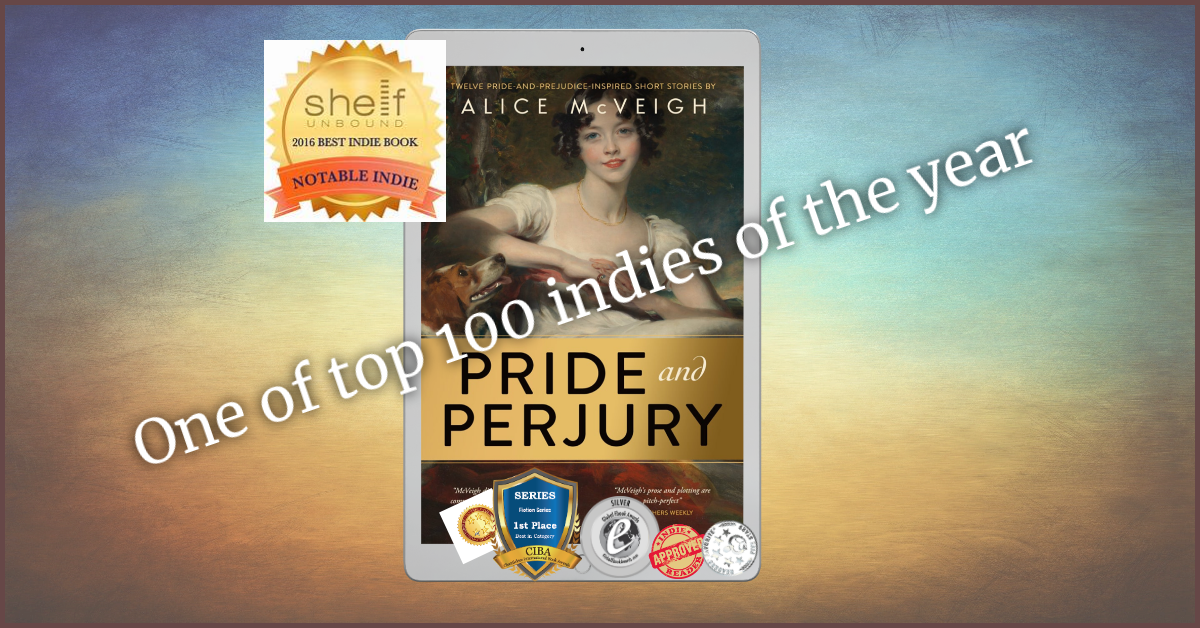
Alice McVeigh, a professional London cellist, has been published by Orion Hachette (contemporary fiction), Unbound (speculative fiction, as Spaulding Taylor) and Warleigh Hall Press (Austenesque fiction). Her books have been honoured at the 2024 London Book Fair, in the UK Selfies Book Awards, runner-up in general fiction for Forward Indies’ 2022 “Book of the Year” and only this week chosen by Shelf Unbound magazine as one of the 100 outstanding books – fiction and non-fiction – of 2024.)


Leave a Reply