
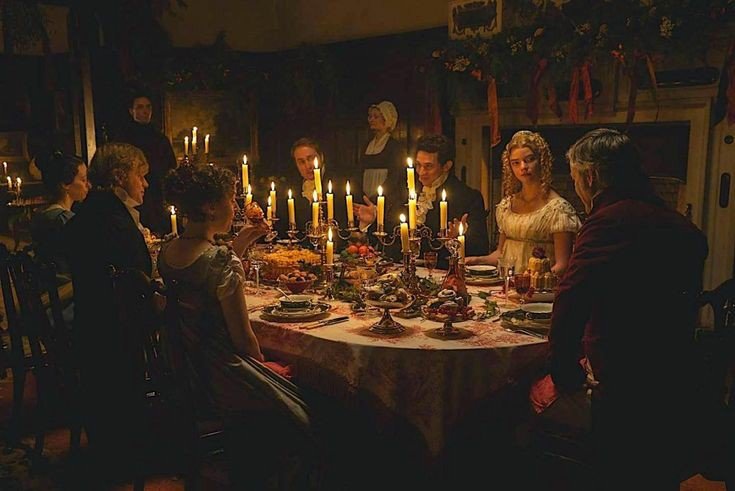
It’s that time of year here where the big meals start appearing.
The busy month of Jewish holidays has just concluded, Canadian Thanksgiving was a couple of weeks ago, and American Thanksgiving is rushing up at us. Diwali is in a few days, then several other events major and minor, and then the whirlwind of Christmas parties and dinners begins.
With all of this, is it any wonder that I have recipes on my mind?
More specifically, I’ve been thinking about old, historical recipes. This has been an interest of mine for ages. Back when I pretended to be an academic, I published a paper on spices and literature, and I’ve experimented with Medieval recipes for years. I’ve prepared Medieval feasts (albeit with the conveniences of a modern kitchen) and have scratched my head over what, exactly, “sweet spices” might include. I’ve prepared the wine-baked pears and herb-filled griddle cakes, and enjoyed every bite.
But those old cookbooks I studied don’t always have the same ingredients we usually think about. Pigeon was, until not so long ago, a regular menu item, and for a feast, roast swan was a delicacy. Playing with food was considered a good thing as well, especially if you were a fancy Medieval chef, where you would prepare a pheasant by keeping the feathers and replacing them after the bird was cooked, so it looked like it was still alive while sitting on your plate! Not quite my tastes, but there was a real artistry in how food was presented.

I will not pretend to be an expert in Regency cooking. There are plenty of terrific people around to take you on that journey (may I suggest, for the interested, a peek at Paul Couchman’s site, The Regency Cook). But it doesn’t take much poking around early 19th-century cookbooks or food sites to discover that the Regency table was almost as foreign to us as the Medieval table. Pigeon? Parmesan cheese ice cream? Brains? Lamprey eels?
Yes, some people do still enjoy some of these more, er, exotic dishes, but it’s fairly safe to say that they grace relatively few tables these days.

However, well into the twentieth century, dishes like roast rabbit and squirrel were found in the pages of popular recipe books. The Boston Cooking School Cook Book (Fannie Merritt Farmer) I have from 1939 has directions on how to choose a good rabbit for cooking (look for soft ears and paws, and short necks), as well as recipes for pigeon, and my 1953 Joy of Cooking (Irma S Rombauer and Marion Rombauer Becker) even has descriptive illustrations on how to skin and dress rabbits and squirrels, as well as several suggestions for how to prepare them.
Now why, you ask, has my rabbit hole led me to literal rabbits?

Well, in my recent release, Pride and Pursuit, Elizabeth Bennet and Fitzwilliam Darcy find themselves on a desperate flight through Wales as they try to escape a murderous George Wickham. Money is running out and there’s no handy Tesco or Safeway at the corner where they can pick up a quick something to tide them over.
On one rather hungry occasion, Elizabeth decides to show her travelling companion that there might be more to a lady’s accomplishments than being able to sing and paint screens.
Here’s an excerpt for you from Pride and Pursuit.
The burble of running water suggested a stream very nearby, and a short walk behind the shack proved this to be so. It was not Milden Hall, but after two days of driving in the rain, it looked beautiful to Elizabeth’s tired eyes.
Will knocked at the door, and then, when there was no response, pressed upon it. It swung open, revealing a single room, larger than Elizabeth had expected, with a table, two chairs, and two cots against one wall. There was a fireplace along the side wall closest to the door, and two shuttered windows, one facing the front and the other the back of the hut. From the dust on the floor, no one had been in the place for several months.
But what caught her attention was not the little set of shelves beside the door that held some tin plates and knives and two iron pots that would fit over the fire, nor the rough trunk by the beds that, when opened, revealed some heavy blankets, but rather, the assortment of tools lying against the corner between the window and fireplace.
“It’s somebody’s hunting box,” Will exclaimed when he followed her gaze. “Look, a small axe, a bow and some arrows, and some traps. Rabbits, probably. Nothing dangerous, thank the heavens. We shall be safe in here until Dobbin decides to walk again. Why do you not see if you can make us comfortable for the evening, whilst I see about feeding the horse. I believe we have enough hay if he cannot find suitable grazing. Ah, there is a bucket as well. I shall try to get some water from the stream.”
He took the metal pail and set off to do his chores.
There was little enough to do. The rain had, by now, stopped falling, and weak sunlight slid through the cracks in the shutters. Elizabeth threw them open to allow fresh air and light into the room, dispelling some of the dampness and the scent of old dust. There was a flint and steel knife on the shelf with the implements, and a few minutes work set a little fire burning in the hearth. The wood was a bit wet and it smoked, but it burned steadily enough for now, and they could find more logs later.
Then she shook out the blankets and draped them over the backs of the chairs to air out, before further examining the hunting equipment in the corner. This was something she knew about from time misspent in the woods (according to her mother) back at Longbourn. The bow was old but still strong and flexible, and the string needed only a bit of tightening. She fingered the few arrows and tested their tips, a smile on her face.
When Will returned a while later, it was to find her sharpening one of the knives, with the bow and arrows on the table.
“Elizabeth? What are you doing?”
She turned a beaming smile towards him. “Preparing dinner, of course.”
The look on his face was enough to widen her grin. He did not seem the sort of man to be often perplexed, but the expression was eloquent.
“We have a few pieces of bread left,” she explained, “which we might wish to keep for breakfast. For dinner, I hope you like roasted rabbit.”
I wonder what Mr Darcy thinks of this rustic fare. It must be quite a change from the ragouts that Mr Hurst claims to enjoy so much.
If you’re curious about some of the more unusual historical recipes I’ve found, take a look at these. Some are still considered treats, so let me know if you’ve had any, or if you’re curious!
Hirchones (Hedgehogs)
No, not real ones, but it’s a good question. These are little sausages made to look like a mother hedgehog and her litter. Forgive my translation from Middle English.

Take the stomach of the great swine and five or six of pigs’ stomachs. Fill them full of the seasoned stuffing (of the meat) and sow them tight. Parboil them; take them up and make small pricks (slivers) of good pastry and fry them. Take these fried pricks and set them in the stomach in the stuffing, made after a hedgehog without legs. Put them on a spit and roast them, and colour them with saffron, and serve them forth.
In other words, make sausages from pigs’ stomachs stuffed with spiced ground pork, roll them into little logs, and stick fried pastry ‘quills’ into them to make them look like hedgehogs!
(From Pleyn Delit: Medieval Cookery for Modern Cooks, Hieatt, Hosington, and Butler, 1996
Jugged Hare
Here is some interesting information from the Jane Austen Centre’s blog on hare, stews, and our favourite author.
https://janeausten.co.uk/blogs/uncategorized/first-catch-your-hare-hannah-glasses-jugged-hare
If you’re not too eager to click, and yes, there is a photo of the hare being prepared, here’s their recipe:
Skin the hare, and cut it in pieces, but do not wash it; dredge it with flour, and fry it a nice brown in butter, seasoning it with a little pepper, salt, and cayenne. make about a pint and a half of gravy from the beef. Put the pieces of hare into a jar; add the onion stuck with 4 or 5 cloves, the lemon peeled and cut, and pour in the gravy. Cover the jar closely to keep in the steam; put it into a deep stewpan of cold water, and let it boil four hours; but if a young hare, three hours will be sufficient. When done, take it out of the jar and shake it over the fire for a few minutes, adding a table-spoonful of mushroom ketchup, 2 glasses of port wine, and a piece of butter rolled in flour, with some fried forcemeat-balls. Serve with red currant jelly.
Jellied Eel
If jellied eels appeal, you don’t need much of a recipe at all. This dish, which began as a simple way to take advantage nutrient-rich eels that crowded the Thames in the 17th century, became something of a city favourite. Simply take chopped eels, cook them in a flavoured or spiced stock, and let them cool. Ta-da!
Parmesan ice cream
Time for dessert. You’ve been looking forward to this treat all day, haven’t you?

Take six eggs, half a pint of syrup and a pint of cream; put them into a stewpan and boil them until it begins to thicken; then rasp three ounces of parmesan cheese, mix and pass them through a sieve, and freeze it.
From The Complete Confectioner, Frederick Nutt, 1790
You can read with Elizabeth did with her rabbit in the pages of Pride and Pursuit, available at Amazon and free to read on Kindle Unlimited.


Leave a Reply to Riana EverlyCancel reply