
Have you ever been reading a book you are enjoying very much and all of a sudden there appears a term or event that just doesn’t fit what you’re perusing? I have experienced that several times when reading Regency romance or even Pride and Prejudice variations.
Some of the most common interruptions are:
- misspellings
- use of wrong words
- incorrect time placement of an event
- using American terminology when the setting is England (Great Britain)
- having someone arrive at a destination the next day when the distance is 150 miles and the time period is the Regency and the transportation is either horse or carriage
- a gap indicating a missing word
So, let’s take each of these one at a time.
- Misspellings – In many cases, it’s just because we are not paying attention. When working on the computer, depending on the settings, we get a small message letting us know the correct spelling. However, that message may not appear if we are dealing with homophones (words that sound alike but have different meanings), and we use the wrong word. Homophones are interesting words: different meanings and different spellings that spellcheck may not have caught. Caught/cot, suite/sweet, heel/heal, borough/burrow, whether/weather, toe/tow, which/witch, waist/waste, write/right, male/mail, board/bored, team/teem, hair/hare, bare/bear, road/rode, sink/sync, paws/pause, pane/pain, mall/maul, flower/flour.
- Use of wrong words – This usually happens if one is not familiar with the terms that should be used.
- Incorrect time placement of an event – This applies especially to noteworthy worldwide events such as a war, etc. However, an author may deliberately displace an event to fit a particular plot. If they do, and the plot works, the author might mention the displacement so readers are aware that it was deliberate and not a mistake. That might prevent negative reviews that the author had either not done their research or didn’t know what they were writing about.
- American terminology versus British usage of words – If the setting is in Britain, an author needs to be aware of how various words are used and spelled whether the story is the current time period or during the Regency. Most of my books have an American Edition and a British Edition. I also have a list of about 100 words that have different spellings for American and for British perusal. And, yes, I change the spellings for the British editions so my readers in Great Britain will get a little more enjoyment out of reading my books because of the more familiar spelling.
- This one concerning travel time is something that really irritates me. I just finished reading a book that had someone traveling to Pemberley from London and arriving the next day. When I checked the distance from London to Derbyshire County, the distance is 150 miles. My goodness!!! Did the horses pulling the carriage have wings? If I’m remembering correctly what my research found was that carriages traveled about 10-13 miles per hour. The most distance they would cover in a day could be up to 30 miles. There had to be numerous stops on a 150-mile trip because the horses had to be bated (rested, watered, and fed) or even changed for fresh horses, and the passengers would need breaks for meals and potty stops especially if there were children aboard or women with overactive bladders. And unless the carriages were well sprung, breaks were needed for the passengers to just walk and get the kinks out from riding over rough roads or dealing with inclement weather. So, a carriage traveling from London to Pemberley would take at least five days or more on average.
- Missing words – Again, spellcheck will probably catch this and the author should also.
These are just some of the writing traps that I endeavor to avoid. Are all my books perfect? I doubt it as I am as imperfect as the next person. However, one thing I am doing is going back and re-reading all of my books to see if there are mistakes or changes I could introduce that would make them more interesting.
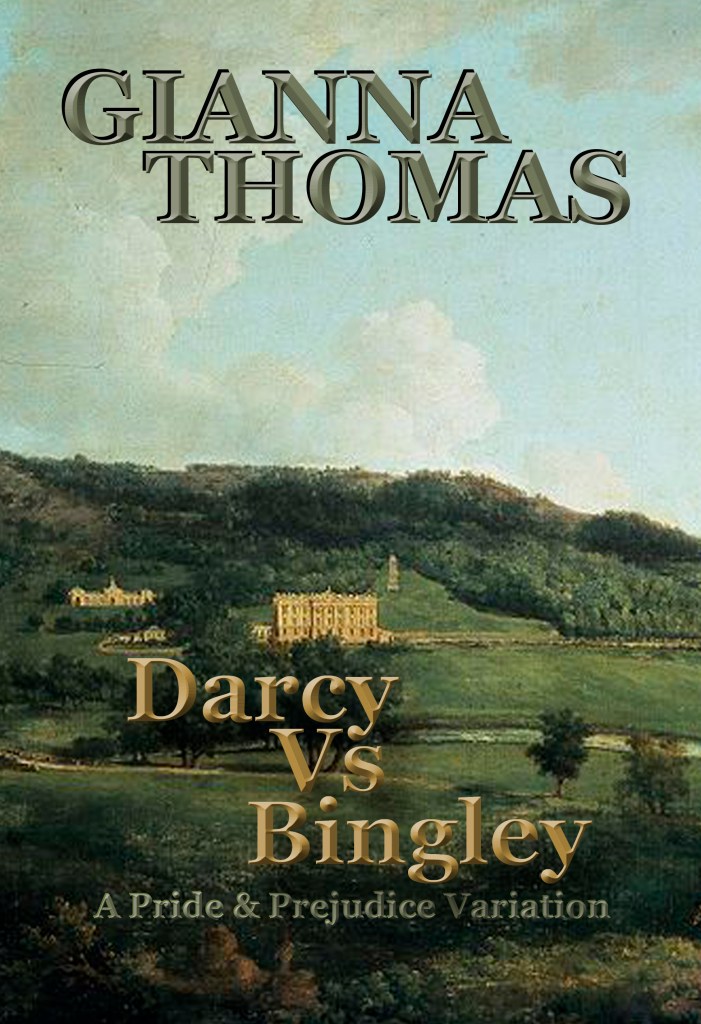
In the meantime, the paperback of Darcy Vs Bingley is available for only $9.99 until November 30th. You save $3.00. Enjoy!


Leave a Reply