
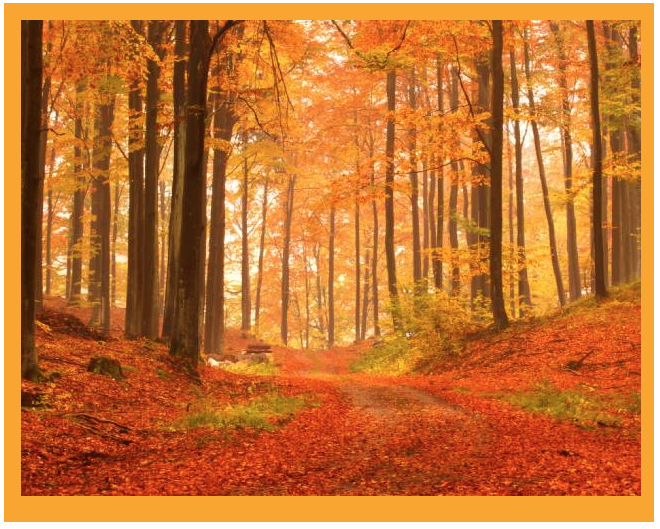

Now that autumn is upon us, we are all awakening to the delights of crispy fallen leaves and misty mellow mornings. However, for Jane Austen’s contemporaries, especially those living in the country, the changing of the seasons would have meant far more than that.
Ash trees, which were considered a great adornment of any country estate, started shedding their foliage early, heralding the change of seasons. The yews, mind you, remained evergreen – those patriotically-minded recalled their role in the long-ago victory at Agincourt (the longbows having been made from the yew), especially in the light of the new and bloody conflict with France.
The very first month of the new season brought one of the year’s four “quarter days” – Michaelmas Day on September the 29th. It was a very important date, since that was when servants working at those country estates would have been paid their wages for the past three weeks. The day was celebrated by the cooking of a good fat goose, usually with prunes and apples. There was even a saying – “Who eats goose on Michael’s day, shan’t money lack his debts to pay”. Whether they meant the goose part as a cause or an effect is up for debate, of course!
In general, autumn meant harvest, and harvest meant a bright flash of abundance at the table. Of course, if one was wealthy enough to have a good hothouse, he did not depend on the changing of the seasons as much as most of his peers did, not to mention most of the population – you could have apricots, asparagus, and strawberries regardless of the weather outside. Importing oranges from Spain would also be possible in that case, though that would have been considered luxury.
However, for most people, including even the minor landowners, life was still very much tied to the rhythms of the season. It was a good thing, therefore, if the season proved generous. September fruits alone included peaches, figs, mulberries, nectarines, and grapes – not to mention apples. Recipes for apple-involving desserts, whether these were apple pies or dumplings, were popular and numerous.
If you were lucky enough to live not far from the nearest shore, you could also enjoy a profusion of autumn fish on your table – for example, pike, halibut, carp, and shellfish, while the summer catch types such as mackerel were no longer available.
However heavy the tables after the harvest, though, a good mistress of the house (or, honestly, even most average ones) would have remembered that the lean days of winter were ahead, and some of this plenty would have to be preserved.
There was a number of ways to do that. For example, meat, such as that of the pigs traditionally slaughtered in November, could be salted or pickled. There was also a method used for all kinds of foods known as potting – one cooked the food, then put clarified butter (so, a butter that had been heated to remove the milk solids) over the top to avoid spoilage. In a twist, fruits could be potted in honey.
There was a fashion for preserves of green colour in the era, so those ladies who wanted to be modish as well as practical had fruit and sugar boiled in brass or copper pans to dye the preserves with verdigris. This was not particularly good for anyone’s health, and, perhaps, some at the very least suspected it to be so – after all, there was a safer way to achieve the same hue that developed as an alternative. This other option consisted of boiling the fruit under a thick layer of vine leaves.
However, the autumn days did not mean simply a long to-do list for the lady of the house. They could also mean dances, such as lively Scottish reels or, in the later decades, the rather side-eyed newfangled waltz, for autumn was when assembly rooms started opening their doors. Apart from fulfilling the simple human need to move and socialize, visiting assembly room balls could also mean the vital act of showing respect for your neighbours. This was especially important if your rank was high enough for them to be looking up to you. Suffice to say, Regency society was not precisely tailor-made for introverts!
Whether the men of the house enjoyed the assembly rooms as much as their wives and daughters did varied; however, most of them did enjoy another fruit of autumn – namely, the hunting season.
The best hunting country was situated in the shires surrounding Leicestershire, but hunting parties gathered everywhere across the land. Shooting was usually conducted on foot, and most targets were game birds – the hunters used “bird dogs” to find and flush the game. The birds they hunted included pheasant, duck, woodcock, and partridge.
Of course, it must be noted, not all men loved the sport – the famous dandy Beau Brummel was noted for riding out with the hunters in the crisp autumn mornings, but then going back to the house before the first fence. This kind of behaviour, however, was often considered peculiar, and even sometimes unmanly.
Not all Regency autumns were as golden and as full of good food and companionship as that, though. The most notorious example was 1816, also known as the Year Without Summer. This event, featuring the coldest temperatures on record between 1766 and 2000, was essentially a volcanic winter, following the eruption of Mount Tambora in faraway Indonesia the year before. As a result, the harvests that year were dire, and hunger loomed. While the real-life equivalents of Jane Austen’s genteel characters would not have faced starvation, they would have still had to spend their October evenings worrying about the skyrocketing food prices and what these could mean for their tenants and servants.
After all, as in most societies before the twentieth century, good autumn harvest and a bad one could mean a difference between a contented winter or a very, very lean one indeed. Even for people insulated with a degree of wealth, this precariousness was never far from their thoughts as they watched the ash trees shed their leaves and the world outside growing steadily cold.

Ann Hawthorne is a passionate student of the Regency era, and sets all her historical romances there. Her books do not follow the leading couples into their bedchambers, preferring to let the sparks fly in the ballroom instead. More information about her and her books can be found at cleanregencyromance.com.


Leave a Reply