

Hello Friends! One question I get asked about a lot is – how do I do research for my books? Being set in the 1800s, I obviously don’t have personal knowledge of the time period, customs, and lives of the people I’m writing about. So how have I developed my writing style and my characters?
The cheeky answer is – Blogs like Always Austen of course 😊
The real answer is much more complicated. From the beginning I’ve tried to use my critical research skills from my university degrees to vet out what sources are academic in nature with enough detail and context to provide me with a good basis for some detail in my stories. Some of these well vetted published source include Ian Mortimer, Claire Tomalin, Jennifer Kloester, and the married historians Roy & Lesley Adkins. Academic papers from JSTOR and other journal publication repositories are also a great way to find serious research into the life and times of yore.
And of course, there’s Wikipedia. Good old Wikipedia, with its well curated, easily digestible, and well cited topics pages. And the well funded Widimedia Foundation who raises money to make sure that no one tries to take over the website and sell it to the highest bidder. The nonprofit holding back political institutions, seditionists, propaganda spreaders, and people determined to spin their own narratives around the truth. I personally feel that the Wikimedia Foundation is one of the most important nonprofits in the world today.
Seriously, how did any of us survive before there was Wikipedia?

But we were talking about rabbit holes. It always starts with one simple question – “what’s the average time after marriages before a pregnancy in 1800s England?” (Okay, maybe not so simple). Then four hours later, and hundreds of open tabs, you are knee deep in the controversary over whether charcoal drawings on the walls of caves in Egypt as far back as 200 CE actually depict early penile gland condoms or if those are just loin cloths worn by the laborer class.
This is a real debate and if you have time and interest, I suggest you look up some of the back and forth here because it is full of shade throwing by people with Ph.D.s and some really funny attempts to not explicitly talk about genitalia and mechanics of human sexuality. You’d think that people who research historical birth control methodologies and societal responses to early prophylactics would be less squeamish about it all, but oh well.
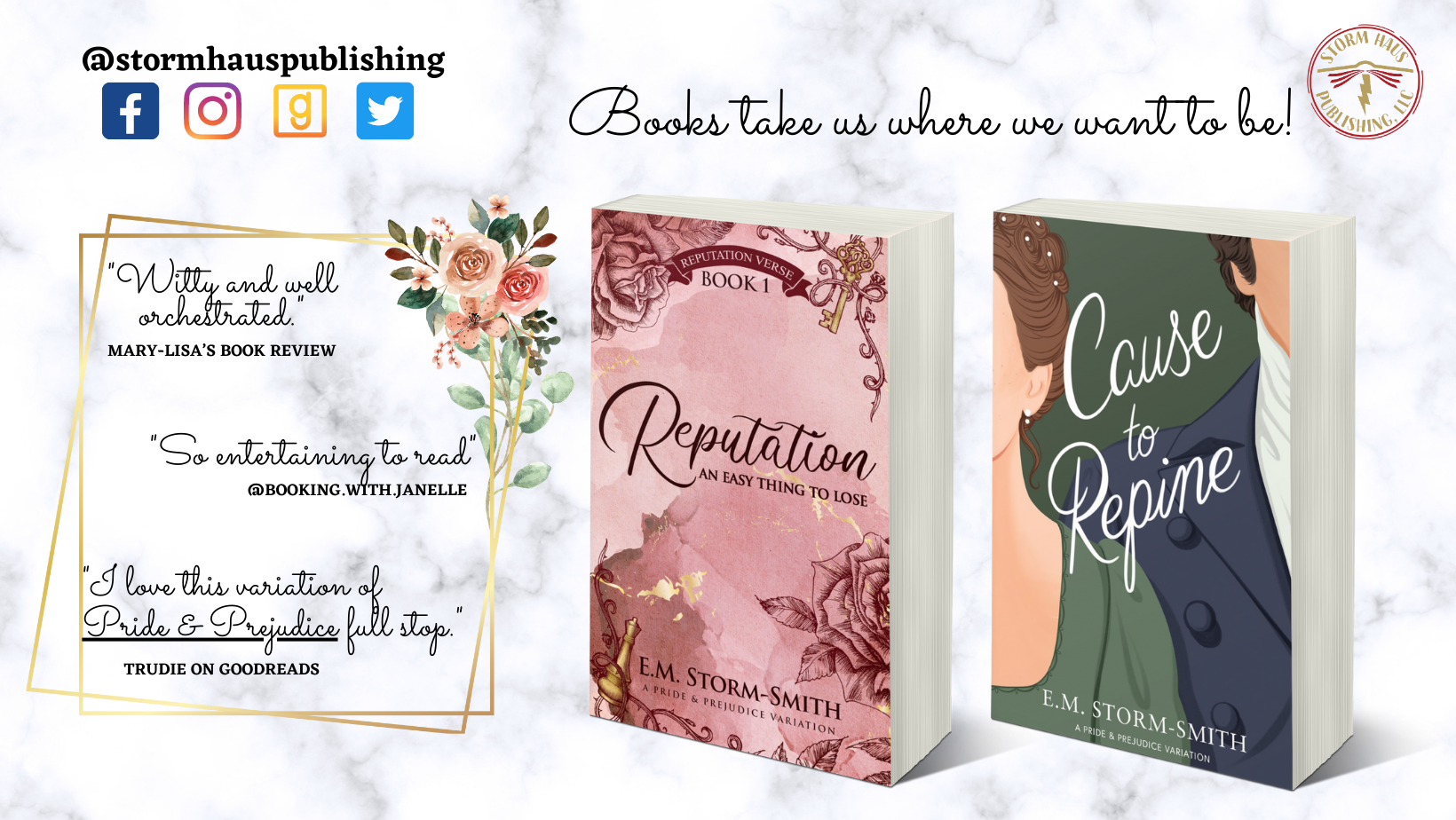
So, why are we here, on this turn in the bend that I’ve taken you down? Well, by far, the number one thing I’ve been asked about from either of my books is my mention of condoms in Reputation, An Easy Thing to Lose. You see, I had a problem in the narrative. The main theme of the book is a secret marriage following the death of both Mr. Bennet and Lt. Wickham in a duel over Lydia’s honor. The alternative universe set-up requires that Lizzy and Darcy marry in secret, then present to the world that Lizzy is Georgiana’s debutant companion during her London season. But they get married in the fall and had to survive the winter together before coming back to London for the spring/summer social season. So, showing up heavily pregnant would have been a spoiler for the story I wanted to tell. It seemed unreasonable to cottontail some story about remaining abstinent for the first 8 months of their marriage, so I needed another explanation as to why/how they could pull this off.
Hence the Googling about the arrival of babies.
Instead of relying on some wishful thinking, I decided to just write in that Lizzy’s uncle Gardner, who is a merchant, knows where to get a supply of early 1800s lamb skin condoms. It’s really a throw-away reference inside one paragraph of the story. Nothing specific at all, just a mention of Jeremy Bentham who championed the use of sheeps’ intestines condoms as a way to protect English troops from syphilis during the Eighteenth and Nineteenth century French wars and then also provided them to prostitutes around London to try and cut down on the unhoused child population. But man, does it get people’s attention.
I’ve had people email me asking everything from how in the world I could put something like a reference to condoms in my books <<pearl clutch!!!>> to accusing me of making up the whole thing and didn’t I know that the Georgian and Regency periods in England were certainly more sexually repressed than we are today and condoms were not necessary at all, for shame!
Sidebar – if you have heard that people were more faithful, less promiscuous, more repressed, or less sexually diverse in ye’olde times, I would love to point you towards some fun scholarship and academic writings on how the opposite is really true. Queen Victoria was a prude for sure, but mostly because her father and his siblings were absolute debauchers. The nobility in England during the regency period was full of sexual freedom for both men and women. It is well documented today, and wasn’t even particularly hidden at the time, that Willian Lamb, the second Lord Melbourne was not the natural child of the first Lord Melbourne. Lamb’s mother provided his husband with one male heir, then proceeded to have an ongoing relationship with George Wyndham, 3rd Earl of Egremont by which it is alleged that she bears William. When his older brother dies, William Lamb inherits the entire Melbourne estate because by law, he was Lord Melbourne’s son. He even goes on to become Prime Minister in 1835 and a close confidant of Queen Victoria.
Of course, he denied the accusations of his disputed parentage his entire life, it was the polite thing to do in public after all. But Lamb did visit Egremont regularly throughout his life and was with him when the earl died. So, maybe it’s true, maybe it’s not. All I know for sure is we’re not going to be digging either of them up anytime soon to do DNA tests.
So, now that I’ve given you adequate warning, here’s some information about condom use and birth control in the Regency period.
While there are a smattering of references to sparse coverings for the glands of the penis sprinkled throughout antiquity, contraceptives were not widely referenced in Europe after the decline of the Western Roman Empire until the 1500s. Muslim, Jewish, and Asian writings have references to advances in male-controlled birth control methods throughout the Middle Ages, but if the knowledge and use of barrier method prophylactics were practiced in Europe in that time, they were not being mentioned in the primary sources which have survived to today.
Barrier method birth control became important again during the first wide spread syphilis outbreak in France at the end of the 1400s. The French troops were ravaged by the disease, which caused horribly painful pustules that would often leave gaping wounds on the victims’ face. The disease spread quickly across Europe and Asia from the trade routes and decimated large areas of rural China in the 1500s.
By the late 16th Century, an Italian priest, who was also a scholar of anatomy and physics, Gabriele Falloppio, wrote a detailed treatise on “De Morbo Gallico” – The French Disease. This is where the common name for syphilis used until well past the Regency period comes from, as well as the first uncontested primary reference to what we would recognize as a modern-day condom. In his treatise, Falloppio claimed to have done experiments with men using his version of a glad condom and finding that none of them contracted the disease when they used the device.
Side note – Fallappio is also credited with the first accurate anatomical depiction of the female reproductive system and for whom the fallopian tubes are named.
Throughout the early European history of birth control, they were as controversial as you might imagine. Many religious leaders, Catholic theologian Leonardus Lessius chief among them, condemned their use as immoral and against God’s will. But their efficacy in preventing both disease and unwanted pregnancy were difficult to deny and use of condoms spread rapidly in the enlightenment period.
The personal physician of King Charles II is credited with first using animal intestines covered in oil lubricants as an easy to produce, durable material for condoms. Prior to this, most were made out of a linen fabric like material which was prone to tearing and not as effective at preventing pregnancy. Think of using cheese cloth as your birth control. Not the best for sure. And with how prolific Charles was at bedding women of all stations in life, his need for more effective birth control was obviously a serious priority for his physician.
The first undisputed use of the word “condom” comes from a report of the English Birth Rate Commission, published in 1666, which attributed the noticeable decline in the English birth rate to the widespread use of male sheath barrier prophylactics. And the earliest English specimens of condoms made from animal membranes ever found date to about 1640. They were found in the cesspit on the grounds of Dudley Castle and still mostly intact.
In the 18th and 19th Century, condom use had become so widespread that there was public discourse against them. Many political, religious, and even some medical authorities condemned the use of contraception as immoral on several grounds. Beyond those arguments that we would expect today, such as preventing pregnancy is against the will of God and that no one, but women especially, should not engage in sexual intercourse outside of the marriage bed, some medical scholars argued that condoms actually increased the rate of syphilis. Noted English physician Daniel Turner argued that the availability of condoms encouraged promiscuity, but the loss of sensation often led those same men would actually engage in unprotected sex in unsafe ways.
More recent scholars note that the prevalence of brothels and sex workers did not statistically increase after the introduction of the condom, so there is little to no evidence that promiscuity increased as a result of the availability of condoms. Therefore it is likely that those cases of syphilis would have been suffered regardless of the availability of condoms and without such availability, there would have been more cases. But this did not stop the anti-condom powers that be from using Turner’s work as the centerpiece of the scientific medical movement against condoms. This movement would grow and by the 1870s, governments around the western world were enacting legislation banning the manufacture, distribution, and use of contraceptives including condoms. But that’s a rant for another day 😊
By the turn of the 1800s, birth control advocates in England were promoting and distributing condoms to the masses. Most were made of oil-soaked animal intestines and came with instructions on how to wash and reuse them. The British crown army purchased condoms in bulk to send to their troops fighting in France during the Napoleonic wars (it was the French disease you know) and theatre promoters would allow the distribution of condoms near the theatre entrances to encourage their patrons engage in evening activities safely.
So, all that is to say, yes, Mr. Gardner would have absolutely been able to get his hands on a box of condoms for Darcy in 1813. Easily.
Did you need to know all that in order to understand and enjoy literally 25 words in my book?
No, definitely not.
Did I need to understand all that in order to write those 25 words?
Yeah, probably. And again, this was all the background research I did for 25 words out of 97,000.
I guess what I’m saying is check on your writer friends. They’re probably drowning in open Google search tabs.
Come find me in all the usual places!


Leave a Reply