
Learn all about knights and what makes them different from other members of the British Peerage, especially during the Regency era.
The Regency era in England, spanning from 1811 to 1820, was a time of great social and political change. During this period, the British peerage system was well-established, with titles that held distinct roles and privileges.
Among these titles were knights, a peerage rank that stood apart in certain ways from the more familiar titles of dukes, earls, marquesses, and barons.

The Origins of Knighthood
Knighthood in England had ancient origins, dating back to the early medieval period. Knights were typically members of the landed gentry or nobility who were granted the title in recognition of their military service and loyalty to the monarch.
Becoming a knight prior to the Regency period involved a ceremonial ritual known as “dubbing,” in which a knight-to-be knelt before a lord or monarch, who then tapped him on the shoulder with a sword, symbolizing his new status.

The Distinctive Role of Knights
Knights held a special place in the peerage system of Regency England. While they were not as high in rank as dukes, earls, or marquesses, knights were considered the epitome of chivalry and were often respected for their bravery and service. Their primary duties revolved around military service and protection, which was especially important during a time when England faced the constant threat of war, both domestically and abroad.
One of the most distinctive aspects of knights was their obligation to provide military service to the king or lord who had granted them the title. This duty often included the provision of armed men and resources for the defense of the realm. Knights were expected to be skilled in the art of warfare, including horsemanship and the use of weapons like swords and lances.

The Code of Chivalry
Knighthood in Regency England was closely associated with the code of chivalry. Knights were expected to uphold a set of moral and ethical principles that included loyalty, honor, courage, and courtesy.
The code of chivalry emphasized the protection of the weak, the defense of justice, and the adherence to a strict moral code. Knights were also expected to be courteous and respectful to women and to act with humility.

The Social and Economic Standing of Knights
In terms of social and economic standing, knights occupied a middle position in the peerage hierarchy. They were ranked below the higher-ranking titles of dukes, marquesses, and earls but held a more prestigious position than barons. Knights were often landowners, holding estates that generated income, and they were considered part of the landed gentry.
One key difference between knights and other peerage titles was the absence of a hereditary element in knighthood. While titles like duke, marquess, earl, and baron were typically hereditary and passed down through generations, knighthood was not.
A person could be granted knighthood during their lifetime in recognition of their service, but the title did not automatically transfer to their descendants. This aspect of knighthood made it unique among peerage titles in Regency England.

Honorary Knighthood and Social Mobility
One intriguing aspect of knighthood during the Regency era was its role in social mobility. While the highest peerage titles were typically reserved for the aristocracy, knighthood offered individuals from more modest backgrounds the opportunity to ascend socially.
Many knights had not been born into nobility but had earned their titles through acts of valor or service to the crown. This aspect of knighthood made it a symbol of meritocracy in a society still marked by rigid class distinctions.

Honorary knighthoods were often granted to individuals who had made significant contributions to the country in fields such as politics, literature, or the arts. Such individuals were not dubbed in a formal ceremony but were granted the title of “Sir” as an honorific.
Orders of chivalry, such as the Order of the Bath or the Order of the Garter, were prestigious organizations that recognized exceptional service to the crown. Membership in these orders was highly coveted and bestowed upon individuals from various walks of life, including military leaders, statesmen, and scholars. Knights who belonged to these orders held a special place in society and were often seen as exemplars of chivalry and honor.

The Decline of Knighthood
As the 19th century progressed, the role of knights in English society began to change. The advent of modern warfare and the decline of feudalism contributed to a diminishing need for knights in their traditional military role.
Additionally, the social and economic changes brought about by the Industrial Revolution shifted the focus away from the landed gentry and towards industrialists and entrepreneurs.
The decline of knighthood as a prominent and influential peerage title continued into the Victorian era, as the British aristocracy underwent further transformations.
However, the legacy of knights and their code of chivalry persisted in literature, art, and cultural expressions of the time, reflecting a nostalgia for a bygone era of noble ideals and gallant heroes.

Famous Knights in Regency Times
During the 19th century, many notable British individuals were knighted in recognition of their achievements and contributions to society. Here are some famous British knights from the 19th century:
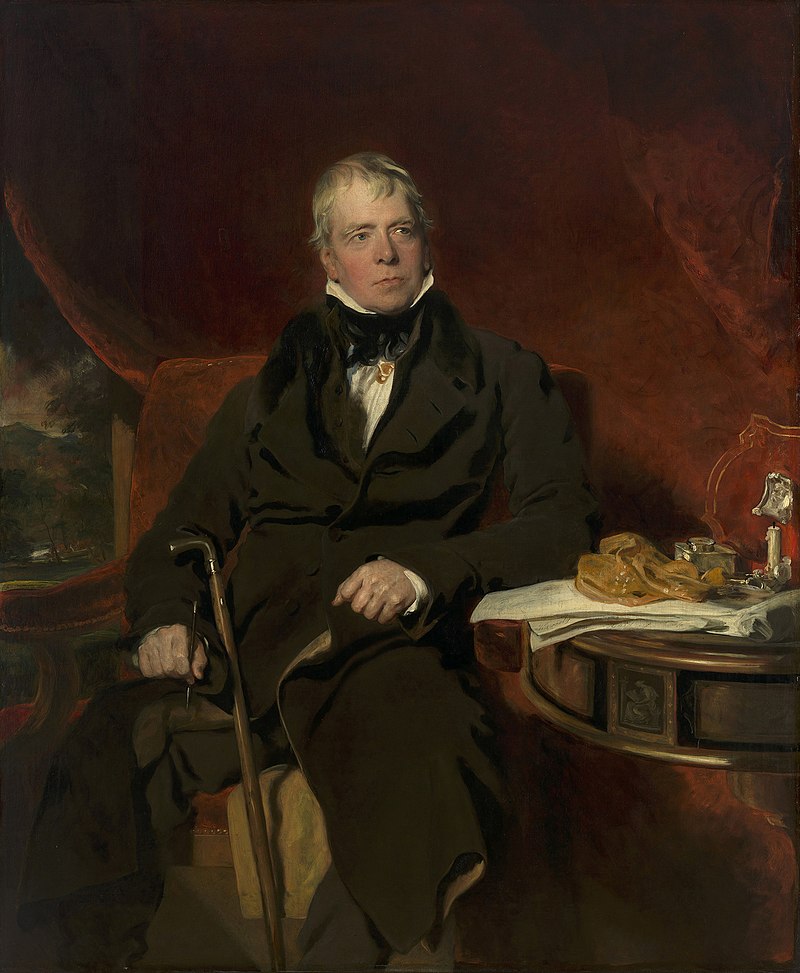
- Sir Walter Scott (1771-1832): pictured in header image The renowned Scottish novelist and poet, best known for his historical novels like “Ivanhoe” and “Rob Roy,” was knighted in 1820 by King George IV.
- Sir Robert Peel (1788-1850): A prominent British statesman, Peel served as Prime Minister twice and is often regarded as the father of modern policing. He was knighted in 1830.
- Sir Joseph Paxton (1803-1865): An accomplished architect and horticulturist, Paxton designed the famous Crystal Palace for the Great Exhibition of 1851 and was knighted for his contributions to architecture.
- Sir George Gilbert Scott (1811-1878): This prolific Victorian architect designed many iconic buildings, including the Midland Grand Hotel at St Pancras Station and the Albert Memorial in London. He was knighted in 1872.
- Sir Joseph Lister (1827-1912): A pioneer in the field of antiseptic surgery, Lister’s work significantly reduced surgical infection rates. He was knighted in 1883.
- Sir Arthur Sullivan (1842-1900): As one half of the famous Gilbert and Sullivan duo, Sir Arthur Sullivan composed numerous operettas, including “The Pirates of Penzance” and “The Mikado.” He was knighted in 1883.
- Sir Henry Morton Stanley (1841-1904): An explorer and journalist, Stanley is best known for his expeditions in Africa, including the famous search for Dr. David Livingstone. He was knighted in 1899.
- Sir John Everett Millais (1829-1896): A prominent Pre-Raphaelite painter, Millais’ works include “Ophelia” and “Bubbles.” He was knighted in 1885.
- Sir Charles Wheatstone (1802-1875): A physicist and inventor, Wheatstone made significant contributions to the development of the electric telegraph and the Wheatstone bridge. He was knighted in 1868.
- Sir William Thomson, Lord Kelvin (1824-1907): A pioneering physicist and engineer, Kelvin made groundbreaking contributions to thermodynamics and electricity. He was knighted in 1866 and later became a Baron.
These knights made lasting contributions to fields such as literature, politics, science, and the arts, leaving an indelible mark on British history and culture during the 19th century.

Knighthood in Regency England was a unique and distinctive peerage title that held a special place in the social and cultural fabric of the time. Knights were revered for their chivalry, valor, and commitment to service, and they occupied a middle position in the peerage hierarchy.
While the role of knights evolved and diminished over time, their legacy as symbols of honor and bravery continued to captivate the imagination of generations to come, leaving an indelible mark on the history and literature of England.


Leave a Reply to Regina JeffersCancel reply