
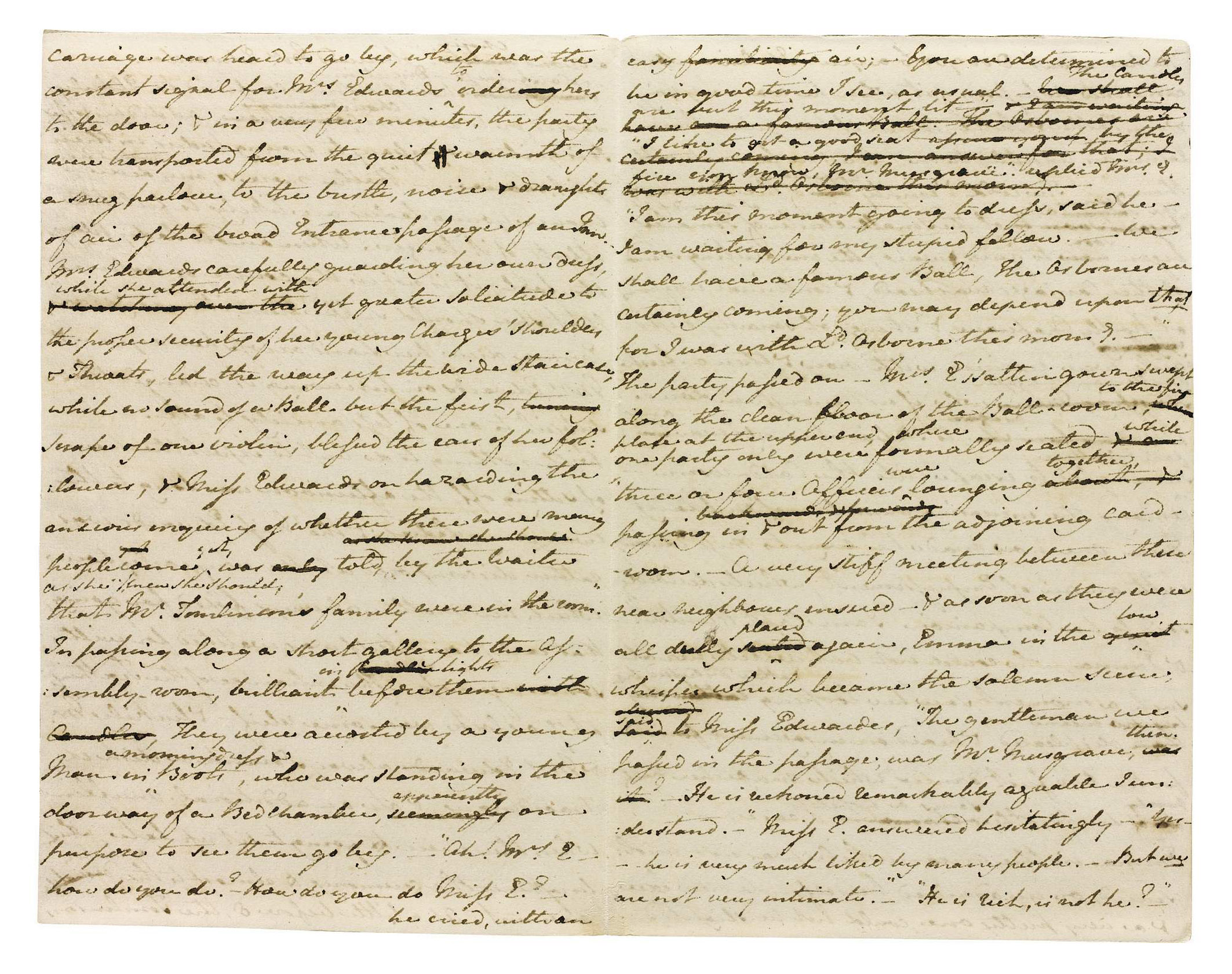
Good morrow, fair readers! As your friendly neighbourhood nerd continues my convalescence, I have been reading and listening to the Jane Austen Mysteries by Stephanie Barron. I tried to read these early in my JAFF journey (a decade before Second Son danced across my brain). As a devourer of mysteries, I thought, Jane Austen and murder! I will love these!
Love them, I did not.
I found the language clunky and off-putting. Yet, immersing myself for the last dozen years in our Dear Aunt Jane’s history, the events and literature of her day, and reading (and loving) her surviving letters, I now declare Ms Barron is a Genius – she wholly captures the original language of Jane Austen, especially the letters.

When I started writing, I struggled whether to mimic Jane’s voice or to just flow with my own. I chose the latter but with an editorial step I call “aging the language”. I studied the sentence structure of Georgian English; purchased a copy of Samuel Johnson’s 1755 dictionary; and have an ever-growing list of words and idioms that were and were not in use by 1817. (I selected the date of Jane’s death as my limit.) I read and/or listened to other novels contemporary to Austen’s masterpieces – novels she quotes or mentions, refers to in her letters, and the novels her characters (my characters, too) would have read. [I intend to supply you with book reports in future posts to spare you the agony of the long eighteenth-century’s drivel.]
Who knew that emotional, finalise, and moniker were not words in the early 1800s? Or that mess could only refer to the dining hall aboard a ship, or escort was merely used in relation to the military? Or that social had a very specific, and different meaning than the more catch-all phrase we use today? (Mr Bingley could be correctly described as social, but social calendar is out.) And I could fill blog after blog on idioms – which ones were in use, which ones were not, which ones were worded differently but had the same meaning (e.g. clear the voice instead of our clear the throat).
I am not judging other JAFF authors who choose not to “age” their voice; I read and love these stories! I chose to go down this path for myself, and there is much subjectivity therein. Stephanie Barron is an Austen language purist in her mystery series, but I am not; for example, Ms Barron uses ejaculate (correct a la Jane) where I choose exclaim because the meaning of the more Austenesque term has a vastly different connotation two centuries later. (Every time the narrator says the word, I hear a chorus of laughter from my teenage children – though they are no longer teenagers nor are they in the car.)

This subjectivity can be hard to balance. I want to take my readers back to a different time and place with my stories, but neither do I want to make the language so cumbersome that it pulls them out of the story. (Which the historic use of ejaculate does for me.) I use some historic spellings, especially if it is easy to discern the modern word. Our modern choose is chuse in Johnson’s dictionary – the one Austen used; but stile in Johnson’s means both the crossing at a fence/hedgerow AND a manner of dress (which was not a synonym for gown). Thus, I use stile for the crossing and style for fashion, because when reading the first editions of Austen’s novels, “stile of dress” pulls me out of the story to re-read the sentence to ensure I understood it properly.
Unfortunately, dear readers, I may have met my historical accuracy undoing: sibling. As Inigo Montoya says in [the greatest film ever made] The Princess Bride, “You keep using that word. I do not think it means what you think it means.” At least in Georgian England, sibling doesn’t. According to my favourite site on the entire internet, sibling is an Old English word meaning “kinship”, and its modern meaning of brothers and sisters dates to 1905! In my current story, I’m abstaining from sibling’s use, but it is very clunky. Miss Lucas, along with each of her brothers and sisters, were in attendance, uses a LOT more words than, The Lucas siblings were in attendance.

We shall see if sibling makes it into the final draft of Her Heart Did Whisper – of course, it would be nice if the “tailbone block” which has been severely limiting my writing output of late would go away! (Cross you fingers for pelvic physical therapy!) In the meantime, if I fall down a rabbit trail… look for me at etymologyonline.org, where I am likely blissed out in a warren of words.


Leave a Reply to Regina JeffersCancel reply