

Ann Hawthorne loves her research and this piece on private theatricals, we learn something of how the Austen family might have put on productions of their own.
We usually associate private theatricals with half-baked, somewhat childish business, but in the Georgian and Regency era, it was taken extremely seriously.
The great and the (sometimes less-than-) good of the era indulged in it, with the sorts of production budgets that could have made a professional theatre producer envious. It had been extremely popular with the audiences, too. On one occasion in 1787, a motion in the House of Commons was deferred because too many parliamentarians were in attendance at a private performance of Arthur Murphy’s The Way to Keep Him at Richmond House!
Other members of the ton kept up – in the late 1770s, one private theatre was erected by the Earl of Barrymore in Berkshire at the cost of £60,000. The building was modelled on Vanbrugh’s King’s Theatre in the Haymarket, and could fit in no less than seven hundred spectators.
Private theatricals were not always performed by households, however – sometimes they were organized by schools. One establishment on French Street, London, was especially famous for that. The school’s headmaster, George Whittaker, helped his pupils to stage amateur theatricals for charitable causes. In 1807, Home’s famous tragedy Douglas was acted to encourage donations for the British prisoners of war in France, and the ‘house’ was reputedly completely packed.
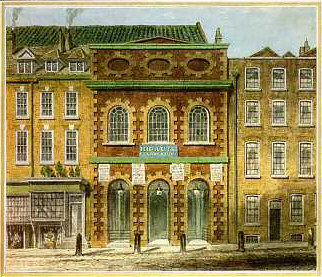
Of course, the theatricals at Steventon in Jane Austen’s youth were on a rather more modest scale than either of those. However, what Jane and her relatives lacked in funds, they made up in enthusiasm – a number of comedies and one tragedy (more of this one later) had been performed by the ‘young folks’ of the household through the late 1780s. Private theatricals were likewise beloved by her glamorous cousin, Eliza de Feuillide, a French countess.
Advertisement
In her letters, Eliza regaled her family with tantalizing tales of those were organized in France – she had been acting in those performances organized by her aristocratic friends there for years. At one point, she claims that she has ‘promised to spend the Carnival, which in France is the gayest Season of the year, in a very agreeable Society who have erected an elegant theatre for the purposes of acting Plays amongst ourselves’.
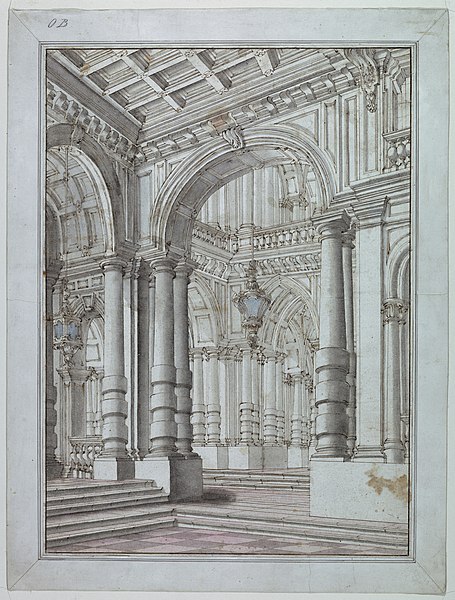
Not every member of the Austen household was enchanted by the notion and keen on taking part in the theatricals, however – and the same must have been true of any household. The reasons were not always so lofty as a commitment to modesty and propriety – sometimes, the ladies in question were just plain shy and nervous. For example, Jane’s older relative by the name of Philadelphia Walter claimed that ‘I should like to be a spectator, but am sure I should not have courage to act a part, nor do I wish to attain it’. The livelier Eliza assured her that she must not worry – ‘Do not let your dress neither disturb you, as I think I can manage it so that the Green Room should provide you with what is necessary for acting.’ The Green Room reference was, of course, ironic – in professional theatres, this term referred to a kind of waiting room or lounge for the actors.
On occasion, the barn at Steventon was fitted for the theatricals. The shy Philadelphia wrote in 1787: ‘My uncle’s barn is fitting up quite like a theatre and all the young folks are to take their part’. Which sounds a far cry from the ‘elegant theatre’ of Eliza’s circle, but likely a solution that was much wider (for the given value of wider) in use than purpose-built spaces. The same can be said of the number of spectators – one of Eliza’s letters mentions that ‘only a selected party of friends will be present’. That circumstance, again, was likely much more common than the sight of the star-struck crowds that gathered in Richmond House in the same year.
Never lacking in ambition, at one point the Austens decided to put on a whole five-act tragedy in their dining parlour (Matilda, a play in five acts by Dr Thomas Francklin).
The future novelist did not seem to be amused by the subject matter, though (a love triangle melodrama set during the Norman Conquest) – or even by the genre in general. The plot of the tragedy surely sounds dramatic enough – it’s set during the Norman Conquest, but the two brothers, Edwin and Morcar, apparently have no greater concerns than feuding over the lovely titular heroine, Mathilda. Mathilda chooses the kind-hearted Edwin, then Morcar the Evil Brother separates the lovers and tries to woo her, only to end up announcing his sudden reformation, reuniting the couple, and reconciling with Edwin.
In her juvenilia, Jane Austen noted later that a different play, but one written in a similar tone to Mathilda, The Tragedy of Jane Shore, is ‘a tragedy and therefore not worth reading’.
One can see the roots of her more future irony over certain Gothic novels here!
Perhaps, the brother and the sister thought similarly, at least when their tastes in plays was concerned – Mathilda ended up being the first and the last tragedy performed in Steventon. The rest of their repertoire mostly consisted of comedies like Susanna Centlivre’s lively play, The Wonder: A Woman Keeps a Secret. The spirited heroine, Donna Violante, played by Eliza, had to use her wits a lot to protect her friend Isabella from the horrors of an arranged marriage to a very unpleasant man.
Advertisement
One doesn’t want to jump to conclusions, but it’s rather tempting to wonder whether Eliza’s famous cousin might have recalled that particular plotline years later during her own work…
Sources:
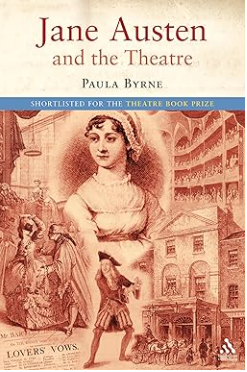
Jane Austen and the Theatre, by Paula Byrne
About the author:
Ann Hawthorne specializes in closed-door Regency romances where the sparks fly in the ballroom, not the bedroom. You can find her and her books at http://annhawthornestore.com or her website, Clean Regency Romance.


Leave a Reply