
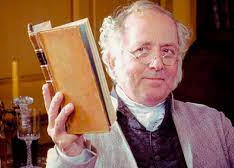
The other day, I was talking with my husband about Jane Austen (like you do), and he asked, “Why would anyone entail an estate anyway? Wouldn’t a man want it to stay in the family, no matter what?”
I’d like to pause here to reflect on just how sexy this moment was. This question came from a man who once believed Austen was just a city in Texas. A man who tried to read Pride and Prejudice, then tossed the book aside after a page and asked, “Isn’t there a movie version of this?”
(I got him back for that one. Three words: Six. Hour. Miniseries.)
Things really steamed up when Andy took out his phone to Google Regency entails, reading different answers to me from various websites. “This is pretty interesting,” he said.
And it was. That’s when I thought, “Hey, I should write a blog about this.”
“Hey, you should write a blog about this,” Andy said because that is totally something he does. He’s always trying to take credit for my writing ideas.
I can hear you from across the internet. You’re thinking that this time it actually was Andy’s idea, you Wickham-level villain, you. (Alright, fine. It sort of was his idea this time.)
When I dug deeper, I realized this entail thing is pretty interesting, so here’s what I found on entails.

What is an Entail?
An entailment was a legal clause that typically carried for three or four generations (but not forever). It most often stated that when the father died, his eldest son would inherit the estate, and this pattern of leaving the property to the eldest son would continue for generations. In the Bennets’ case, since they did not have a son, the estate was entailed to the closest living male relative. Estates did not have to be entailed to eldest sons, but that was the common practice. However, it was illegal for a father to disinherit his eldest son altogether, as his eldest son was seen as the rightful heir.
If there had been no Mr. Collins or other male heir, could the Bennet sisters have inherited?
Yes! If the estate is entailed to a male heir and there is no male heir, then Mr. Bennet’s daughters could inherit. They would have been considered equal co-heiresses, and the land and its profits would have been divided equally among them. (Lydia would have cashed out to travel to follow the regiment for sure.)

Why entail an estate, anyway?
Wouldn’t the creator of the entail want the estate to stay in the family, even if it’s inherited by his daughter? You’d think so, but it wasn’t just about sexism.
Land was power in Regency England. It determined the family’s position in society, since only landowners could join the upper class. It also produced a steady income that rescued the family from having to sully their hands with work—which was so middle class. The intact estate was thus a pretty big deal—it was income, it was status, and it made sure no one was working a job in Cheapside (shudder).
If there was no male heir, and the estate went to daughters, it would be divided. Then those daughters might marry, each taking a piece of the estate with them. The main reason for the entail was to protect against this division of the estate, which would result in the family’s loss of wealth and status. We see this in Persuasion, when Sir Walter does not want to sell off any piece of his estate to relieve his debt because of this drive to keep the estate intact. (But, yeah, it was also about sexism.)
Could an entail ever be broken?
Yes. If the person who stands to inherit agrees to end the entail and not inherit, the entail can be broken. You can imagine how many times this happened.
The Bennets didn’t have the option of asking Mr. Collins to break the entail, however, because Mr. Collins was not the heir apparent but the heir presumptive. This is because Mr. Bennet could still have a son. If Mrs. Bennet predeceased him and Mr. Bennet remarried and had a son, that son would become the heir apparent. The possibility of Mr. Bennet producing an heir only dies with Mr. Bennet. This means that the Bennets could not approach Mr. Collins, the heir presumptive, and ask him to break the entail. (Also, there’s that small problem that Mr. Collins came ready to pick a wife and move into Longbourn.)

So Mrs. Bennet was going to get nothing?
Yes and no. She wasn’t going to get the property, but after Mr. Bennet died, she would have received a dower share, which entitled her to one-third of the income produced by the estate—either from the farm or rental property. Her father also left her £4,000. This £4,000 could have been more, as a husband often invested part of his wife’s dowry to make sure that she was cared for after his death. Mr. Bennet, unfortunately, didn’t do this, as he was banking on having a son. Thank goodness Mr. Darcy and Mr. Bingley swoop in with their capes.
Is this entail thing still happening?
No. The entail was abolished in 1925 in the U.K., but wills with entails created prior to this date were still honored.
And how did I reward Andy for his sudden interest in Regency entails? I was so impressed with him that I vowed not to mix up Star Wars and Star Trek for one whole week.
Things got a little racy after that.
Andy: Let’s Google Regency entails all night, baby.
Me: Oh, Andy. Explain to me again why Spock doesn’t have emotions.
This is our love language.
Thanks for reading! If you have some burning thoughts on entails, I’d love to hear them below!
Below are some websites I used in my research if you’d like to read more:
Inheritance Laws: England, 16th-18th Centuries
Entailment in English Inheritance Laws during the Regency Era
Pride & Prejudice & Entailed land
Regina Jeffers is the expert on this. You can read her post here.


Leave a Reply to Alice McVeighCancel reply