
I did this research (and original post) a couple years ago, but it came to mind, so I delved back in to remember the details!
Pall Mall, the Street
If you’re like me, you’ve probably seen references to Pall Mall in regency romances and you may even know that it is a street in the St. James region of London, near Westminster, and that it was known for being a haunt of gentlemen. White’s Club could be found in St. James, for instance, and it was probably the most exclusive private club in London. There were many clubs on Pall Mall as well– though a little less exclusive. In 1814, Pall Mall was also an artistic center with the Royal Academy, National Gallery, and Christie’s auction house, though those all moved on to other locations pretty quickly.

The idea of a “mall” became so ubiquitous as a shopping center that the word is still used commonly in the U.S., as in “Let’s meet up at the mall,” and I think it’s still used in the U.K., although I’ve heard they tend to use the proper name for a shopping center more than we do. (Somebody from the U.K., let me know!)

But why was the street called Pall Mall at all?
Pall Mall, the Game
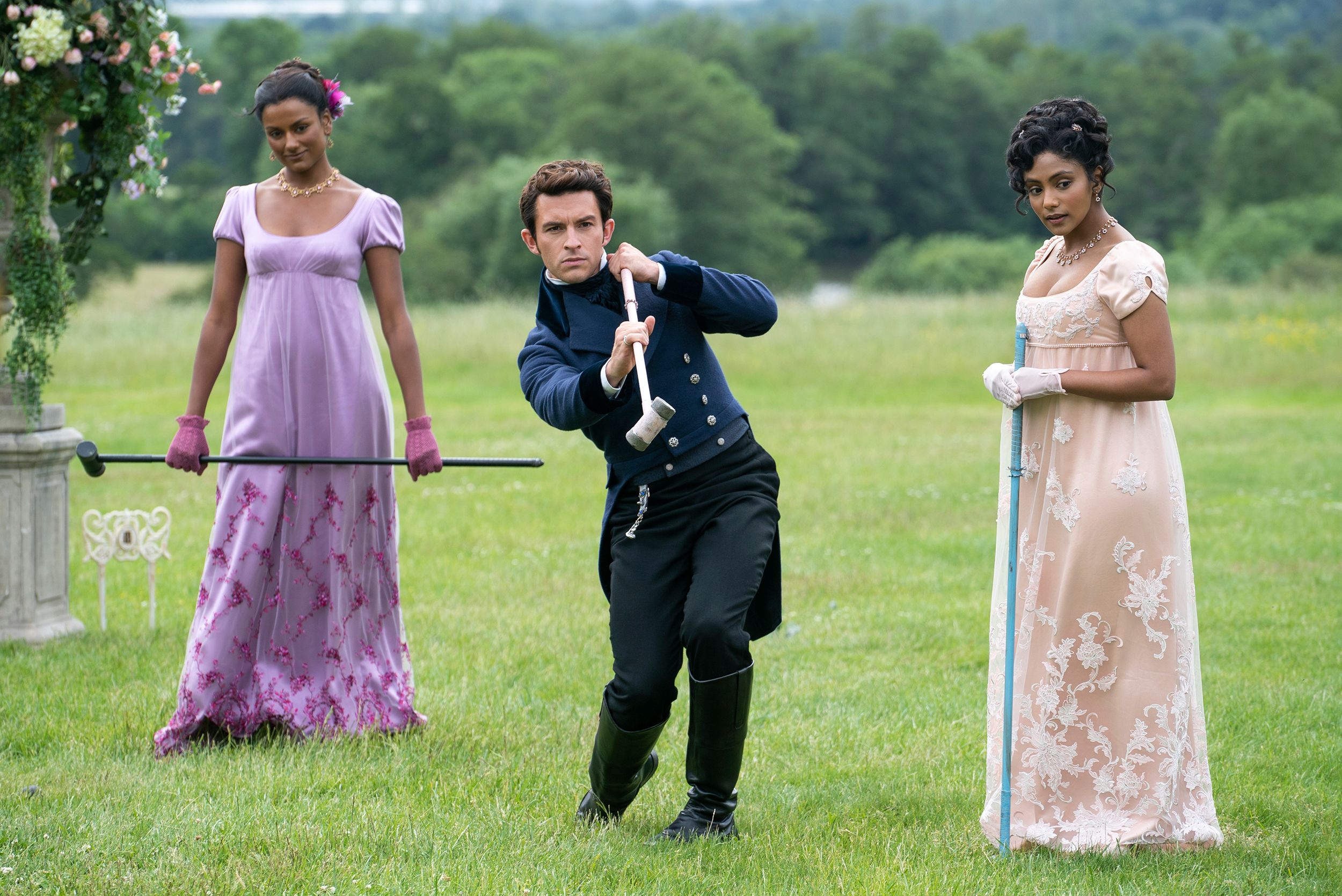
The word apparently comes from a Italian game which came to the UK through France. It was called pale-maille, and similar to croquet, with mallets, 6-inch wood balls, and little arches to aim for.

In The Sports and Pastimes of the People of England, written in 1810, it is described like this:
“a game wherein a round bowle is with a mallet struck through a high arch of iron (standing at either end of an alley) which he that can do at the fewest blows, or at the number agreed on, wins. This game was heretofore used in the long alley near St. James’s and vulgarly called Pell-Mell.”
Pall mall was originally brought to London in the mid-1600s, and though the street had moved on and become a high-end stop, a regency lady or family might still play it. Then, of course, it morphed or got overtaken by the more colorful and better known croquet.
I wanted to use this new tidbit, so in my Emma/P&P crossover, Mrs. Goddard’s students (including Harriet Smith) get to play Pall Mall.

When Elizabeth spends the winter in Highbury with her relatives, and Darcy visits his friend Mr. Knightley, Highbury is abuzz with gossip about potential matches.
Wouldn’t the wealthy Mr. Darcy be the perfect match for their village queen, Emma Woodhouse? Wouldn’t Mr. Knightley, so gentlemanly and intelligent, be happy with the witty Lizzy Bennet? She is a little young, the gossips admit, but he is too good a man to be lonely forever!
Soon Mr. Knightley is deeply confused, Emma is terribly jealous, and Mr. Darcy is pining for a woman who may very well be engaged before Christmas. Between Christmas parties, outdoor frescoes, and fireside chats, the Highbury community is in for all the drama their village can hold.
Thanks for reading!
Corrie


Leave a Reply