
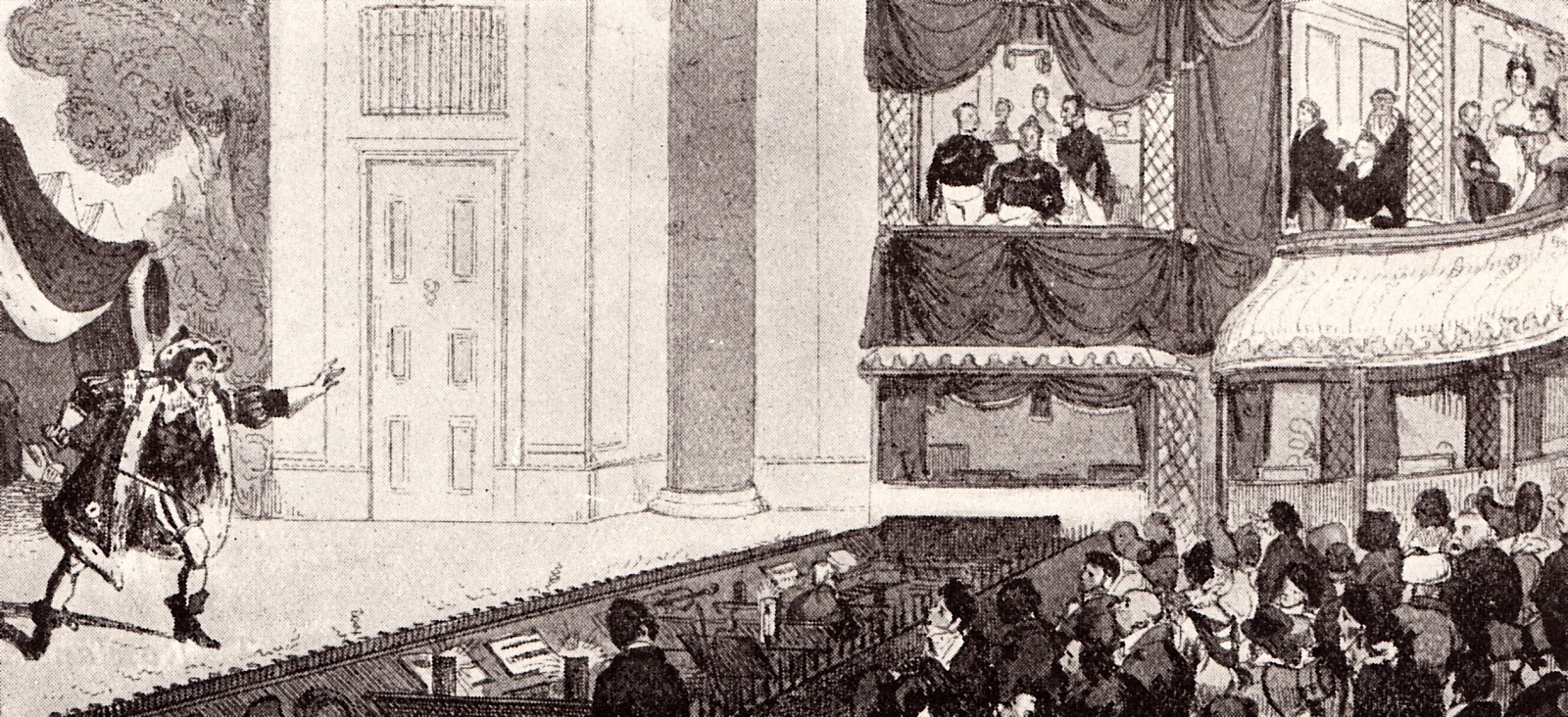

Covent-Garden Theatre: This engraving was published as Plate 27 of Microcosm of London (1808)
We know that Jane Austen wrote and acted in home theatre productions herself, so why is it so bad that Tom and Yates want to put on a play in Mansfield Park? I find it so strange when people argue that Austen had something against home acting, because it’s clear in the novel that this is a very specific circumstance, not a general indictment of plays.
Quotes from the novel in italics
1. It’s because of the particular play they chose. Lovers’ Vows features a fallen woman, Agatha, who had a child out of wedlock. The first act also involves a lot of touching between Agatha and Frederick (her natural son). Amelia, who was toned down from the German version, declares her love for a man before he does, which was seen as very vulgar. Even the bold Mary Crawford struggles with Amelia’s lines! The Count, played by Rushworth, is sexually immoral.
For a summary of the play, click here.
They have chosen almost as bad a play as they could

2. It’s because Sir Thomas is in danger. And you may wonder, would people in the Regency have zero fun whenever someone was at sea? Maybe? We see in the society that Jane Austen writes about a lot of performative mourning, as in someone you barely know dies and you wear black ribbons and don’t get engaged for a while (Elizabeth Elliot does this in Persuasion). It’s not like you can’t have any fun when the head of your family is possibly being attacked by pirates, but maybe don’t publicly put on a play. They also use Sir Thomas’s study while he is away without permission.
It would shew great want of feeling on my father’s account, absent as he is, and in some degree of constant danger
3. It’s because Maria is engaged (AND not acting opposite to her fiance.) The first thing Maria does is secure herself as Agatha so she can get touchy-feely with Henry Crawford. This may put her engagement in danger. That is her goal, but as a concerned brother Edmund is trying to help her avoid it.
it would be imprudent, I think, with regard to Maria, whose situation is a very delicate one, considering everything, extremely delicate.
4. It’s because Sir Thomas is strict. Edmund points out that while acting may be okay for other families, his father would not approve of it. Not all Regency families are the same, like today, some are more strict and worried about propriety. The Bertrams are on the far side of conservative, while the Crawfords and Yates families are on the laissez-faire side.
His sense of decorum is strict.

5. It’s because Tom wasting is money while they are in financial difficulties. Dude hired a scene painter! That cannot be cheap! Sir Thomas is off trying to secure their fortune and Tom’s at home wasting cash. And Mrs. Norris is so concerned with the pennies that she can’t see the pounds.
The innovation, if not wrong as an innovation, will be wrong as an expense.
6. It’s because of the publicity. Edmund joins the play to keep a third family from being included in the production, but Tom keeps inviting everyone to come and see them act. If Sir Thomas wouldn’t want his adult daughters to act at all, then he definitely wouldn’t want them acting in front of the whole neighbourhood. In an era where the rich are supposed to be leading the way with morality, this is not a good look for the baronet’s children.
This is the end of all the privacy and propriety which was talked about at first.
7. It’s because Tom is acting like he’s already in charge. By dismissing the cares of his father and acting against his known wishes, Tom acts as a usurper of his father’s power instead of a dutiful son.
“I know all that,” said Tom, displeased. “I know my father as well as you do; and I’ll take care that his daughters do nothing to distress him. Manage your own concerns, Edmund, and I’ll take care of the rest of the family.”
So it’s not just acting, its the play they picked, it’s not all families, it’s this family, it’s not just this family, it’s this time and these conditions. The play is only wrong because of the specific circumstances of this family.
More:
Jane Austen’s Brave Refusal to Reform the Rake
The Problem with Portrayals of Mr. Collins
The Unwritten Proposals in Jane Austen’s Novels
Imagining Jane Austen’s Heroines (with period portraits)
Who is more Physically Attractive? The Hero or Villain in Each Austen Novel…
Austen Quotes and the Problem with Wit
Check out my novel, Unfairly Caught, for a different ending to Mansfield Park


Leave a Reply to Amanda KaiCancel reply