
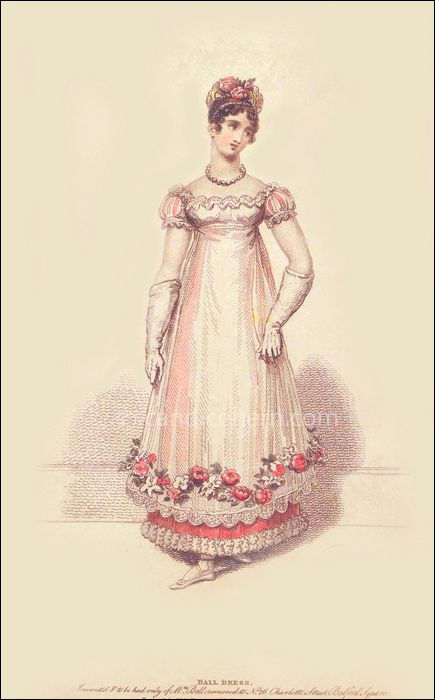
If you’re anything like me you’ve probably spent a ridiculous amount of time imagining what Elizabeth Bennet wore the night she danced with Mr. Darcy at Netherfield. Was it muslin? Silk? Did it swish dramatically when she turned away from him in elegant disdain? And the all important question: what did it cost Mr. Bennet?
I had to research the cost of women’s fashions for one of my earliest books: Love’s Fool: The Taming of Lydia Bennet. With more years of research under my belt, I decided to revisit the research I did then and correct any past errors. So let’s settle in with a cup of tea (or ratafia, if you prefer) and investigate just how much a lady like Lizzy might have spent on a ball gown in the early 19th century. Spoiler: it depends on who she’s trying to impress. Dressing to impress has always been a thing!

We’ll start with an assessment of the early Elizabeth: witty and sharp-eyed, but not especially wealthy, at least not among her set. The Bennet household runs on an income of £2,000 a year, split among five daughters, a fretful mother, and a father who pays more attention to his library than to his family. Lizzy is not out here buying designer gowns. She has to shop like a woman who knows her father’s estate is entailed away.

A decent muslin or fine cotton gown for evening wear would cost anywhere from 10 to 20 shillings. For something more eye-catching, say a silk gown with a bit of trim, the price might creep up to £2 or even £3. Add accessories (gloves, shoes, a fan, and a sprig of artificial flowers for her hair), and the full ensemble might cost £4 to £5—a small fortune to the second daughter of an unaspiring country gentleman.
But Lizzy isn’t really trying to catch Wickham. He’s charming, but he’s also a man with shady finances and an unpromising career, eminently unsuited for marriage. So she would probably wear something lovely but practical: a soft white muslin with a blue ribbon sash, clean gloves, and just enough embroidery to show she made an effort. If she has a fancier dress she’ll save it for someone who will appreciate it-and her.

By contrast let’s look at Mrs. Elizabeth Darcy, mistress of Pemberley, just a year or so later. She has access to the Darcy fortune, and suddenly, the gown budget is no longer a matter of scraping together pocket money. It’s a matter of taste, dignity, and looking so good at the next assembly ball that Caroline Bingley chokes on her syllabub. (Isn’t that a lovely thought?)
Lizzy can now afford imported silks, hand-embroidered trims, lace from Honiton, and natural pearls. A high-end evening gown might run £10 to £20, possibly more if it came from a fashionable London modiste. For context, £20 was roughly the annual wage of a housemaid.
Would she go all in? Well—Lizzy is still Lizzy. She’s not suddenly going to start dripping in diamonds just because she married well. But she might indulge in a silk gown dyed a fashionable shade of primrose, and an overskirt of gauze that flutters just enough to make Mr. Darcy’s jaw clench in that subtle way we all enjoy. Call it £15 with accessories and a new hair ornament.
It’s also worth noting that many Regency women made their own gowns or hired local dressmakers. The cost of materials—cotton, muslin, silk—was more significant than the labor at this time. A roll of decent muslin might cost 8 to 10 shillings, and with enough time and a little talent, a lady could fashion a perfectly respectable ball gown for herself for under £1. This also means Lizzy might have reworked older gowns, updated trimmings, or added a new sash to refresh her look for each event. It’s basically the Regency version of “shopping your closet.”
So, what did a ball gown cost? Anywhere from £1 for the practical country girl to £20+ for the wife of Derbyshire’s finest, depending on fabric, embellishment, and other details. It would be even more if the lucky lady was going to spend time at court. Elizabeth likely spent only what was necessary—enough to shine, but not enough to shout. Because no matter who she wanted to impress, Elizabeth understood that the best-dressed woman in the room is the one with the cleverest tongue and the clearest eyes—not necessarily the most expensive gown.

Sources:
https://www.quillsandquartos.com/post/the-cost-of-a-season
https://thechictribe.com/how-much-did-a-ball-gown-cost-in-the-1800s


Leave a Reply