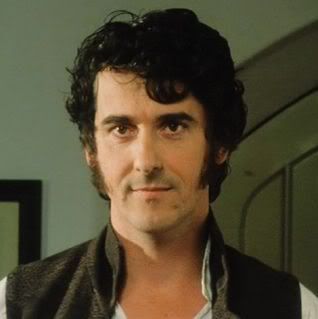
I love words, slang included!  But my students never want to teach it to me, so I’m constantly behind the times.

Case in point: The other day, I was picking up my son when we saw his friend walking home. I stopped and rolled down my window. “Do you want a ride?” I asked.

“I’m chillin’,” his friend said.

Very good!  I myself like to sometimes be…chillin’. But, um, am I pulling over? Or not pulling over?

“He’s fine,” my son translated. “He doesn’t want a ride.”

I pretended I knew this and drove away. But how was I supposed to know if he was going to be chillin’ inside the car or outside it?

Since I’m woefully ignorant of modern slang, I thought I’d look up some Regency slang (omitted from Austen’s novels, but I’m sure she used it).  Won’t my students be awed when I break out with these 18th century gems?

Your Personal Regency Slang Dictionary

Inexpressibles: This referred to men’s breeches because they were so tight-fitting and revealing.  

Isn’t it interesting that this word’s about men’s  scandalous clothing instead of women’s?  I like picturing Lydia in the ballroom, saying, “Hot dawg!  Pass me the smelling salts, Kitty. Wickham just walked in his inexpressibles.”

This site is ending, so I moved this post. Click here to read the rest & find out what pudding-house and bacon-faced mean.

Click the image to visit Kirstin Odegaard’s website.

4 responses to “Fillin’ the Pudding-House!: Regency Slang”

  1. cindie snyder Avatar
    cindie snyder

    Fun post! Their slang words are as funny as ours!lol I won’t call anyone bacon faced!lol

    1. Kirstin Odegaard Avatar

      Thanks Cindie! Probably a good idea. 🙂

  2. Regina Jeffers Avatar

    Have you ever read the “Dictionary of the Vulgar Tongue”? It was written my 6th Great Uncle, Francis Grose, Jr. Loads of words we have long forgotten and lots of “cant,” words used by those on the streets of London. “From the 1790s to the 1820s, numerous editions of the “Dictionary of the Vulgar Tongue” were published. Looking at the slang and vernacular language of the time, this dictionary pre-dated Roger Mellie’s best-selling Profanisaurus by a good 200 years.”
    Francis Grose was the eldest son Francis Grose (Sr.) or (Esquire) and his wife Ann Bennett (or Bennet), daughter of one Thomas Bennett [you JAFF fans will know I smiled when I saw this name] of Kingston, Oxfordshire, who happens to be my 6th Great-Grandfather and Great-Grandmother. Francis Sr. was born in Berne, Switzerland, an immigrant who came to England in the early 18th Century, with a pedigree in the College of Arms. He was a jeweller of some renown living at Richmond in Surrey. He fitted up the coronation crown of George III (some accounts say George II, but either way he was a jeweller to a king). I often use Francis Grose, Sr., in my stories when a jeweller is required.
    If interested, you can find more on the both men in my post over on my blog: https://reginajeffers.blog/2020/03/18/meet-francis-grose-author-of-the-1811-dictionary-of-thevulgar-tongue/

  3. Kirstin Odegaard Avatar

    That sounds like a delightful book! You have writing in your genes. Fitting the crown to the king is also interesting family history. Writing your family’s history might be a fun project.

Leave a Reply

Discover more from Always Austen

Subscribe now to keep reading and get access to the full archive.

Continue reading