
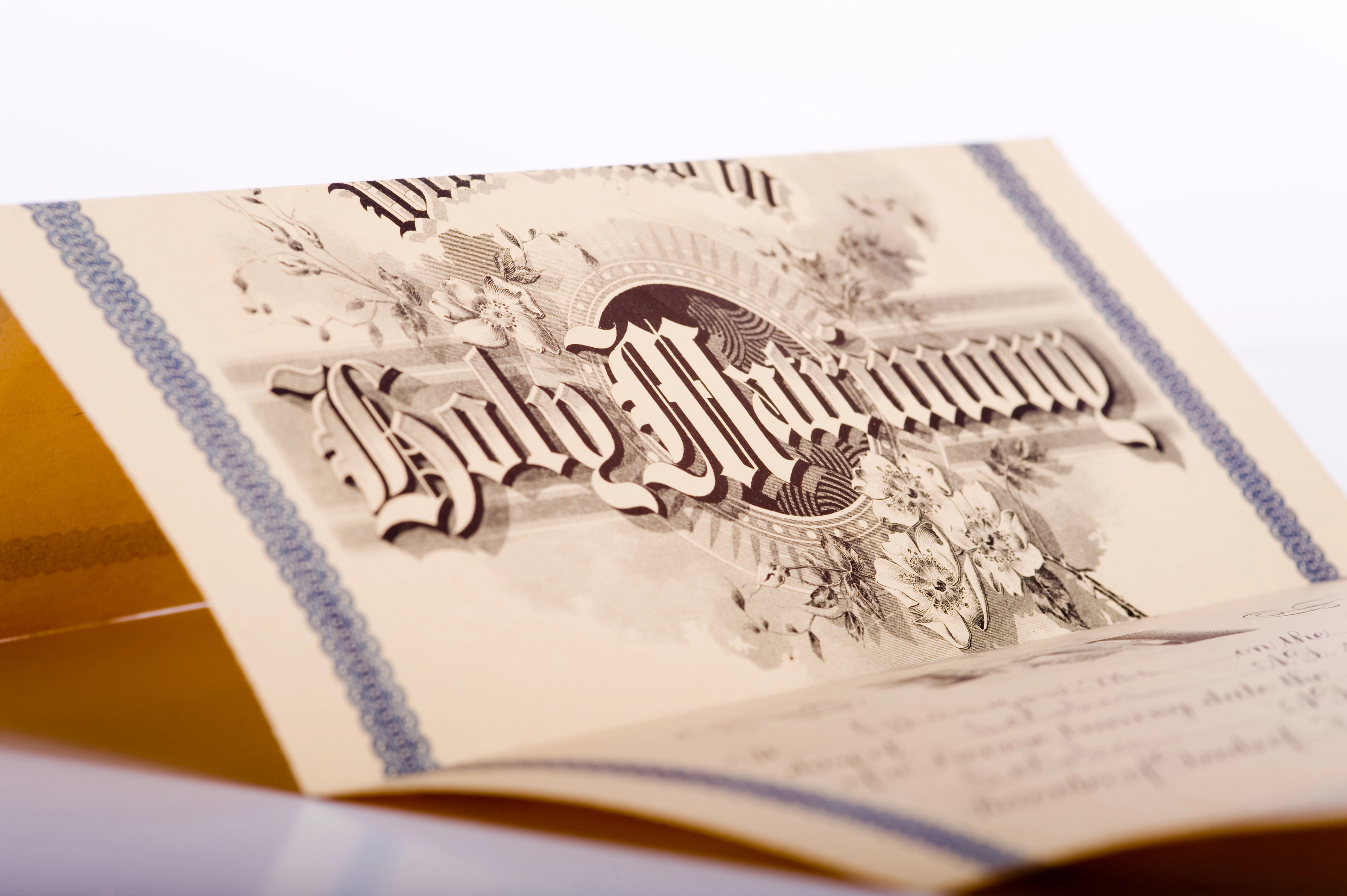
Learn about the different types of marriage licenses in Regency England, including common and special licenses.
So many Regency novels talk about a compromise occurring and the gentleman rushing off to London to purchase a special license. The reality, however, is quite different.
Marriage in Regency England was not simply a personal affair, but also a matter governed by both social expectations and the ecclesiastical laws of the Church of England. Couples wishing to wed needed to follow a prescribed legal framework to ensure their union was recognized.
Rules for Getting Married
The legal framework governing marriage in Regency England was not limited to how one obtained permission to wed—there were also regulations about when and where the ceremony could take place. These rules were shaped in large part by the Hardwicke’s Marriage Act of 1753, which set strict guidelines that were still in effect during the Regency period. While some flexibility existed, especially for those with the means to secure special licenses, the majority of couples found their wedding day constrained by clear stipulations regarding time and place.
Under the standard rules established by law and ecclesiastical authority, marriages typically had to take place between the hours of 8 o’clock in the morning and noon. This requirement aimed to ensure that weddings occurred publicly, in daylight, and within the oversight of the Church community. It also discouraged clandestine or impulsive matches that might be arranged under cover of night. Whether a couple married by banns or by common license, these time constraints generally applied.
The Hardwicke’s Marriage Act also dictated that the wedding ceremony occur in a parish church or a chapel officially licensed for marriages. Typically, when marrying by banns or by a common license, the couple had to wed in a church belonging to the parish of the bride or groom. The Church’s involvement reinforced the sacramental nature of the marriage and placed the union under the moral and communal scrutiny of the parish. A common license might specify a particular church in which the ceremony must be performed, providing some certainty about the location, but it generally could not free the couple from the basic expectation of a church wedding in a recognized place of worship.
For couples who opted for banns or a common license, there was little leeway to circumvent these rules. Banns firmly rooted the ceremony to the parishes involved, while a common license might relieve the couple from the public reading period but still required them to marry in a designated church during lawful hours. In other words, while these methods altered the route to consent and timing (in terms of preparatory waiting), they did not grant the couple broad freedom to choose an unconventional time or place. A wedding had to be a public, daylight event, under ecclesiastical jurisdiction, reinforcing the idea that marriage was a communal, church-sanctioned institution.
The exception to many of these restrictions was the special license. One of the key advantages of obtaining a special license—despite its substantial cost, extensive waiting period, and thorough vetting—was that it allowed the couple to marry at virtually any time and in almost any suitable place. Rather than being limited to a church building within standard hours, a special license permitted the couple to choose a more convenient or personally meaningful location. They could wed in a private chapel on a family estate, a drawing room, or another approved site not typically used for marriage ceremonies. Additionally, while many couples still chose to marry during conventional daylight hours, the special license did not impose the same strict time restrictions as the other methods did. Essentially, it broke free from the standard template set by the Hardwicke’s Marriage Act.
These legal constraints were not arbitrary. Marriage was considered a cornerstone of social order, inheritance, and moral propriety. Conducting the ceremony openly, in a recognized church, before witnesses, and at a proper hour ensured that the union was legitimate and free from clandestine schemes or hasty decisions. Such regulations helped protect individuals—especially women—from forced or secretive matches, curtailed bigamy by insisting on public announcement and established locations, and promoted community transparency. The rigidity of time and place requirements also maintained the Church’s authority over marriage as a religious sacrament and social contract.
Gaining Permission to Marry
At the time, there were three principal ways to obtain lawful permission to marry: the publication of the banns, acquiring a common license, or obtaining a special license. Each option reflected different social standings, financial resources, and time constraints, and understanding these distinctions sheds light on both the practicalities and subtleties of marriage in that era.
1. Publication of the Banns
The most traditional and accessible route to marry was through the publication of the banns. This method required that the couple’s intention to wed be announced publicly in church on three consecutive Sundays. The banns were read in the parish churches of both the bride and the groom (if they resided in separate parishes), ensuring the local community was informed and offering anyone with a legal objection an opportunity to raise their concerns. If no impediments were voiced, the couple could proceed to marry after the third announcement.
The publication of the banns was the least costly method. Indeed, this approach was regarded as the most common and socially inclusive means of verifying that both parties were free to marry. It also granted a degree of transparency, reflecting a time-honored tradition that integrated community involvement and accountability into the marriage process. However, the need to wait for three Sundays could pose an inconvenience for those wishing to marry quickly.
Additionally, the public nature of banns meant that anyone in the community could become privy to the match and potentially create obstacles—even unfounded ones—if they opposed the union. For most couples, though, the banns provided a straightforward, familiar, and respectable route to the altar.
2. The Common License
For those who could afford a bit more privacy and expediency, a common license offered an alternative to the public reading of banns. Issued by ecclesiastical authorities such as a bishop or archdeacon, the common license allowed a couple to marry after a shorter waiting period and without the three-week public announcement period. This meant no need to face potential gossip or interference from neighbors before the ceremony took place.
Common licenses were not free; they required a fee that made them costlier than the banns. Additionally, the couple or their representatives would generally need to swear that there were no legal impediments to the marriage. This method was particularly attractive to families who valued discretion and speed, such as those wishing to formalize a match swiftly without the public commentary that might arise over three weeks of banns. For the gentry and well-to-do middle classes, the common license struck a balance between avoiding lengthy delays and not incurring the expense or exclusivity of a special license.
Common licenses also ensured a degree of control over the marriage’s timing and location. Typically, a couple married in a church of the parish in which at least one of them had residence. The common license often specified that the marriage would take place in a particular church, providing more predictability than the public and somewhat uncertain route via banns. In essence, the common license appealed to those of moderate means who preferred a more private, prompt, and secure approach than community-driven banns could provide.
3. The Special License
The pinnacle of marital convenience and exclusivity in Regency England was the special license, obtainable only from the Archbishop of Canterbury or his officers at Doctors’ Commons in London. While vastly more expensive, the special license granted privileges that neither banns nor a common license could match. With a special license in hand, a couple could marry at any time and place—be it a drawing room in a private estate or a chapel not typically licensed for marriages. This remarkable flexibility freed the parties from the geographic and temporal constraints that governed the other two methods.
Special licenses were often sought by the aristocracy, wealthy gentry, or those needing to marry under unique circumstances. Such a license was not lightly obtained, as it required both significant financial outlay and a justifiable reason.
However, the prestige and convenience associated with a special license was well worth it for those who valued social impression or needed a prompt and discreet union due to inheritance matters, changing fortunes, or sudden shifts in family circumstances.
A special license could only be obtained from the Archbishop of Canterbury or his ecclesiastical court, often operating out of Doctors’ Commons in London. The process was neither simple nor quick. It was far more than paying a fee and walking away with a piece of paper. Applicants needed a solid justification for bypassing the usual marriage procedures. Such reasons might include urgent family matters, concerns over inheritance settlements that demanded immediate matrimony, or the need for utmost discretion—perhaps due to complex property rights, social sensitivities, or even time-sensitive military postings.
The Archbishop’s office conducted due diligence, which could involve researching the couple’s backgrounds, ensuring no legal or canonical impediments existed, and verifying that the request for a special license was legitimate rather than frivolous. This research could include examining genealogical records, confirming both parties were of legal age and free to marry, and sometimes reviewing attestations or letters of recommendation from reputable individuals. While historical records vary, it is widely acknowledged that such careful scrutiny was not completed overnight. Acquiring a special license could take weeks or even months, as church officials methodically reviewed documents and justified the extraordinary exception.
The ability to obtain a special license was, therefore, as much a testament to the couple’s social standing and connections as it was to their financial means. It often required having the right introductions and relationships in ecclesiastical circles. Aristocrats, those close to the royal court, or families with longstanding influence within the Church had distinct advantages in streamlining the process. Even so, the Archbishop’s office could not be rushed too easily—maintaining the authority and integrity of the Church’s marriage laws remained paramount.
The complexity and length of this process ensured that a special license was an unmistakable symbol of privilege. Not only did it allow the couple to marry privately and promptly once all the requirements were met, but also it signified an exceptional status—one that allowed them to step outside the normal patterns dictated by parish residencies, public announcements, and strictly defined locations.
Conclusion
The three avenues to matrimony in Regency England—banns, common licenses, and special licenses—offered flexibility, but they also reinforced social hierarchies and customs.
Banns were the mainstay of the majority, reflecting communal life and moral transparency. The common license balanced pragmatism and social respectability, appealing to couples who wished to proceed with their plans swiftly and quietly. The special license signified privilege, wealth, and the power to bend traditional rules to one’s advantage.
Together, these options not only governed how and where couples could wed, but also signaled much about their status, priorities, and position in the subtle tapestry of Regency society.


Leave a Reply