
Do you enjoy shopping for shoes? Are they an essential part of your wardrobe? Do you have a pair to go with every outfit?
Ladies in regency England liked shoes about as much as we do today, and upper class ladies like the ones in Jane Austen’s novels were no exception. Just like today, their shoes balanced form and function, and a lady’s choice of footwear gave people around her an idea of her wealth, her taste, and her position in society.

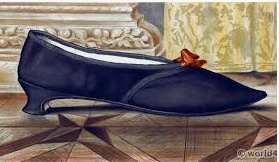
Shoes of this era were crafted using fine, soft materials such as kid leather, silk, and satin, all sewn together with meticulous hand-stitching. A typical dancing shoe had a thin leather sole and a fabric upper, making it both dainty and highly impractical for, say, walking three miles across muddy fields to help an invalid sister. They were usually flat, but they could be either pointy toed or have a squared off end.
Most shoes were made by skilled cordwainers, the highly respected shoemakers of the day (not to be confused with cobblers, who merely repaired shoes). These artisans worked their magic using hand-cut patterns and hand-stitched seams, ensuring that each pair was as unique as the lady who wore them. There were no shoes for left and right feet yet–the wearer just had to break them in over time. Shoes were often fastened with ribbons, ties, or even tiny buttons, and could also be decorated with shoe roses.

If you were a well-to-do lady, your shoes were likely crafted from the finest silk or satin, maybe even dyed to match your gown, because heaven forbid your feet should clash with your empire-waist frock! Embroidery was common, featuring delicate floral patterns or even sparkling embellishments.
For the more practical (or simply less wealthy), soft leather shoes were an option, offering at least a modicum of durability while still maintaining a ladylike appearance. Those without the money to indulge such vanity made do with shoes that cordwainers assembled and kept on hand in their shops, without any fancy customization.

During wet weather, ladies often resorted to pattens, which were wooden platforms strapped to the bottom of their shoes, to keep their dainty slippers from becoming sodden disasters. Of course this also meant clomping about like an especially dainty horse; but one must suffer for fashion!
So, how much did a fine pair of Regency slippers set a lady back? Prices of course varied depending on the materials and craftsmanship. A pair of simple leather shoes might cost a few shillings, while more elaborate silk slippers embroidered with gold thread would be multiple times that amount. Such an exorbitant cost *might* make even Mrs. Bennet think twice before splurging!
For reference, a modest middle-class family might live on around £100 per year, so spending several pounds on a single pair of shoes was not for the faint of purse. Those of means often had their shoes made bespoke, ensuring a perfect fit and the satisfaction of knowing no one else at the ball would be wearing the exact same shade of peacock blue.
While these shoes were undoubtedly elegant, they could also be alarmingly fragile. One unfortunate step on a damp cobblestone, and your beautiful satin slipper was likely never to recover. And imagine the agony of wearing thin leather soles on the unforgiving streets of London! Pavements was not yet a widespread luxury, and a poorly-placed stone could make any promenade an exercise in endurance.
Despite these drawbacks, Regency ladies carried on, floating through their social engagements with grace and poise (or at least trying to). After all, when your main goal is to catch the eye of a dashing gentleman or impress the ton with your impeccable taste, a little discomfort is but a small price to pay.
If you were in regency England today, what kind of shoes do you think you would wear? How similar or different would they be from the shoes you’re wearing right now?
Further research:


Leave a Reply