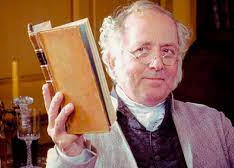
The other day, I was talking with my husband about Jane Austen (like you do), and he asked, “Why would anyone entail an estate anyway?  Wouldn’t a man want it to stay in the family, no matter what?”

I’d like to pause here to reflect on just how sexy this moment was.  This question came from a man who once believed Austen was just a city in Texas.  A man who tried to read Pride and Prejudice, then tossed the book aside after a page and asked, “Isn’t there a movie version of this?”

(I got him back for that one.  Three words: Six.  Hour.  Miniseries.)

Things really steamed up when Andy took out his phone to Google Regency entails, reading different answers to me from various websites.  “This is pretty interesting,” he said. 

And it was.  That’s when I thought, “Hey, I should write a blog about this.”

“Hey, you should write a blog about this,” Andy said because that is totally something he does.  He’s always trying to take credit for my writing ideas.

I can hear you from across the internet.  You’re thinking that this time it actually was Andy’s idea, you Wickham-level villain, you.  (Alright, fine.  It sort of was his idea this time.)

When I dug deeper, I realized this entail thing is pretty interesting, so here’s what I found on entails.

What is an Entail?

This site is ending, so I moved this post. Read the rest of it here.

Click the image to visit Kirstin Odegaard’s website.

13 responses to “Why Entail an Estate, Anyway?”

  1. Alice McVeigh Avatar
    Alice McVeigh

    Great column!!! I got my husband – finishing his musicology book – to take a break in favour of reading PERSUASION for the first time, which he LOVED. He said, “How did this escape me till my sixties??” We discussed it and decided that it’s the fault of the way Jane Austen is portrayed as a romance writer.

    Simon is NOT a romance reader – he loathes the entire genre, as most guys do. He’d read somewhere that PERSUASION is romantic – which it IS, of course – that LETTER!!! – but it’s still not a ROMANCE – and he thought, “No way.” It pains me to think of all those great guys, perhaps missing out, not only on PERSUASION but on ALL of her books, because of the romantic sections being hyped. How many guys surface on Facebook Austen sites, for example? How many guys read our own books, writers of ALWAYS AUSTEN? Vanishingly few.

    Intelligent men CAN love historical fiction, but, as Si said yesterday, it has to be historical fiction with action in it: WWII or WWI, sea battles in the Hornblower series – and absolutely NO couple on the cover. Simon, who is British, loves the irony and humour in Austen, and maybe a lot of men wouldn’t get that, but I suspect that many would, but steer clear. (“Women’s fiction… boring… too much romance…”)

    1. Kirstin Odegaard Avatar

      Good job you for introducing him to Austen. I agree–it is so much more than a love story.

      I’m uncomfortable with the whole designation of women’s fiction as a genre, as if everyone doesn’t enjoy a witty, nuanced novel. Isn’t it just fiction?

  2. Riana Everly Avatar

    Entails are fascinating documents. The thing I found so interesting is that there was not one single version of entail, but that each document was its own thing. They had a lot in common, but when it came to how to bequeath the estate in the event of no male-line heir, there were so many different possibilities.
    Great article, and Live Long and Prosper. Yeah, I rather loved Star Trek too.

    1. Kirstin Odegaard Avatar

      That’s interesting, makes steady work for the lawyers.
      Live long and prosper. And may the force be with you.

  3. cindie snyder Avatar
    cindie snyder

    Very informative article! I don’t know much about Star Trek, but I like Star Wars, especially Han Solo! Nice reward for your husband!lol

    1. Kirstin Odegaard Avatar

      I like Star Wars too! Especially those personality-filled robots. My husband is a big Han Solo fan, too.

  4. Tom Odegaard Avatar
    Tom Odegaard

    As you might expect coming from me, Adam Smith has a fair bit to say about entail (see Wealth of Nations, Book III Chapter ii, especially paragraph 4). The chapter is part of his stage theory of history, focusing on the evolution of commercial society. Two sentences of this paragraph appealed to me: “Laws frequently continue in force long after the circumstances, which first gave occasion to them, and which could alone render them reasonable, are no more.” And “In every other respect, nothing can be more contrary to the real interest of a numerous family, than a right which, in order to enrich one beggars all the rest of the children.” So Smith is arguing both from an economics perspective (laws need to change as the economy changes) and a moral perspective (people forget his reputation was made, not with the Wealth of Nations but with his Theory of Moral Sentiments, which-in effect-argues that capitalism works only with a moral foundation, with virtuous actors.

    Many apologies for the lecture! Can’t quite get rid of old habits . . .

    Oh: nice job! Good contribution.

    U. Tom

    1. Kirstin Odegaard Avatar

      Those are both interesting quotes–enriching one to beggar the rest, and continuing this law past its usefulness…and that capitalism only works with a moral foundation. Thanks for these thoughts. I think I would have liked to hear these lectures from you in their entirety…

  5. Allyson Avatar
    Allyson

    Thank you, this was very helpful (and of great doctrinal import).

    1. Kirstin Odegaard Avatar

      You’re welcome–thanks for checking it out!

  6. Maria Avatar
    Maria

    Why couldn’t it work the same way that the eldest daughter gets the whole estate instead of being divided among all? Still looks like sexism to me same rules for male heir could apply for female heirs but decided it wouldn’t. Maybe someone could shed some light?

    1. Kirstin Odegaard Avatar

      This is a good question. I looked it up, and it seems like the answer goes back to not wanting to lose the entire the estate. If the estate is given to one woman, the eldest, she might marry and have children, and the land will go to her male sons, who are part of her husband’s family (say, Darcy’s) and not her parents’ (the Bennets, for example). If it’s divided equally among the daughters, the hope is that pieces of it could be sold and some of the money could then stay in the family. This is the best answer I could find. But, yes, I agree with you. It is definitely sexism at play, and the sexist laws begat more sexist laws.

    2. Regina Jeffers Avatar

      Maria, I have several pieces on my personal blog on Female Inheritance. You can you find one I did on May 2 on whether an Earldom could pass through the female line. https://reginajeffers.blog/2025/05/02/could-an-earldom-pass-through-the-female-line/

      During the Regency, Could a Female Run an Estate in the Absence of a Male Heir? https://reginajeffers.blog/2023/08/28/during-the-regency-could-a-female-run-an-estate-in-the-absence-of-the-male-heir/

Leave a Reply

Discover more from Always Austen

Subscribe now to keep reading and get access to the full archive.

Continue reading